
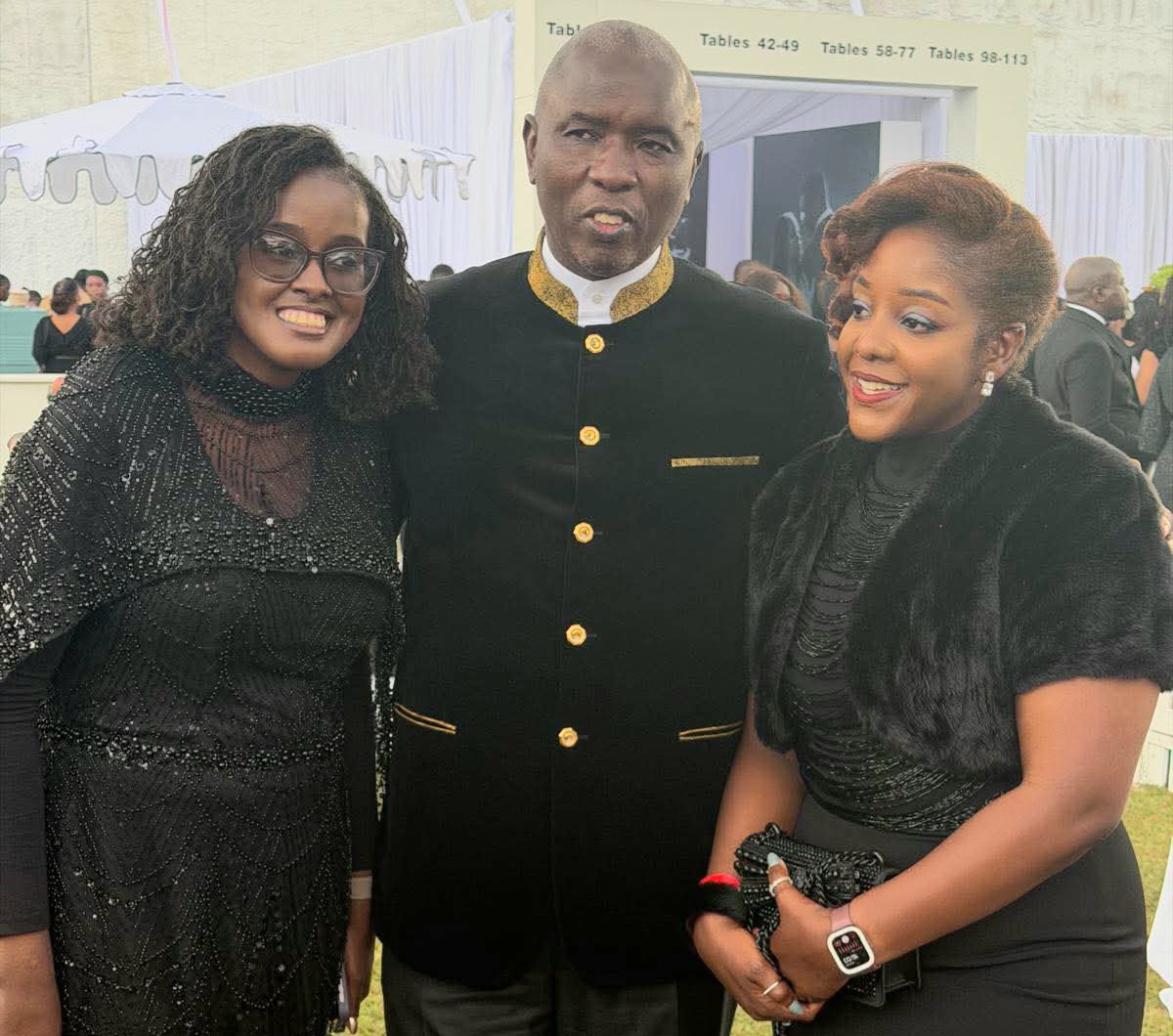
The extravagant wedding of Taonanyasha John Tagwirei and Poneso Tinomuda Janda has evolved far beyond a society celebration, morphing into a national debate about wealth, privilege, land ownership and political power after the Mugabe family was dragged into the growing online storm.
By Advent Shoko
What began as admiration for one of Zimbabwe’s most luxurious weddings quickly turned into a fierce public conversation about elite accumulation and inequality, with social media users revisiting the controversial wealth linked to former first daughter Bona Mugabe and her ex-husband Simba Chikore.
The high-profile wedding, held at Thornpark Polo Club in Harare, attracted cabinet ministers, senior government officials, businessmen, church leaders and celebrities, while legendary American R&B group Boyz II Men performed live before invited guests.
- Bellarmine Chatunga Mugabe Apologises To President Mnangagwa
- South African Court Orders Deportation Of Chatunga Mugabe After R600K Fine, Cousin Gets Prison Term
- Tagwirei Donates $1 Million To AFM Youth, Urges Young People To Turn Ides Into Impact
But it was not only the wedding’s luxury that captured national attention.
It was what the spectacle appeared to symbolise.
As multimillion-dollar gifts, luxury vehicles, pedigree cattle and prime land were publicly announced during the celebrations, online debate rapidly shifted toward broader questions surrounding political influence, state-linked wealth and the lifestyles of Zimbabwe’s elite families.
The turning point came after Bona Mugabe attended the wedding, triggering renewed discussion around the former first family’s wealth following her widely publicised divorce battle with Simba Chikore.
Old court papers and media reports resurfaced online almost immediately.
The records revealed that Bona and Chikore owned at least 21 farms acquired through inheritance, donations, sole ownership and joint ownership during their marriage, despite Zimbabwe’s long-standing “one-man one-farm” policy introduced to prevent multiple farm ownership.
The revelations reignited old frustrations among Zimbabweans who believe politically connected families accumulated vast wealth and land holdings while ordinary citizens struggled for survival.
Court records linked to the divorce case listed an extensive portfolio of agricultural properties and assets allegedly connected to Bona Mugabe and Simba Chikore, including:
- Rosam Farm – 104.2335 hectares
- Smithfield Farm – 3,280.5898 hectares
- Gushungo Estate / remainder of Foyle – 1,200 hectares
- Iron Mask Farm – 207.8205 hectares
- Cressy Dale – 945.037 hectares
- Cressy Dale Lot Two – 184.534 hectares
- Tankatara – 659.98 hectares
- John O’Groats – 669.5 hectares
- Lot 1 Swandale – 155.482 hectares
- Lot 2 Swandale – 101.84 hectares
- Swandale – 106.361 hectares
- Clifford Farm – 1,426 hectares
- Vusumuzi Banket Farm – 3,182 hectares
- Teviotdale Kaseplan Farm – 310.6189 hectares
- Remainder of Teviotdale – 186.46 hectares
- Buckland Estate – 280 hectares
- Yarrow Dale Farm – 2,516.3358 hectares
- Lemon Pool – 102.5766 hectares
- Lot B of Greater B – 404.6744 hectares
- Benissa Farming Company – 1,248.8033 hectares
- Surtic – 6,385.3470 hectares
- Court records and public reports also referenced an US$8 million mansion in Dubai and a fleet of luxury vehicles linked to the couple during their marriage.
As the details resurfaced online, many social media users linked the revelations directly to the luxury displayed at the Tagwirei wedding.
One viral post read:
“This is another generation being groomed right in front of us. Are we children of a lesser God?”
Another user wrote:
“The gap between the elite and ordinary Zimbabweans has never looked bigger.”
The backlash intensified because the wedding itself had already become a symbol of extreme wealth.
Businessman Kudakwashe Tagwirei and his wife Sandra reportedly gifted the newlyweds US$2.5 million in cash together with 33 hectares of Umwinsidale land believed to be worth around US$15 million.
Businessman Wicknell Chivayo reportedly added US$250,000 and a luxury designer handbag, while gold dealer Scott Sakupwanya contributed US$500,000.
Finance Ministry permanent secretary George Guvamatanga and his wife reportedly donated US$250,000 together with 25 pregnant pedigree Beefmaster heifers.
Presidential investment adviser Paul Tungwarara publicly announced he had gifted the couple US$300,000.
Other contributions reportedly included a rare Defender Octa luxury vehicle, tractors, luxury goods and large cash donations from politically connected businessmen and senior government figures.
For critics, the wedding became more than a celebration.
It became a public display of the enormous wealth circulating within Zimbabwe’s political-business elite at a time when many citizens are battling unemployment, low salaries, deteriorating hospitals and rising poverty.
Some opposition activists and commentators linked the conversation directly to the controversial Constitutional Amendment Bill No. 3 (CAB3), arguing that powerful elites were seeking to preserve political control in order to protect economic interests and influence.
Former Deputy Prime Minister Arthur Mutambara also re-entered public discussion after comments he previously made about Bona Mugabe’s divorce resurfaced online.
Speaking during the launch of his book Ideas and Solutions, Mutambara argued that the divorce proceedings exposed the scale of wealth accumulated by Zimbabwe’s ruling elite.
“If Bona Mugabe has 21 farms, how about her father?” Mutambara said.
“You should ask yourself how many farms the late President Robert Mugabe and his other sons had.”
Supporters of Tagwirei and other wealthy businessmen, however, pushed back strongly against the criticism.
They argued that wealthy families across the world spend millions on weddings and private celebrations, and said Zimbabweans should stop criminalising visible African success.
“Business success is not a crime,” one supporter posted online.
“Building companies is not a crime. Blessing your children is not a crime.”
Others praised Tagwirei for largely keeping his family away from public controversy and social media despite his growing business and political prominence.
But even supporters acknowledged that the timing and visibility of the wealth made public reaction inevitable in a struggling economy.
Analysts say the emotional intensity surrounding the wedding reflects much deeper frustrations over inequality, political access, land ownership and economic exclusion in Zimbabwe.
For supporters, the wedding symbolised black excellence, prosperity and generational success.
For critics, it became a mirror reflecting how political proximity, wealth and privilege continue to shape modern Zimbabwe.
And as videos, photographs and multimillion-dollar gift revelations continue circulating online, the Tagwirei wedding is no longer just being discussed as a private family celebration.
It has become a national conversation about power, privilege, land and who truly owns Zimbabwe’s wealth.
Leave a Reply