
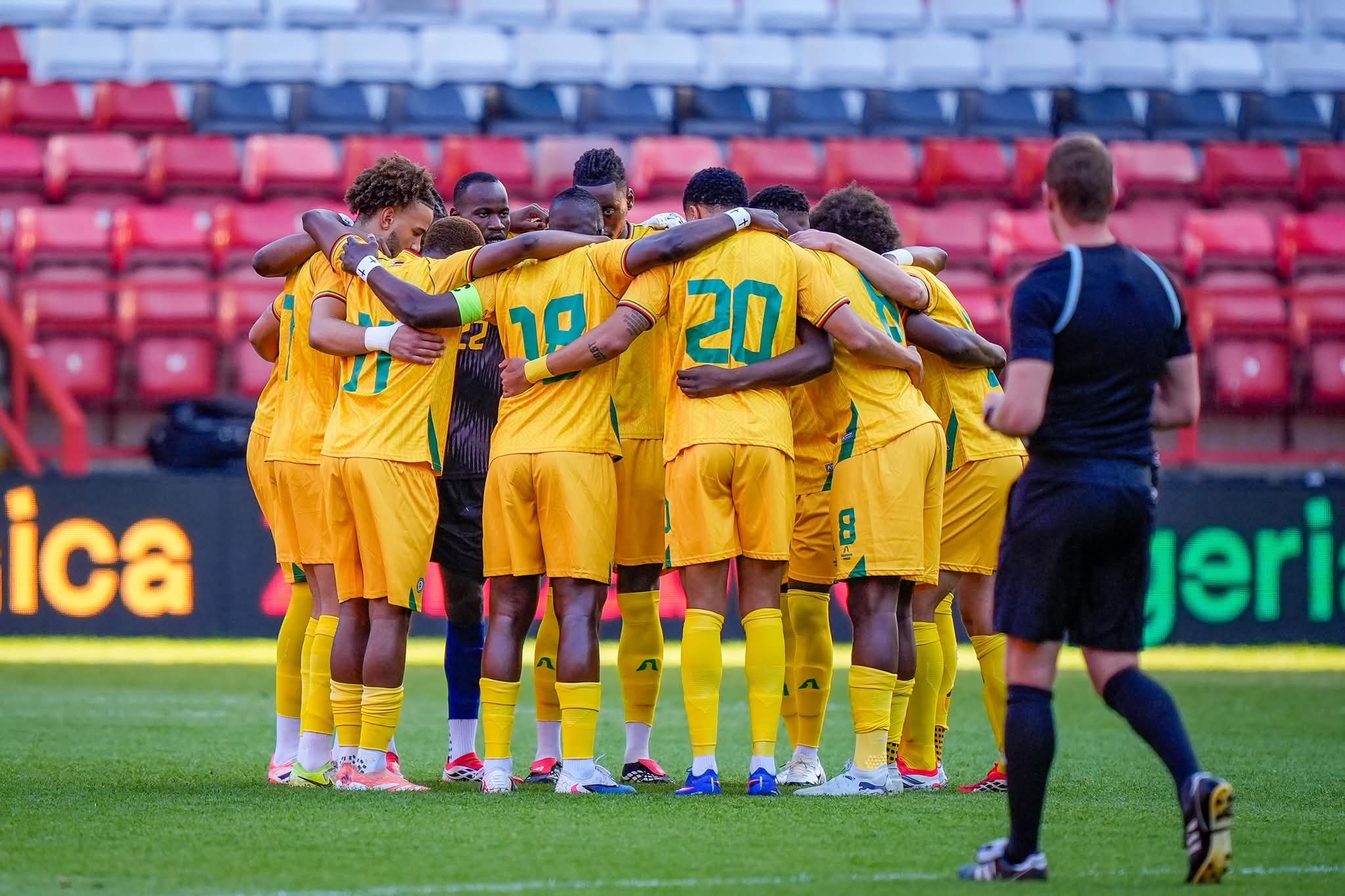
Zimbabwe’s Warriors suffered a 2-0 defeat to Nigeria in the Unity Cup semi-final in London on Tuesday night, handing interim coach Kaitano Tembo a difficult start to life in charge as the Super Eagles exposed the visitors’ lack of cohesion and attacking sharpness.
By Advent Shoko
Played at The Valley, the match began in the worst possible fashion for Zimbabwe after Nigeria struck early and immediately settled into control, forcing the Warriors to chase the game for long periods.
The Super Eagles, despite fielding a squad largely made up of lesser-known and home-based players, looked calm, organised and technically assured throughout the contest. Nigeria moved the ball with confidence, pressed aggressively and rarely appeared troubled even when Zimbabwe enjoyed brief moments of possession.
For Zimbabwe, the defeat raised fresh concerns about attacking fluency and tactical balance following the departure of former coach Marian Mario Marinica, who resigned weeks before the tournament for what were described as personal reasons.
Tembo, taking charge of the Warriors for the first time, arrived in London promising unity, structure and a reset for the national team. But against Nigeria, Zimbabwe struggled to consistently translate possession into meaningful chances, with isolated flashes from a few individuals failing to change the direction of the game.
There were moments where the Warriors hinted at a response, particularly during phases when they attempted to attack through quick transitions, but the final pass, movement and coordination in the final third were often missing.
The result also ended one of Zimbabwe’s most encouraging recent trends.
For the first time since November last year, the Warriors failed to score in a match, a statistic that will concern supporters who had started to see signs of attacking growth under Marinica’s previous reign.
Under Marinica, Zimbabwe had developed a reputation for carrying attacking threats from multiple areas of the pitch, with players such as Tawanda Chirewa, Tawanda Maswanhise, Bill Antonio, Prince Dube and Daniel Msendami increasingly giving the side pace, movement and unpredictability going forward.
That cutting edge, however, was largely absent against Nigeria.
Instead, Zimbabwe looked like a team still searching for chemistry under a new technical setup, while Nigeria appeared more settled despite assembling a relatively unfamiliar squad.
Tembo now faces immediate pressure to stabilise performances and quickly rebuild confidence ahead of the tournament’s third-place playoff.
The defeat may not define his tenure, but it offered an early reminder of the scale of the task ahead.
Zimbabwean football continues to battle recurring transitions, coaching changes and inconsistent momentum at international level, making continuity one of the national team’s biggest challenges.
For supporters who travelled and those watching back home, there remains cautious optimism around the generation of talent emerging across Zimbabwe, South Africa and Europe. But talent alone has rarely been Zimbabwe’s problem.
The bigger challenge has always been turning promise into consistency.
Tuesday night in London showed just how much work still lies ahead for the Warriors.
Leave a Reply