
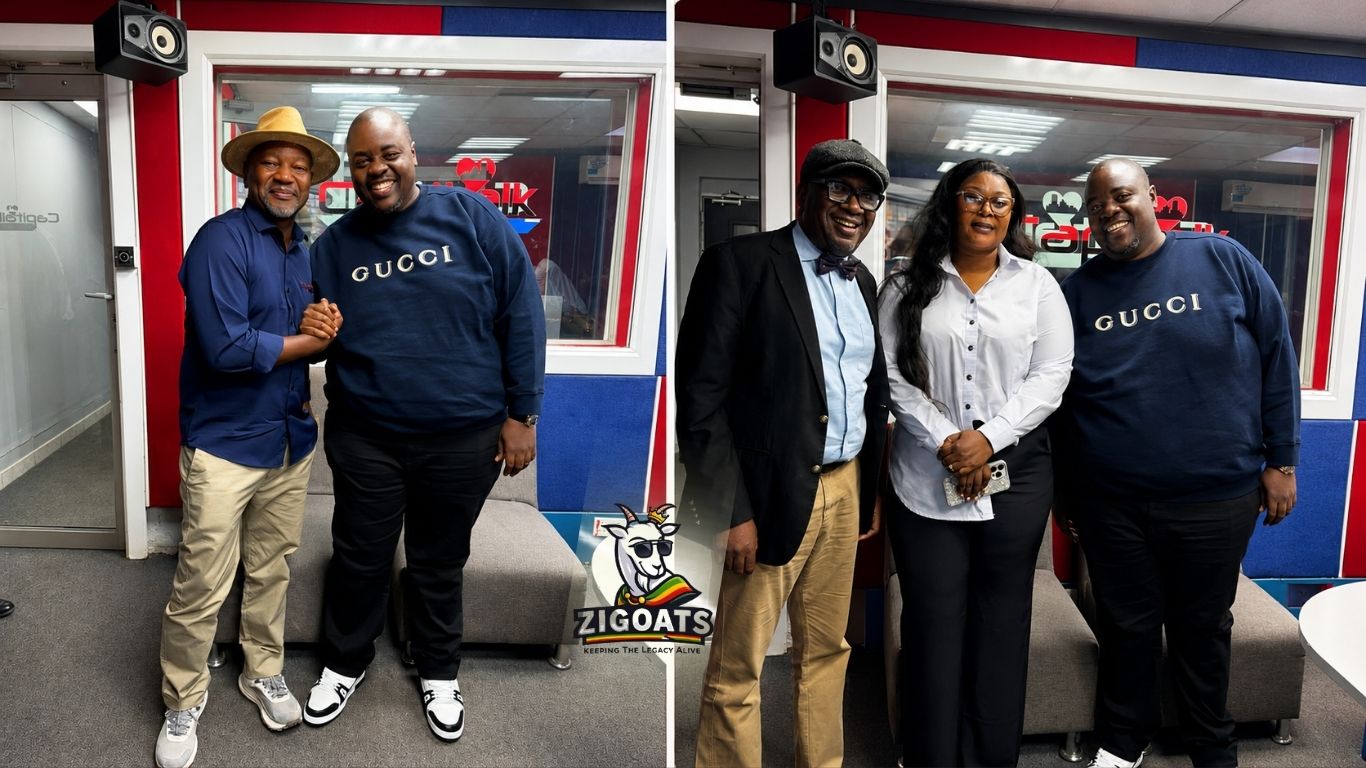
A dramatic standoff has erupted inside state-controlled media giant Zimpapers after polarising businessman Wicknell Chivayo handed out thousands of dollars in cash and offered luxury vehicles to Capitalk FM employees, only for management to later order staff to return the gifts.
By Advent Shoko
The controversy, which has exploded across Zimbabwean social media, has now triggered wider debate around newsroom ethics, political influence, corporate governance and the blurred lines between appreciation and perceived patronage in state-linked institutions.
At the centre of the storm is popular radio personality Phathisani Sibanda, who was reportedly given a blunt ultimatum by management: reject a brand-new Toyota Fortuner GD6 or resign from the company.
The vehicle had been offered by Chivayo as an upgrade from Sibanda’s Toyota Aqua following a recent appearance on Capitalk FM.
At the same time, Chivayo also handed over US$30,000 cash intended for 30 workers at the station, describing the money as a token of appreciation for their professionalism and hospitality during the interview.
Under a Zimpapers gifts policy introduced in 2024, however, employees are prohibited from accepting gifts exceeding US$100 unless formally declared and approved.
That policy now means each worker will reportedly only keep US$100, while the remaining US$27,000 is expected to be returned.
From Appreciation To Internal Crisis
What began as a celebratory radio station visit has rapidly evolved into one of the most talked-about media controversies in Zimbabwe this year.
Ironically, insiders say the same gifts policy now causing turmoil was introduced partly because of Chivayo himself.
Last year, the businessman gifted Sibanda a Toyota Aqua during another radio appearance. At the time, Sibanda was operating as an independent contractor, limiting the company’s ability to intervene.
He only became a fully employed Zimpapers staff member in January this year.
Now, the issue has returned with even greater intensity.
A senior company official who declined to be named said the policy exists to “maintain editorial standards” and eliminate any perception of bribery or influence within the newsroom.
Zimpapers chief executive William Chikoto confirmed the company’s position, saying employees were “not allowed to accept anything with a value of more than US$100.”
Behind the scenes, however, insiders say the situation has sparked intense internal discomfort, particularly given the public nature of the gifts and Chivayo’s close links to powerful political circles.
Chivayo Says Management Approved Everything
In a lengthy and emotionally charged response, Chivayo insisted he had done nothing improper and said management had fully approved the gifts before they were distributed.
According to the businessman, he specifically asked Capitalk FM General Manager Comfort Mbofana for permission before giving employees any money.
“I asked the General Manager Mr. Comfort Mbofana whether I was permitted to give the workers some money for lunch, to which he responded, ‘Yes with pleasure,’” Chivayo wrote.
Chivayo said he was informed there were 30 employees on duty and decided to give US$1,000 to each worker.
He further claimed Mbofana personally escorted him to his vehicle and received the cash on behalf of staff members.
The businessman also said he separately requested permission to buy Sibanda a Toyota Fortuner GD6 and another female employee a Toyota Aqua, requests he says were also approved without hesitation.
“I am therefore profoundly surprised to now hear different versions circulating on social media suggesting that there was something improper about a simple act of gratitude,” Chivayo said.
Sarcasm, Politics And Public Humiliation
As the controversy escalated online, Chivayo responded with a mixture of sarcasm, humour and political messaging that quickly intensified public interest in the saga.
In one widely shared section of his statement, he jokingly claimed vehicle dealer “Madzibaba Chipaga” was now selling a brand-new Toyota Fortuner GD6 for just US$100 and a Toyota Aqua for US$50 specifically for the employees involved.
The comments were widely interpreted as a mocking swipe at the company’s gift restrictions.
Chivayo also announced he would send lawyer Sikhumbuzo Mpofu to recover the remaining US$27,000 from management.
In another sarcastic jab, he suggested the money could help purchase fuel for Mbofana’s “latest Range Rover Autobiography.”
The businessman framed the issue as an attack on appreciation and patriotism, saying hardworking Zimbabweans deserved encouragement rather than “red tape and excessive bureaucracy.”
“As a patriotic citizen, whenever I visit government institutions or companies owned by the State, I naturally have a soft spot because I openly and unapologetically support the ruling party, ZANU PF,” he said.
Bigger Questions About Media Independence
Beyond the spectacle and social media humour, the controversy has reopened deeper questions about ethics and influence inside Zimbabwe’s media industry.
Globally, many major media organisations, including publicly or state-funded broadcasters, enforce strict rules on gifts and benefits received by journalists in an effort to safeguard editorial independence and avoid perceptions of influence or compromised reporting.
Media analysts say even when no direct favours are expected, expensive gifts from politically connected business figures can undermine public confidence in newsroom independence.
The issue becomes even more sensitive within state-linked institutions such as Zimpapers, where questions around editorial autonomy have long existed.
At the same time, many Zimbabweans online sympathised with the affected workers, arguing that ordinary employees should not suffer because of management-level approvals or policy contradictions.
Others defended the company’s hardline stance, saying failing to enforce the rules would damage credibility and create dangerous precedents.
Leave a Reply