
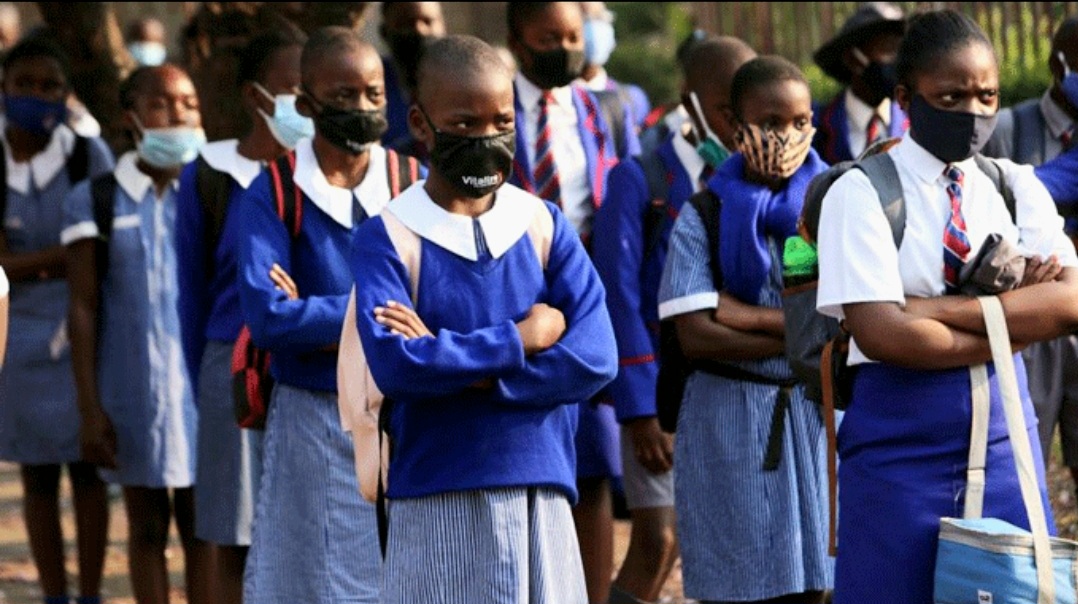
Excerpt: Zimbabwe already has the financial capacity to provide free universal basic education without introducing new taxes, according to political commentator and education specialist Etiwel Mutero. The debate, he argues, is no longer about funding but about political will, transparency and the effective use of resources already allocated to the education sector.
By Advent Shoko
Free Education Debate Returns to the Spotlight
The long-running debate over free universal education in Zimbabwe has resurfaced after education analyst Etiwel Mutero argued that the country already possesses the resources required to make basic education free for every child.
In a detailed policy proposal, Mutero contends that Zimbabwe’s existing education budget, particularly allocations made under the Basic Education Assistance Module (BEAM), could be restructured to guarantee free education from Early Childhood Development (ECD) through Form Four.
His argument comes at a time when many families continue to struggle with school fees, levies and other education-related costs amid persistent economic challenges.
The proposal also raises fresh questions about whether the country is fully meeting constitutional obligations regarding access to education.
The Numbers Behind the Argument
According to Mutero, the 2026 national budget allocated ZWG5.58 billion to BEAM, an amount he estimates to be worth approximately US$219.9 million at prevailing exchange rates.
Zimbabwe currently has about 3.9 million learners from ECD to Form Four.
Based on those figures, Mutero argues that the allocation translates to more than US$56 per learner annually if distributed universally.
He maintains that this amount is sufficient to cover basic tuition costs, textbooks, examination fees and essential learning materials for every child.
“The money is already there,” Mutero argues.
In his view, the challenge lies not in funding availability but in how the funds are distributed and managed.
Why Parents Are Still Paying
Despite substantial allocations to BEAM, many parents continue to face school fees and levies.
Mutero attributes this to the programme’s targeted approach, which currently focuses primarily on vulnerable learners rather than all school-going children.
He also points to concerns about delayed disbursements.
Historically, schools have often complained about late or incomplete BEAM payments, forcing them to seek alternative funding mechanisms to cover operational costs.
As a result, some institutions have introduced levies or pursued debt recovery measures against parents with outstanding balances.
Education authorities have maintained that schools cannot exclude pupils for non-payment of fees, but the issue of recovering unpaid levies remains contentious.
Constitutional Questions Raised
A major pillar of Mutero’s argument centres on Section 75 of Zimbabwe’s Constitution, which guarantees citizens and permanent residents the right to basic State-funded education.
He argues that allowing public schools to engage debt collectors to recover fees from parents contradicts the spirit of that constitutional guarantee.
Recent regulations prohibit schools from excluding learners over unpaid fees or levies.
However, schools are still permitted to pursue parents through legal channels to recover outstanding debts.
Mutero believes this creates a contradiction.
While learners remain in classrooms, he argues that families can still face significant financial pressure, effectively undermining the principle of universal access to education.
The issue is likely to continue generating debate among policymakers, educators and constitutional experts.
Proposal to Transform BEAM
At the centre of Mutero’s proposal is a restructuring of BEAM from a targeted programme into a universal grant system.
Under his model:
– Every pupil in a public school would qualify automatically.
– A standard per-pupil grant would be established.
– Treasury funds would be transferred directly to school accounts.
– Funding information would be publicly disclosed for accountability.
Supporters of universal funding models argue that they reduce administrative costs, eliminate stigma associated with means-testing and ensure equal treatment of learners.
Critics, however, may question whether the current budget can sustainably absorb future enrolment growth and inflationary pressures.
Funding School Infrastructure
While Mutero believes existing allocations could cover recurrent education costs, he acknowledges that infrastructure development requires additional investment.
To address these challenges, he proposes a combination of measures including:
– Ring-fencing education infrastructure funding in national budgets.
– Allocating a portion of mining royalties to school development.
– Expanding selected excise taxes.
– Strengthening anti-corruption mechanisms.
– Encouraging public-private partnerships.
– Seeking concessional support from international development institutions.
– Improving tax collection efficiency.
According to Mutero, these interventions could significantly expand educational infrastructure over the next three to five years without placing additional burdens on parents.
Calls for Greater Transparency
Another issue highlighted in the proposal is transparency.
Mutero notes that government officials previously announced pilot programmes aimed at introducing universal free education in selected schools.
However, detailed information regarding participating schools, funding mechanisms and measurable outcomes has not been widely publicised.
He argues that publishing such data would help citizens evaluate progress and build public confidence in future reforms.
Education experts have long maintained that transparent funding systems improve accountability and reduce opportunities for misuse of public resources.
A Growing Policy Debate
The question of free education remains one of the most important social policy discussions in Zimbabwe.
Supporters view universal education as a constitutional right and a long-term investment in economic development.
They argue that improved access to education leads to higher productivity, reduced poverty and stronger social outcomes.
Others caution that implementation must be carefully planned to ensure quality standards are maintained and schools remain adequately resourced.
The debate therefore extends beyond whether free education is desirable and focuses increasingly on how it can be delivered sustainably.
The Road Ahead
Mutero’s proposal concludes with three central recommendations: ending policies that permit debt collection against families for basic education costs, converting BEAM into a universal per-pupil grant and establishing dedicated funding streams for school infrastructure development.
Whether policymakers embrace those recommendations remains to be seen.
What is clear, however, is that education financing is becoming an increasingly important national conversation.
As Zimbabwe seeks to improve educational outcomes and expand opportunities for future generations, the discussion may ultimately come down to a question that continues to divide opinion: does the country lack resources, or does it simply need a different approach to using them?
For millions of learners and their families, the answer could shape the future of education for decades to come.
**********
Etiwel Mutero is an archivist, records manager, librarian, teacher and a political commentator. You can contact him through +263773614293 or email etiwelm02@gmail.com
Leave a Reply