
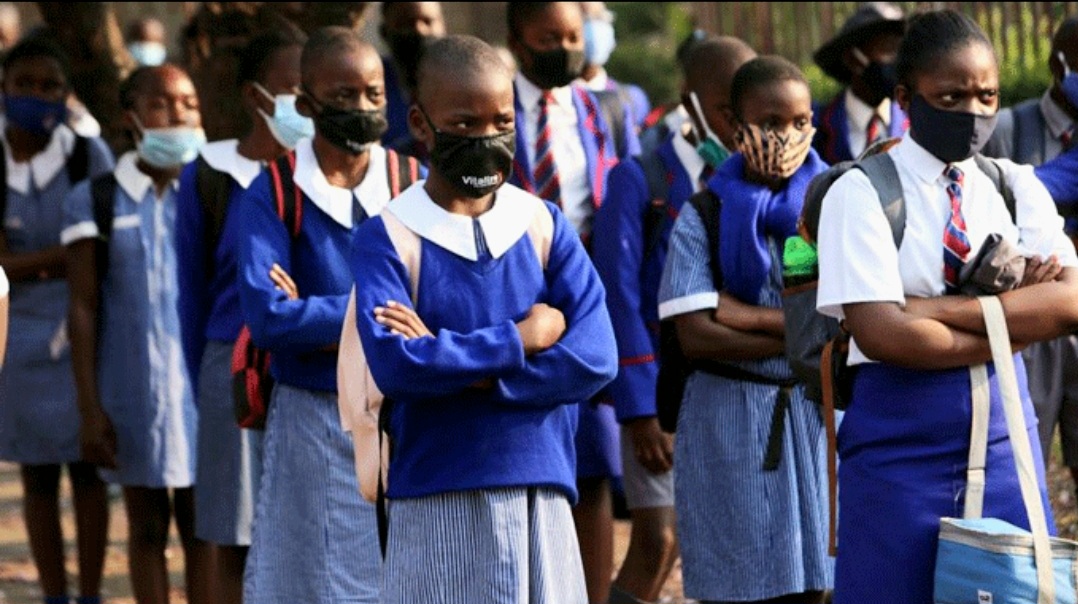
Zimbabwe’s government has confirmed that public schools can legally attach property or hire debt collectors to recover unpaid school fees, marking one of the clearest signs yet of the deepening financial crisis facing the country’s education sector as long-standing promises of universal free education continue to slip further out of reach.
By Advent Shoko
The development comes as schools reopened this week for the second term, forcing many families already struggling with inflation, unemployment and rising living costs to once again confront mounting tuition fees, levies, transport expenses and uniform costs.
For thousands of parents, the start of term has increasingly become a painful exercise in survival — balancing school payments against rent, food and medical bills.
Deputy Minister of Primary and Secondary Education Angeline Gata said schools are legally allowed to pursue unpaid debts through the courts, including attaching property, but stressed that such measures must only be used as an absolute last resort after dialogue, negotiations and payment arrangements have failed.
She said schools are still prohibited from sending children home, victimising learners or withholding examination results because of unpaid fees.
“Schools must exhaust all internal remedies first before taking legal action against defaulting parents,” Gata said, adding that School Development Associations (SDAs), which are legally recognised entities, are expected to act fairly and responsibly when handling disputes involving unpaid fees.
The remarks have triggered fresh national debate over the future of education in Zimbabwe, particularly after repeated government promises that free basic education would gradually become a reality.
In March 2022, President Emmerson Mnangagwa assured Zimbabweans that his administration would begin implementing phased free education from 2023, starting with primary school learners before expanding to other levels over time.
At the time, the President acknowledged that inadequate funding, infrastructure gaps and the high cost of digital learning remained major barriers.
Four years later, however, most public schools continue charging tuition and levies to sustain operations, while many parents say education is becoming increasingly unaffordable.
The growing tensions expose a widening gap between Zimbabwe’s constitutional promises and the realities inside classrooms.
Section 75 of the Constitution guarantees every citizen and permanent resident the right to state-funded basic education, while the Education Amendment Act signed into law in 2020 compels the State to progressively provide free compulsory basic education.
Yet education experts say implementation has been slowed by economic constraints and chronic underfunding.
Schools themselves argue they have been left trapped between government policy and financial survival.
For years, authorities have barred schools from expelling learners over unpaid fees, but administrators say many institutions are drowning in debt because they depend heavily on parental contributions to cover electricity, water, learning materials, maintenance and support staff salaries.
Several schools are also reportedly struggling under unpaid obligations owed by government through the Basic Education Assistance Module (BEAM), the country’s flagship programme designed to support vulnerable and orphaned learners.
Government says nearly two million children benefit from BEAM assistance, which covers tuition and examination fees for disadvantaged pupils.
However, delayed disbursements have repeatedly triggered complaints from schools, some of which say they are failing to maintain basic operations because of outstanding payments.
The strain is increasingly visible across Zimbabwe’s public education system.
According to UNICEF’s Zimbabwe Education Fact Sheet, only 15 percent of children complete upper secondary education, with learners from poorer households facing the highest dropout rates.
The report also found widening inequalities between urban and rural learners, with children from low-income communities significantly less likely to complete their schooling.
Girls remain particularly vulnerable due to poverty, early marriages, teenage pregnancies and domestic pressures that often force them out of classrooms earlier than boys.
Student leaders say the crisis is no longer just about school fees, but about the gradual collapse of equal access to education.
The Zimbabwe National Students Union (ZINASU) this week described the state of education in the country as a “national disaster” and demanded the urgent restoration of free education.
“Education, which was once free in Zimbabwe after independence, a proud achievement of the liberation struggle, has been brutally commodified and turned into a privilege for the children of the elite,” said ZINASU spokesperson Kimberley Timothy Joni.
The union warned that rising fees, levies and hidden school costs were fuelling school dropouts, child marriages, drug abuse and long-term poverty among young people.
“This systematic sabotage of public education is producing a generation of semi-literate youth unprepared for the modern world, deepening poverty, inequality and national underdevelopment,” the union said.
ZINASU also raised concern over overcrowded classrooms, shortages of textbooks and deteriorating teacher morale linked to low salaries and difficult working conditions.
The organisation urged government to abolish school fees, recruit and better motivate teachers, modernise the curriculum and invest more heavily in infrastructure and digital learning systems.
“Free education must be restored by law. Beyond access we demand a quality, competitive and skills-based curriculum that equips young people with critical thinking, innovation, industrial and digital skills,” the union said.
The student body pointed to neighbouring Zambia’s recent legal reforms on free education, arguing that Zimbabwe, once regarded as one of Africa’s strongest education systems, risks losing that reputation permanently if urgent reforms are not implemented.
Government officials, however, maintain that limited fiscal space remains the biggest obstacle.
Former Primary and Secondary Education Minister Evelyn Ndlovu previously admitted that available budget allocations were insufficient to fully finance nationwide free education programmes.
“We wish to do that, to give free education, but it is unfortunate we have US$6.3 million and that is not enough,” Ndlovu said previously.
Education and governance analysts say the latest decision allowing schools to recover debts through legal channels reflects the growing financial desperation facing both schools and families.
While authorities insist learners will remain protected from direct punishment, critics argue that allowing schools to seize property over unpaid fees sends a troubling signal in a country where access to education was once viewed as one of independence Zimbabwe’s proudest social achievements.
For many parents returning children to school this term, the reality is becoming harder to ignore: education may still be recognised as a constitutional right, but for a growing number of Zimbabwean families, it is increasingly becoming a privilege they can no longer afford.
Leave a Reply