
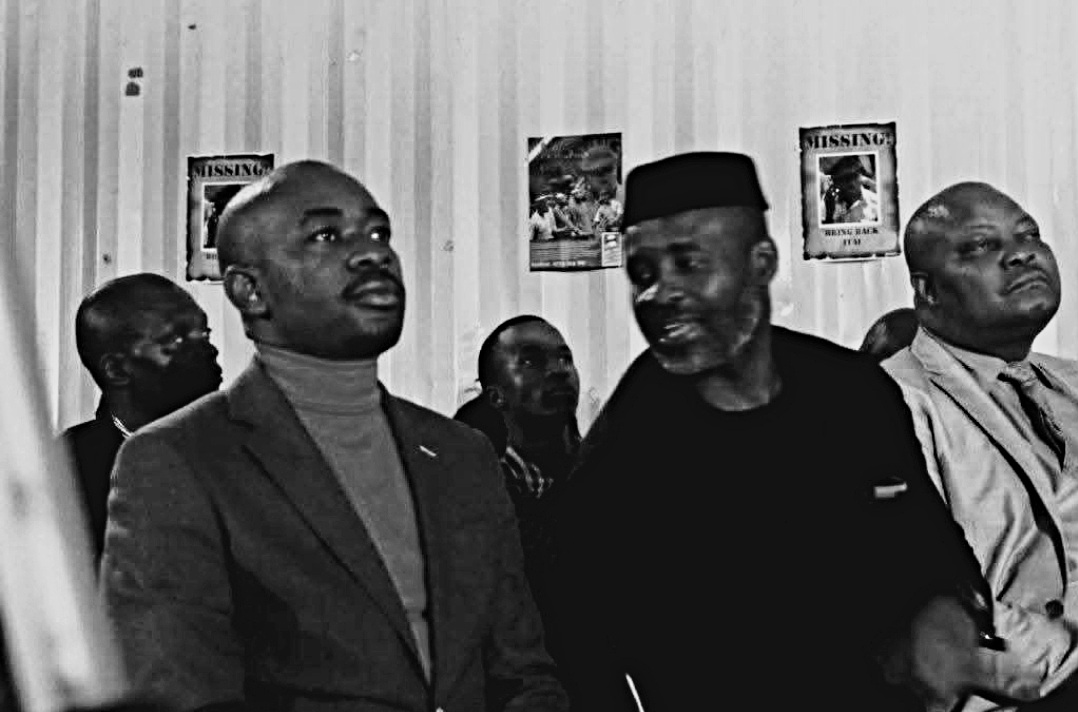
Opposition leader Nelson Chamisa’s earlier remarks on ZANU PF’s Agenda 2030 resolutions have returned to the centre of Zimbabwe’s political debate as discussions intensify around Constitutional Amendment Bill 3 of 2026 (CAB3) and its perceived links to ruling party policy direction.
By Advent Shoko
At the time of the ruling party’s adoption of its 2030 agenda framework, Chamisa drew a firm distinction between party resolutions and national law, arguing that internal party decisions do not automatically become binding on the state.
In his words, Chamisa said:
“Zpf resolutions bind Zpf and her members, not Zimbabwe and her people🇿🇼 #WeThePeople.”
That statement, made in a politically heated environment, was rooted in constitutional principle, that governance authority in Zimbabwe lies with formal state institutions such as Parliament, Cabinet, and the Executive, not political parties.
Why It Matters Now, 30 Weeks Later
The renewed relevance of Chamisa’s remarks lies in the way ruling party resolutions are increasingly being referenced in current legislative and policy discussions, particularly around constitutional amendments and governance direction.
Although party resolutions are not legally binding, Zimbabwe’s political structure means the ruling party’s internal decisions often shape national policy once they are adopted by Cabinet or translated into parliamentary processes.
This creates a recurring governance pattern: party resolutions set political direction, while state institutions formalise implementation. In other words, even a ZANU PF leader or president often becomes the national leader. That has been the case since 1980
It is this overlap that has brought Chamisa’s argument back into focus. On one hand, his statement reflects constitutional clarity, party resolutions do not carry legal force. On the other hand, current developments suggest that in practice, ruling party resolutions can significantly influence the legislative agenda once they pass through government structures.
The Tension Between Law And Politics
The Zimbabwean case highlights a broader feature of dominant-party systems, where the ruling party’s majority control of Parliament and the Executive narrows the practical gap between party policy and state policy.
In such systems, the constitutional separation between party and state remains intact in law, but becomes less distinct in execution.
This is where Chamisa’s earlier argument gains renewed attention. It correctly reflects constitutional theory, but raises questions about how power is exercised in practice when political dominance allows party resolutions to flow into government policy with minimal resistance.
What This Reveals About Power In Zimbabwe
The real issue is not whether party resolutions are legally binding, they are not, but how quickly and effectively they can be translated into national policy when aligned with governing structures.
It also exposes a deeper political reality: in systems where one party dominates the state, constitutional boundaries often depend not only on law, but on political configuration and institutional alignment.
Chamisa’s statement on Agenda 2030 remains valid in constitutional terms. However, current developments around CAB3 and broader governance debates demonstrate why it continues to resonate, it captures the tension between what the law says and how political power operates in practice.
In essence, the debate is no longer about whether party resolutions bind the state, but about how far they travel once they enter the machinery of government.
Leave a Reply