
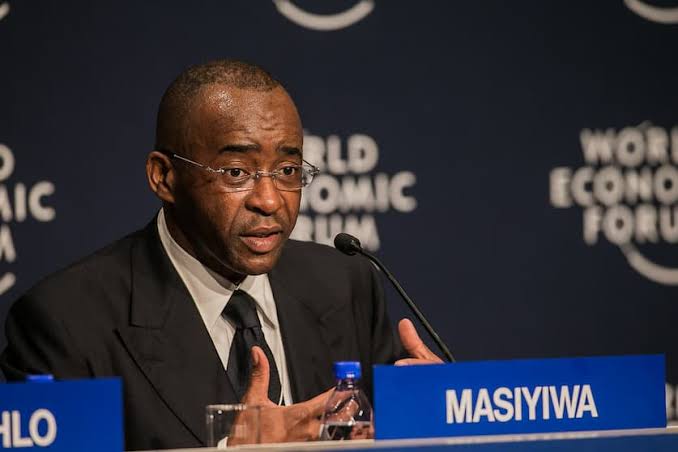
By Advent Shoko | ZiGoats
Zimbabwe has been challenged to address its investment climate and create conditions that encourage major investors to commit capital locally, following reports that billionaire businessman Strive Masiyiwa’s Cassava Technologies is seeking up to US$1 billion to expand artificial intelligence infrastructure across Africa.
The fundraising effort reported by Bloomberg, reportedly targeting investors in the Middle East and the United States, would help the technology group acquire advanced processors from American chipmaker Nvidia for its growing network of AI data centres.
According to Bloomberg, people familiar with the discussions said Cassava is engaging potential investors, although no final financing agreement has been announced.
The proposed capital raise comes as competition intensifies globally to secure the computing power needed to develop and operate artificial intelligence systems.
Cassava is already implementing a US$720 million programme to deploy 12,000 Nvidia graphics processing units (GPUs) across several African markets. Its first AI factory in Cape Town is operational, with further facilities planned for Johannesburg, Egypt, Kenya, Morocco and Nigeria.
The expansion places Cassava among the companies seeking to position Africa as a more competitive player in the global AI economy.
Beyond the technology investment, however, the development has reignited debate about why major Zimbabwean businesspeople increasingly pursue opportunities outside their home country.
Zimbabwean journalist Hopewell Chin’ono argued that the proposed investment could attract funding from ordinary Africans if its commercial potential and expected returns were properly communicated.
“This could be raised easily from ordinary Africans. All they need to do is explain the growth of the investment!” Chin’ono said.
His comments point to the potential for African capital to finance large-scale technology projects rather than relying exclusively on international investors.
However, another commentator argued that the bigger question was not why Masiyiwa was investing elsewhere, but what Zimbabwe needed to change to attract investments of similar scale.
The commentator noted that investment decisions are driven by commercial considerations, including market opportunities, policy consistency, currency stability and confidence in institutions.
“Capital follows confidence, stability and returns,” the commentator observed.
The argument highlights the challenges Zimbabwe faces in attracting long-term investment, particularly in capital-intensive industries such as artificial intelligence, telecommunications and digital infrastructure.
While Zimbabwe has a relatively educated workforce, a growing technology community and significant demand for digital services, investors also assess the predictability of government policies, currency risks, regulatory certainty and the ability to repatriate profits.
For AI infrastructure developers, the requirements go even further.
Large-scale data centres need reliable electricity, high-speed Internet connectivity, advanced cooling systems, substantial land and access to expensive computing equipment. They also require long-term financing and predictable operating conditions.
These factors make the investment environment particularly important because infrastructure projects often take years to recover their initial costs.
Cassava’s expansion also demonstrates how African countries are competing to attract strategic technology investments that could support financial services, healthcare, manufacturing, agriculture and public administration.
AI computing infrastructure can reduce dependence on overseas processing facilities, improve access to advanced digital services and create opportunities for local businesses to develop their own AI applications.
Masiyiwa, who built his business empire through Econet Wireless before expanding into telecommunications and digital infrastructure, has increasingly positioned Cassava as a pan-African technology group.
Its businesses include Liquid Intelligent Technologies, which operates fibre and connectivity networks, Africa Data Centres and Liquid C2, which provides cloud and cybersecurity services.
Google and Nvidia are also among Cassava’s investors, strengthening its connections to the global technology industry.
For Zimbabwe, the wider significance of the proposed US$1 billion fundraising exercise extends beyond one billionaire’s investment decisions.
The country must compete with established and emerging African investment destinations, including South Africa, Kenya, Egypt, Morocco and Nigeria, which are positioning themselves to capture opportunities in the digital economy.
The experience of Nigerian billionaire Aliko Dangote has also featured in discussions about Zimbabwe’s ability to attract large-scale investment. His reported interest in opportunities in the country generated considerable public attention, although attracting investor interest is only the first step towards securing actual projects.
Zimbabwe needs more than investment conferences, political assurances and announcements. It needs consistent policies, credible institutions, reliable infrastructure and a regulatory environment that gives investors confidence to commit capital over the long term.
Masiyiwa cannot be expected to invest billions in Zimbabwe simply because he was born there. Like other businesspeople, he must consider where capital can generate sustainable returns while managing risk.
The more important question for policymakers is whether Zimbabwe can create conditions that make investing at home as commercially attractive as investing elsewhere in Africa.
As the global race for artificial intelligence infrastructure accelerates, countries that provide the right environment today could secure investments, jobs, technology transfer and economic opportunities for decades.
Zimbabwe risks missing that opportunity if it fails to turn its investment ambitions into an environment that gives businesses the confidence to build and grow.
Leave a Reply