
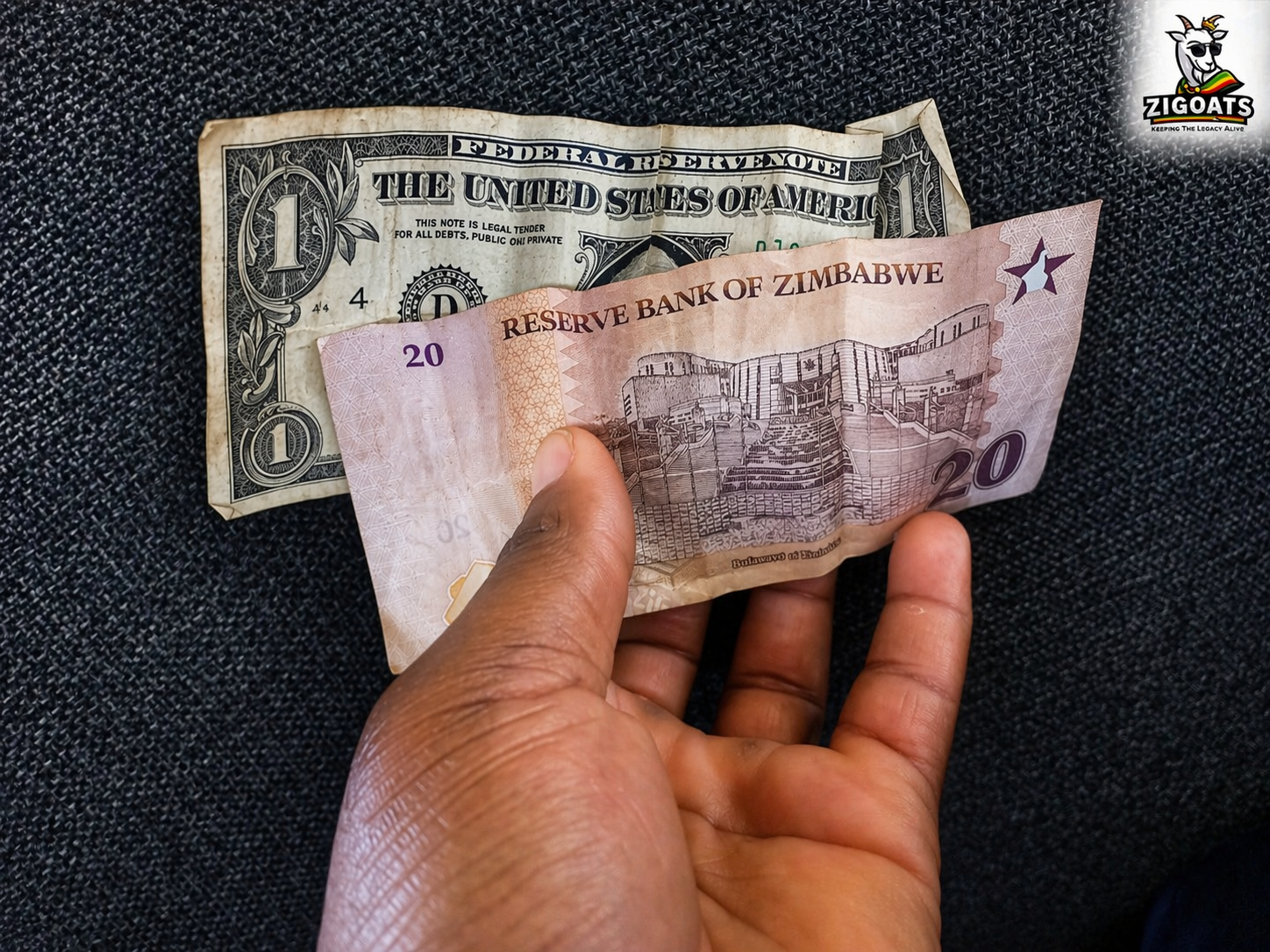
HARARE – Zimbabwe’s central bank (RBZ) has made a striking admission: the Zimbabwe Gold (ZiG) currency is significantly undervalued, but weak market confidence continues to hold it back.
By Advent Shoko
Reserve Bank Governor John Mushayavanhu says the ZiG should be trading at around 1:15 against the US dollar, far stronger than the current official rate of about 1:25. He said:
“If we wanted to buy back all the local currency in circulation using our reserves, we could do so at an exchange rate of around 15 to the dollar.”
ZiG Fundamentals Strong – But Market Not Convinced
The ZiG, introduced in April 2024, was designed as a gold-backed currency to stabilise Zimbabwe’s economy after years of volatility.
According to the Reserve Bank of Zimbabwe, key fundamentals have improved:
- Foreign currency reserves rose from US$276 million to US$1.2 billion between April 2024 and December 2025
- Gold reserves reached 3.4 metric tonnes
- Inflation has eased to single digits
On paper, these indicators suggest a stronger currency.
But in reality, the market remains cautious.
“We Had Lost It” – Confidence Still Fragile
Mushayavanhu acknowledged that the gap between the official rate and the perceived value of the ZiG is largely driven by trust issues. He said:
“It’s a function of the confidence of the market in the central bank, and we’re still trying to rebuild that confidence.
We had lost it and we’re trying to rebuild it.”
This lack of confidence continues to shape behaviour across the economy.
US Dollar Still Dominates Zimbabwe’s Economy
Despite policy efforts, the US dollar remains the dominant currency in everyday transactions.
Data from the Confederation of Zimbabwe Industries (CZI) shows that more than 90% of transactions are still conducted in US dollars, reflecting deep-rooted scepticism toward the local currency.
The International Monetary Fund (IMF) has also flagged concerns, warning that the exchange rate remains heavily managed through central bank interventions.
What This Means for Zimbabweans
For businesses and households, the disconnect is clear:
- Official exchange rates suggest stability
- Market behaviour signals caution
This creates uncertainty in pricing, wages, and savings, with many preferring to hold value in US dollars rather than ZiG.
Until confidence fully returns, the ZiG’s true strength may remain theoretical rather than practical.
What should the ZiG exchange rate be?
The Reserve Bank of Zimbabwe says the ZiG should trade at around 1:15 to the US dollar, but currently trades closer to 1:25 due to low market confidence.
Leave a Reply