
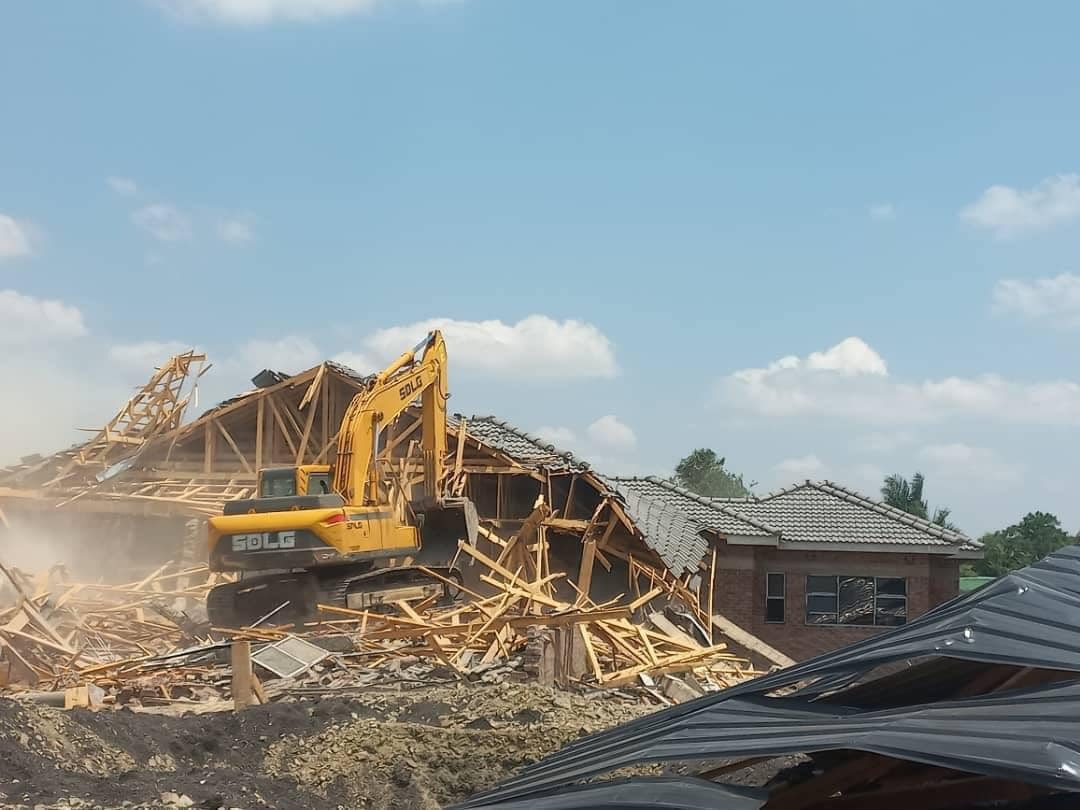
HARARE – The City of Harare has clarified that not all illegal settlements and structures across the capital will be regularised, warning that developments built on wetlands, school sites, recreational land and low-density areas targeted by land barons will continue to face demolition. This comes as the father’s this week demolished homes built on a disputed 20-hectare piece of land in Stoneridge in Harare South reportedly owned by a Chinese national.
The demolitions left many families homeless, with women, children, war veterans and youths among those affected. Many residents watched helplessly as bulldozers razed down their homes, leaving them stranded in the open with no immediate alternative accommodation.
By Advent Shoko
The city’s position comes amid growing expectations among some settlers that government efforts to regularise dysfunctional settlements could eventually legitimise all illegal developments.
In a detailed update on the regularisation programme, Harare City Council said the exercise is being carried out in line with the government’s National Human Settlement Policy and the National Development Strategy 1 (NDS1), but stressed that only settlements meeting planning and development requirements will qualify.
“The settlements considered for regularisation are unique and a one-size-fits-all approach would not apply as regularisation processes differ from settlement to settlement,” council said.
To implement the programme, council established a Regularisation Steering Committee and a Regularisation Task Force, which developed standard operating procedures and assessment criteria after authorities identified the absence of a clear framework for handling such cases.
Who Qualifies?
According to council, the regularisation programme is mainly targeting settlements where residents occupy land that was legally allocated but where development processes remain incomplete.
These include housing cooperatives and pay schemes that received land from either council or the State but failed to fully comply with infrastructure development requirements.
Also under consideration are partially developed private housing projects that possess valid development permits but have not yet received certificates of compliance. Many of these developments are not contributing property taxes or service charges because they remain outside council’s billing system.
Council is also considering regularising some occupants of council and State infill stands that are not yet captured in municipal records, as well as certain high-density settlements where land invasions occurred on properly planned layouts.
Officials argue that bringing qualifying settlements into the formal system will improve urban planning while allowing council to collect rates and service charges from properties that currently generate no revenue.
Who Does Not Qualify?
However, council drew a firm line on developments it considers unlawful and unsuitable for regularisation.
“The regularisation exercise exempted all settlements on environmentally sensitive areas such as wetlands and heritage sites usurped by illegal developments,” the city said.
Developments built on land reserved for schools and recreational facilities will also not be regularised.
Council further ruled out regularisation of settlements involved in ongoing court disputes, as well as any new invasions that occurred after the cut-off date of 24 September 2023.
Most significantly, Harare said all land invasions in low-density suburbs remain excluded from the programme.
Crackdown on Land Barons
City officials accused land barons of exploiting housing cooperatives and pay schemes to facilitate illegal occupation of land, particularly in medium- and low-density areas.
Authorities said a new trend has emerged in which invaders occupy land during weekends or overnight, erecting structures quickly and moving people into them in an attempt to frustrate demolition efforts.
“Council shall not regularise invasion of land in low-density areas by land barons under the disguise of housing cooperatives and pay schemes,” the city warned.
The council said organised land invasions intensified around August 2023, allegedly involving politically connected individuals, land barons and groups seeking to benefit from expectations that future regularisation programmes would legitimise illegal occupation.
In some cases, the city said invaders have occupied land already allocated, leased or sold to lawful beneficiaries who were still complying with infrastructure development requirements before taking possession.
Fake Documents Raise Alarm
The municipality also raised concerns about the growing use of fraudulent documents in land transactions.
According to council, some land invaders are presenting forged offer letters, fake agreements of sale and counterfeit title deeds, particularly in medium- and low-density residential areas.
“All fake documents are being reported to the Zimbabwe Republic Police,” council said.
Authorities warned that possession of fraudulent paperwork will not protect illegal developments from demolition.
Demolitions to Continue
Harare City Council said it will continue mapping areas eligible for regularisation under the Regional, Town and Country Planning Act while simultaneously pursuing demolitions in areas that do not qualify.
Officials insist the objective is to restore order to urban development while protecting critical public land and environmentally sensitive areas from unlawful occupation.
“Council shall continue to deal decisively with all invasions and illegal developments without fear or favour,” the city said.
The warning sends a strong signal to prospective land buyers and settlers that regularisation should not be viewed as a guarantee of ownership.
For thousands of residents living in unapproved settlements across Harare, the message is clear: only developments that satisfy planning requirements and fall within the approved framework stand a chance of being regularised. For everyone else, the threat of demolition remains very real.
Leave a Reply