
By Advent Shoko
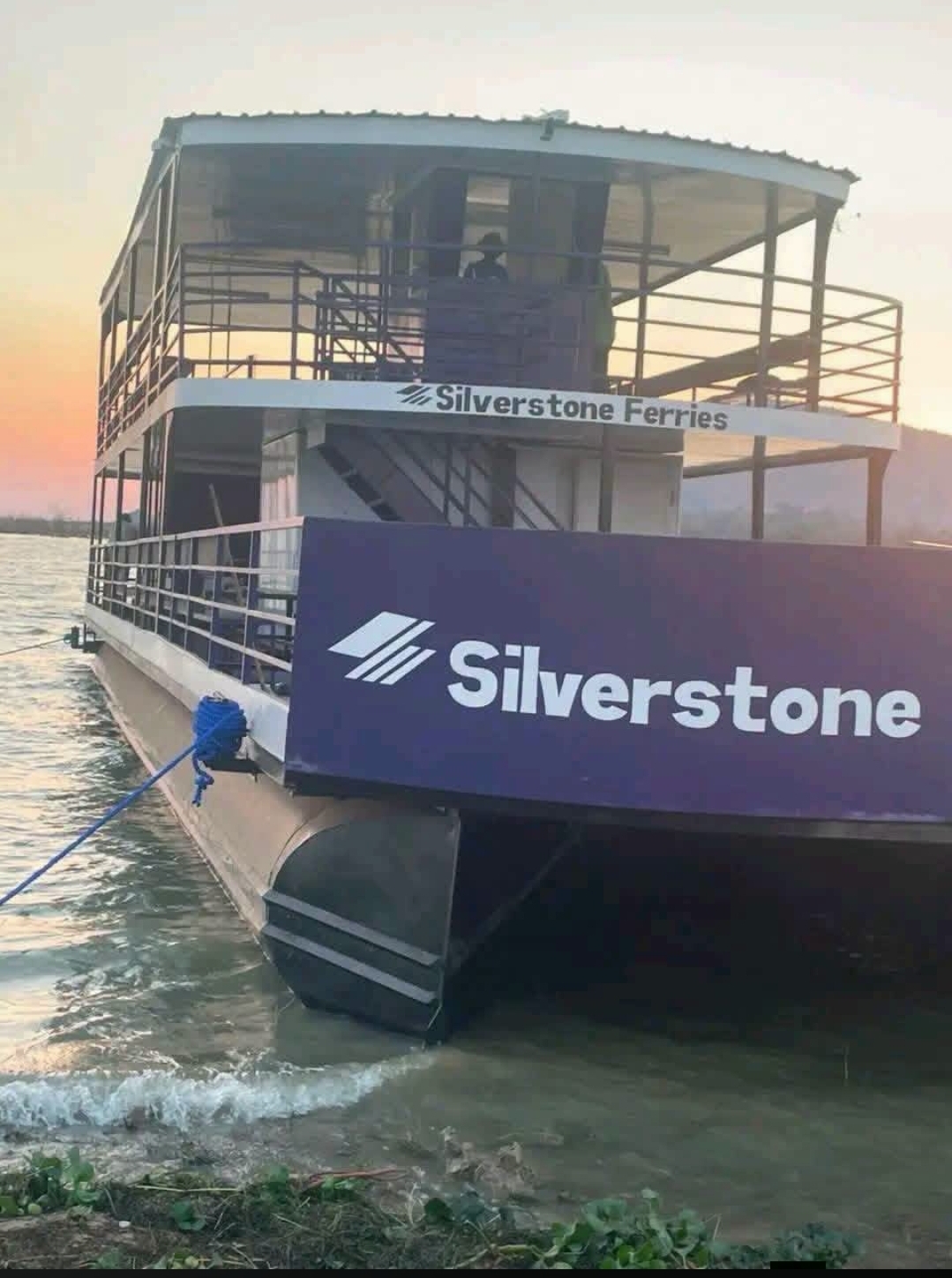
HARARE, Zimbabwe — A new ferry has been introduced on the Chalala–Kariba route, days after the Lake Kariba boat disaster that has killed at least 97 people and exposed serious concerns about passenger safety, overcrowding and transport access in Zimbabwe’s remote lakeside communities.
The new vessel can carry approximately 90 passengers and up to six tonnes of fish, along with 300 blocks of ice and Matemba, reflecting the route’s importance not only to passengers but also to fishing communities whose livelihoods depend on transport across the lake.
The vessel is powered by a 275-horsepower main engine and has been built on three pontoons, a design intended to improve stability on the often-choppy waters of Lake Kariba.
Its introduction comes as the country continues to grapple with the worst maritime disaster in its history.
New ferry brings major safety upgrades
According to details released on the new vessel, safety equipment includes 115 life jackets, 10 life rings, two life rafts capable of carrying about 20 people each, and two tender boats powered by 70HP engines.
The ferry also has a 175HP Suzuki engine as additional backup propulsion.
The combination of multiple propulsion systems, flotation equipment and rescue craft is expected to provide greater redundancy in the event of an engine failure or emergency.
“The vessel is powered by a 275HP main engine and built on three pontoons for improved stability,” details on the new ferry state.
The vessel’s safety equipment includes “115 life jackets, 10 life rings, two life rafts carrying about 20 people each and two tender boats powered by 70HP engines.”
The introduction is already receiving close attention from communities who rely on the route following the August 11 disaster involving the government-operated Mbuya Nehanda.
Lake Kariba disaster: what happened?
The Mbuya Nehanda capsized on August 11, 2026, while travelling from Kariba towards Chalala and surrounding fishing communities.
The ferry was officially authorised to carry 90 passengers, but investigations have produced increasingly higher estimates of the number of people aboard.
Initial information put the number of passengers at 90, before authorities confirmed 114 adult passengers and five crew members, with children below ticketing age not included in the ticket records.
Later estimates put the total number aboard at around 153, while the government subsequently said preliminary investigations indicated the figure could have been as high as 180 people, including goods.
The discrepancy has become one of the major issues surrounding the disaster and is expected to form part of the government’s investigation.
The ferry capsized after encountering strong waves on Lake Kariba. Survivors also reported that the vessel began taking on water and that passengers raised concerns about the conditions before the accident.
Death toll reaches 97
The tragedy has become Zimbabwe’s deadliest transport disaster.
Police reported 97 deaths by August 20, surpassing the 89 people killed in Zimbabwe’s 1991 bus disaster. 77 people were rescued, while search and recovery operations continued.
At least 18 children were among those who died, according to earlier police updates, with several of the victims aged below 10.
President Emmerson Mnangagwa declared the incident a national disaster, allowing government agencies to mobilise resources for rescue, recovery and support for affected families.
The scale of the tragedy has also triggered calls for a wider investigation into the operation and regulation of passenger vessels on Zimbabwe’s inland waterways.
Zimbabwe Lawyers for Human Rights has called for an independent investigation that goes beyond the vessel operator to examine the role of regulators and other public institutions responsible for maritime safety.
Why the Chalala route matters
The Chalala–Kariba route is more than a ferry crossing.
For communities scattered around Lake Kariba, water transport is often the most practical connection to Kariba town, where people access markets, healthcare, education, government services and other necessities.
The lake is vast, stretching for more than 200 kilometres and reaching around 40 kilometres at its widest points. It is shared by Zimbabwe and Zambia and is one of the world’s largest man-made reservoirs by volume.
Poor roads and limited alternative public transport have made ferries a lifeline for communities along the shoreline.
That dependence partly explains why overcrowding became such a serious issue aboard the Mbuya Nehanda.
Can the new ferry restore confidence?
The new vessel’s specifications suggest a significant focus on safety.
Its three-pontoon construction, 115 life jackets, two life rafts, two tender boats and backup engine provide several layers of protection that passengers can rely on during an emergency.
But equipment alone will not solve the problems exposed by the disaster.
The most important test will be whether the 90-passenger limit is strictly enforced, whether weather conditions are properly assessed before departure and whether vessels are maintained and operated in line with safety regulations.
The Lake Kariba investigation is expected to examine precisely those questions, including possible overloading, navigation decisions and compliance with weather advisories.
A new beginning after a national tragedy
For families who lost loved ones on the Mbuya Nehanda, the arrival of another ferry cannot undo the devastation.
The new vessel therefore arrives with an enormous responsibility: to demonstrate that passenger safety can come before cargo, convenience and pressure to complete a journey.
After the country’s worst maritime disaster, the message from the lake communities is simple — they need transport, but they need to arrive alive.
Leave a Reply