
By Advent Shoko
HARARE — Zimbabwean football has finally regained its home. The National Sports Stadium in Harare has been granted Confederation of African Football (CAF) Category 3 approval, clearing the way for the country to host a wide range of international matches on home soil.
The approval, announced by the Ministry of Sport, Recreation, Arts and Culture, follows a recent CAF technical inspection and progress on priority rehabilitation works at the stadium.
It marks a major turnaround for Zimbabwe, which has spent years playing international home fixtures outside the country after its main stadiums failed to meet CAF requirements. The National Sports Stadium had been unavailable for CAF-sanctioned international football since 2021, forcing the Warriors and Zimbabwean clubs to use venues in neighbouring countries.
What CAF Category 3 approval means
The new status gives Zimbabwe considerably more options when hosting continental and international football.
According to the ministry, the National Sports Stadium can now host, subject to the specific requirements of individual competitions:
- CAF Champions League group-stage and quarter-final matches;
- CAF Confederation Cup group-stage and quarter-final matches;
- Africa Cup of Nations qualifiers;
- FIFA World Cup qualifiers; and
- Other competitions permitted at Category 3 venues.
The approval does not mean every competition or fixture is automatically guaranteed to be played at the stadium. Each tournament remains subject to CAF’s specific operational and technical requirements.
For Zimbabwean football, however, the significance is difficult to overstate.
The country can once again offer its national teams and eligible clubs a genuine home venue instead of travelling across borders for supposedly home matches.
Government welcomes major stadium breakthrough
Sport, Recreation, Arts and Culture Minister Lt Gen (Rtd) Anselem Nhamo Sanyatwe said the approval reflected sustained efforts by Government and the Zimbabwe Football Association (ZIFA) to restore the country’s flagship football venue.
The ministry said CAF had acknowledged the work undertaken by Zimbabwean authorities and encouraged the country to maintain momentum while completing outstanding priority works.
“This milestone is a direct reflection of the concerted and deliberate efforts made by the Government of Zimbabwe, through the Ministry of Sport, Recreation, Arts and Culture, to restore the National Sports Stadium to its rightful position as the country’s premier footballing venue,” the ministry said.
The Government said the rehabilitation programme is aligned with its broader plans under the National Development Strategy 2 and Vision 2030 to develop modern, functional and sustainable sporting infrastructure.
Sakunda support credited
The ministry also singled out Sakunda Holdings, owned by oil mogul Kudakwashe Tagwirei and wife Sandra, for its contribution to the stadium’s rehabilitation.
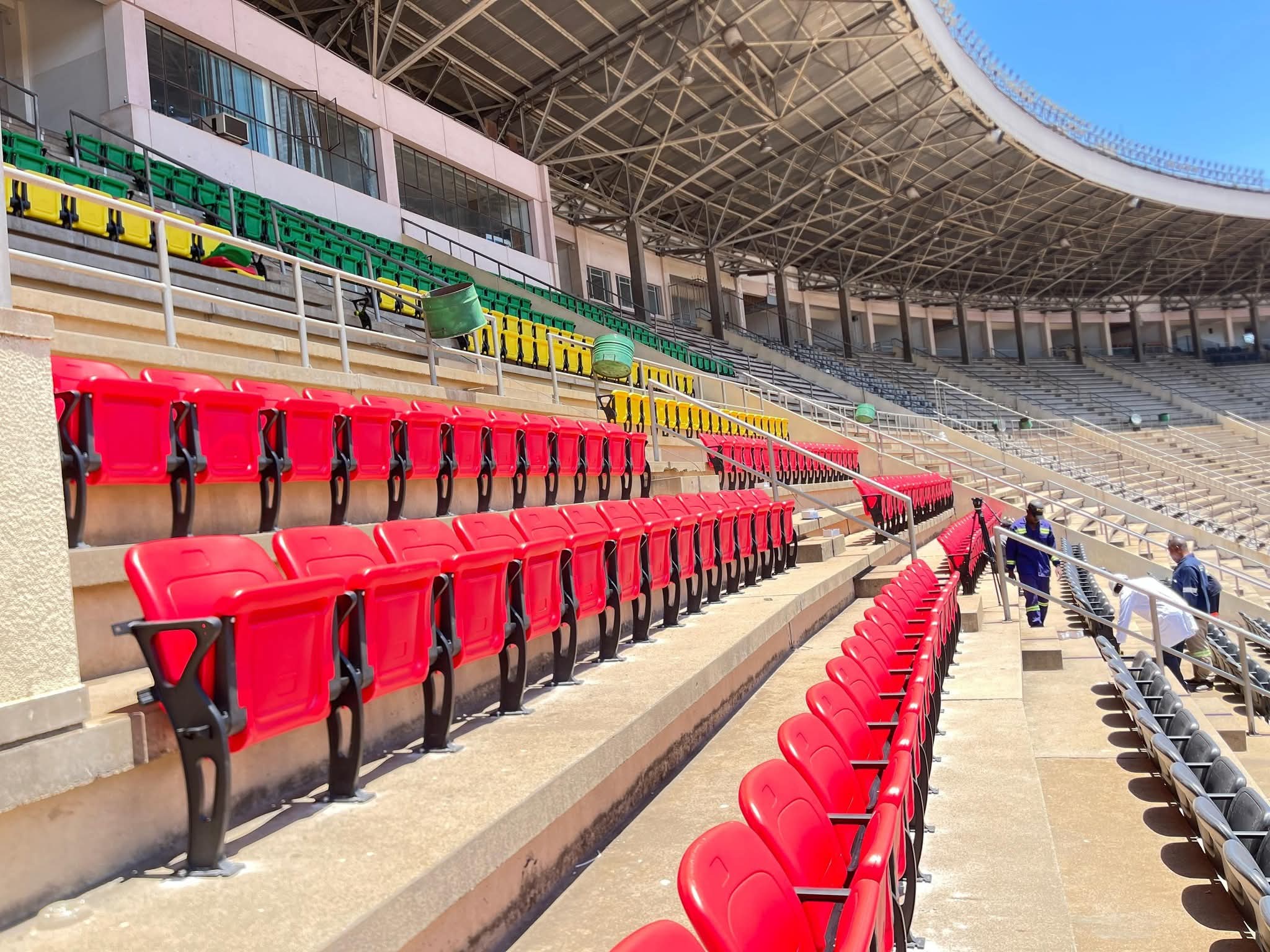
The company supported the modernisation of the playing surface and installation of bucket seats, two of the visible changes at the 60,000-seater Harare venue.
Sakunda handed the refurbished stadium back to Government in May following an extensive rehabilitation programme carried out under a public-private partnership. The works included improvements to the pitch, technical areas, players’ facilities and spectator infrastructure.
The ministry said the partnership demonstrated how private-sector involvement could complement Government investment in major national infrastructure.
ZIFA welcomes return of home advantage
The Zimbabwe Football Association has also been central to the approval process, providing technical support and working with Government to address CAF’s requirements.
For ZIFA, the return of the National Sports Stadium is more than an infrastructure milestone.
It could restore the emotional and financial benefits of playing international football in front of Zimbabwean supporters.
Zimbabwe’s national teams have had to travel abroad for home fixtures during the stadium crisis, depriving supporters of the chance to watch major competitive matches in Harare while adding logistical and financial pressures to the national game.
The approval also comes at an important time for Zimbabwean clubs.
Scottland, the 2026 Premier Soccer League champions, had previously identified the National Sports Stadium as its preferred venue for its CAF Champions League preliminary-round campaign, although the club had to keep a foreign venue as a fallback while approval remained uncertain.
Warriors set for homecoming
The biggest immediate beneficiary could be the Warriors, who have been without a reliable CAF-approved home venue for competitive international football.
The timing of the approval is particularly significant with the next Africa Cup of Nations qualifying campaign approaching.
Zimbabwe is expected to host the Democratic Republic of Congo in a 2028 AFCON qualifier, subject to CAF confirmation and the specific requirements for the fixture.
For supporters who have watched the national team operate in exile, the prospect of seeing the Warriors walk out at the National Sports Stadium again carries enormous significance.
The stadium has long been the symbolic home of Zimbabwean football. Its return gives the Warriors something they have badly missed in recent years: home advantage.
A long road back
The approval closes an important chapter in Zimbabwe’s prolonged stadium crisis, but it also comes with a responsibility to maintain the facility.
CAF’s decision follows years of concerns over stadium infrastructure and compliance. Zimbabwe’s failure to meet international standards resulted in national teams and clubs having to stage home matches outside the country.
The ministry said CAF had encouraged Zimbabwe to maintain the positive momentum and complete remaining priority works.
That means the latest approval should be viewed not as the end of the rehabilitation process, but as a major step towards establishing the National Sports Stadium as a consistently compliant international venue.
Ministry calls for national support
Sanyatwe’s ministry has now urged football supporters, businesses, sporting organisations and the media to help protect the facility and create an environment where international football can thrive.
“Let us fill our stadiums, support our Warriors and our clubs, protect and take pride in our sporting infrastructure, and collectively contribute to creating an environment in which international football can thrive in Zimbabwe,” the ministry said.
After years of watching Zimbabwe’s biggest football matches played on foreign soil, the message is simple: international football is coming home.
And for the Warriors, their supporters and Zimbabwean clubs chasing continental glory, Harare’s National Sports Stadium is home once again.
Leave a Reply