
By Advent Shoko
HARARE — Thousands of property owners across the capital could face enforcement action after the City of Harare reaffirmed that structures built after 24 September 2023 will not qualify for regularisation.
The warning has reignited fears among residents living in disputed settlements, while the council steps up its campaign against illegal land occupations and unapproved developments.
In a statement seen by Zigoats.com, the City of Harare said it was preparing to verify developments on Council, State and privately owned land and would enforce planning laws where illegal activities are confirmed.
The council also moved to distance itself from a document circulating on social media outlining proposed regularisation and demolitions, saying the document was an old internal working draft first circulated in May 2025.
“It is an old document that was circulated in May 2025 and was redistributed again early this year,” the council said.
The authority said the document was a preliminary administrative working paper and its circulation did not represent a final public demolition programme.
However, the council’s latest statement makes clear that enforcement against illegal developments remains firmly on the table.
The September 2023 Cut-off
At the centre of the announcement is the 24 September 2023 cut-off date.
The council said properties that meet its regularisation framework may still be considered, but new land invasions and illegal developments created after that date will not qualify.
“Regularizations of properties that meet the Regularisation Framework, cut off date remains the 24th of September 2023 and any land invasions and illegal developments done after that date will not be considered for regularisation,” the council said.
Such developments could instead face enforcement action.
The council has previously said that settlements can only be regularised where planning requirements can be met. Structures occupying land reserved for schools, roads, recreation, wetlands and other public purposes can face removal because the land has a different designated use.
St Martins Demolitions Brings Issue Into Focus
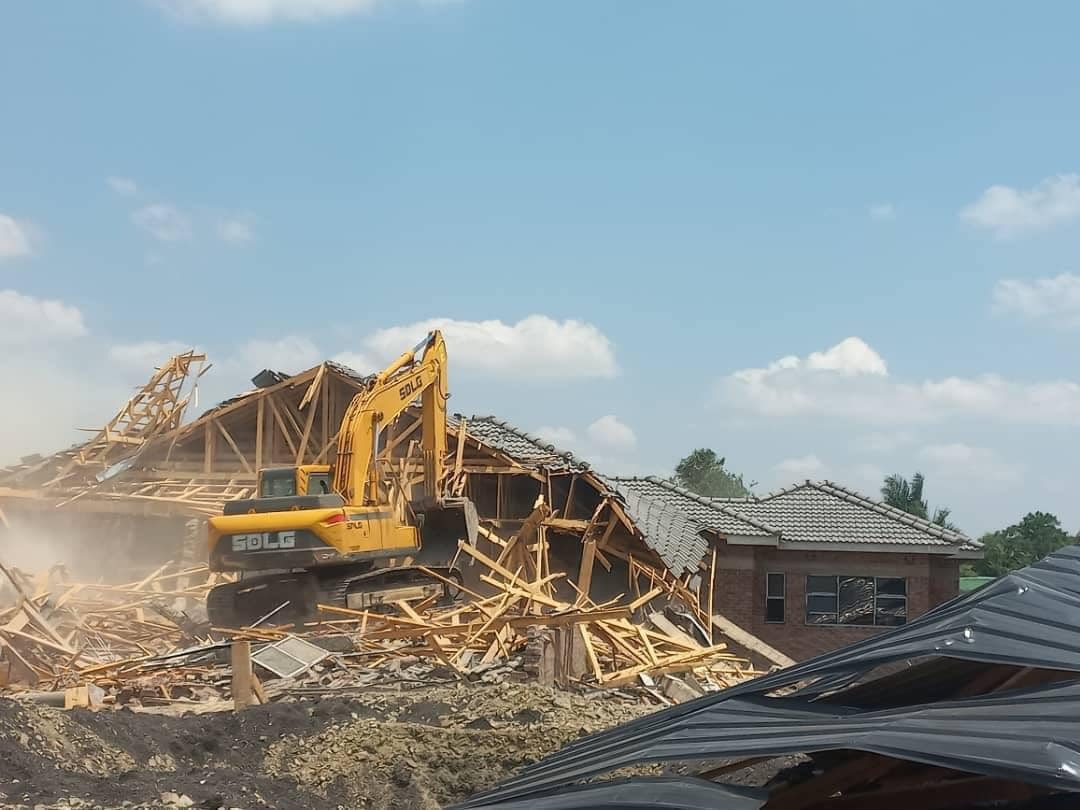
The announcement comes days after Harare authorities demolished houses and other structures in St Martins Extension along Airport Road, near 1 Commando Barracks.
The August operation left affected families collecting belongings from demolished homes and prompted renewed debate over land ownership, planning approvals and the handling of disputed housing schemes.
Some affected residents have since sought answers from council, with reports that residents were camping at council offices following the demolitions.
Harare Mayor Jacob Mafume said residents with approved building plans should produce their documents when enforcement teams conduct inspections.
“Those who have approved building plans need to produce them when enforcement is being done. It is very clear; this is how the law is followed,” Mafume said.
The St Martins operation has also generated political and legal controversy, with Harare South legislator Trymore Kanopula criticising the demolitions and questioning whether proper court processes were followed.
Harare Faces A Wider Demolition Crackdown
St Martins is only one part of a much bigger problem.
Recent council-related reports indicate that Harare has identified 167 sites and structures for enforcement, spanning residential areas, wetlands, school sites, open spaces, road reserves and other land earmarked for public purposes.
The city has also previously reported holding 37 High Court orders covering the removal of thousands of illegal structures in high-density suburbs.
The areas mentioned in recent reports include Kuwadzana, Budiriro, Glen View, Mabvuku, Mabelreign, Greendale, Amby, Glen Norah, Crowborough and Hopley, among others.
The scale of the planned enforcement has raised concern because many of the affected structures are homes where families have invested years of savings.
For the authorities, however, the issue goes beyond individual houses.
The Land Baron Problem
Harare has repeatedly blamed illegal land dealers and land barons for exploiting desperate home-seekers by selling stands on land they do not legally control.
The council has warned residents against accepting offer letters, agreements of sale or other documents from unauthorised individuals without independently verifying the land with council.
The problem is compounded by reports of allegedly forged or improperly issued documents, leaving some buyers believing they have legally acquired land when they may have no recognised planning rights.
Council officials have previously argued that allowing every illegal development to be regularised would encourage further invasions.
City spokesperson Stanley Gama has put the council’s position bluntly:
“We will not regularise where it is impossible to regularise. Land meant for a school will have to be used to build a school.”
What Residents Should Do
The latest council warning effectively puts home-seekers and property owners on notice: do not assume that an existing structure will eventually be regularised.
The City said anyone dealing with land in Harare should first obtain accurate information from its Housing Director’s Office, Director of Planning or relevant District Office.
“All our stakeholders and clients are strongly advised to refrain from engaging in illegal land activities, including the acquisition of land from unauthorised individuals and the unlawful occupation of Council, State and private land,” the council said.
This means prospective buyers should verify ownership, planning status, approved layouts and development rights before paying for land or starting construction.
Leave a Reply