
By Advent Shoko | ZiGoats
The blame game over Zimbabwe’s worst Lake Kariba ferry disaster has intensified after Local Government and Public Works Minister Daniel Garwe blamed the dead captain for sailing into dangerous weather, while former Mt Pleasant MP Fadzayi Mahere accused the Government of trying to escape responsibility for a disaster rooted in failed systems.
The ferry capsized on Lake Kariba on 11 August 2026, carrying far more people than its authorised capacity.
The tragedy has raised explosive questions over passenger safety, overcrowding, the age and condition of the ferry, emergency preparedness and the Government’s oversight of a vital transport route serving communities around Kariba.
Garwe blames captain for fatal journey
Speaking during Tuesday’s post-Cabinet media briefing, Garwe said the captain, Sign Patsikadova, ignored warnings from the Meteorological Services Department (MSD) not to sail because strong waves were developing on the Binga side of the lake.
“We are advised that the Meteorological Department advised sailors to stop all sailing on the fateful day because some strong waves were developing on the Binga side,” Garwe said.
“The boat captain for this specific boat disregarded those early warning messages and proceeded with the journey.”
Garwe also said the ferry was designed to carry about 90 people but was carrying substantially more.
“We are advised the carrying capacity of that boat was about 90,” he said.
Garwe said the Government’s figures showed 93 deaths and 77 survivors, while some families were still reporting missing relatives.
He said the numbers indicated that the ferry had been overloaded, describing the situation as contrary to transport regulations.
But survivor accounts suggest the problems began before the ferry even left harbour.
Survivors say captain was warned
Survivor Itai Marumisa said passengers became concerned when a battery and inverter fell into the water while they were boarding.
According to Marumisa, passengers asked for the journey to be postponed, but Patsikadova allegedly told them he had worked on Lake Kariba for many years and expected the wind to settle.
He then reportedly prayed before proceeding.
Another survivor, Friday Munenga of Dobe Village in Mola, said passengers continued raising concerns after the ferry had left the harbour.
“We left the harbour and before long we highlighted to the captain that the conditions were not suitable for us to continue with the journey,” Munenga said.
“We suggested that we dock at a nearby island, but he insisted on continuing with the journey, saying that he had traversed the lake for many years.”
Survivors also told ZBC that Patsikadova allegedly reassured passengers that the ferry would not sink.
He reportedly told them: “DDF does not drown.”
DDF refers to the former District Development Fund, the predecessor of the Rural Infrastructure Development Agency (RIDA), which owns the ferry.
Mahere rejects Government’s version
Mahere, a former Mt Pleasant MP, has strongly rejected Garwe’s attempt to place primary responsibility on the captain.
She argued that the disaster exposed deeper failures within Government systems, including transport infrastructure, ferry safety, emergency response and oversight.
“I am disgusted by Minister Garwe’s attempt to shift blame to the Captain of the Kariba Ferry. The Captain did not cause that accident. The Govt’s broken systems did,” Mahere said.
She questioned why communities dependent on the ferry did not have alternative transport options.
“No community overloads a public ferry for fun. It’s a mark of desperation because there’s no other mode of transportation available,” she said.
Mahere asked why there were not multiple public ferries operating on the route, why roads serving the communities remained inadequate and why a bridge had not been constructed.
She also questioned the ferry’s safety standards.
“What safety protocols govern the ferry? Why were there inadequate lifejackets on the boat?” she asked.
Mahere further questioned crew training, emergency response, the absence of lifeguards and the time taken for emergency teams to reach the disaster scene.
Questions over ferry’s age and condition
Mahere also challenged Government claims about the condition of the ferry.
“How can he say the ferry was ‘fit’? When was it last serviced? Has he seen the pictures of it?” she asked.
She alleged that the ferry was a donation from the Belgian Government in the 1980s and questioned why a newer vessel had not been procured.
Her criticism extended to the Government’s handling of the aftermath, including assistance to victims, psychosocial support, rescue operations and the release of casualty figures.
She also questioned who was responsible for supervising the crew and why stronger oversight did not prevent the tragedy.
“Why is the Govt not disclosing that the ferry was in fact a donation from the Belgian Govt in the 80s?” Mahere asked.
“When will new ferries be procured?”
She accused the Government of making conclusions before a full investigation or independent inquiry had been completed.
“Why is the Minister making conclusions before a full investigation or independent inquiry have been conducted?” she asked.
Mahere called for accountability, including questions over whether senior officials responsible for the ferry operation should resign.
Death toll reaches 95
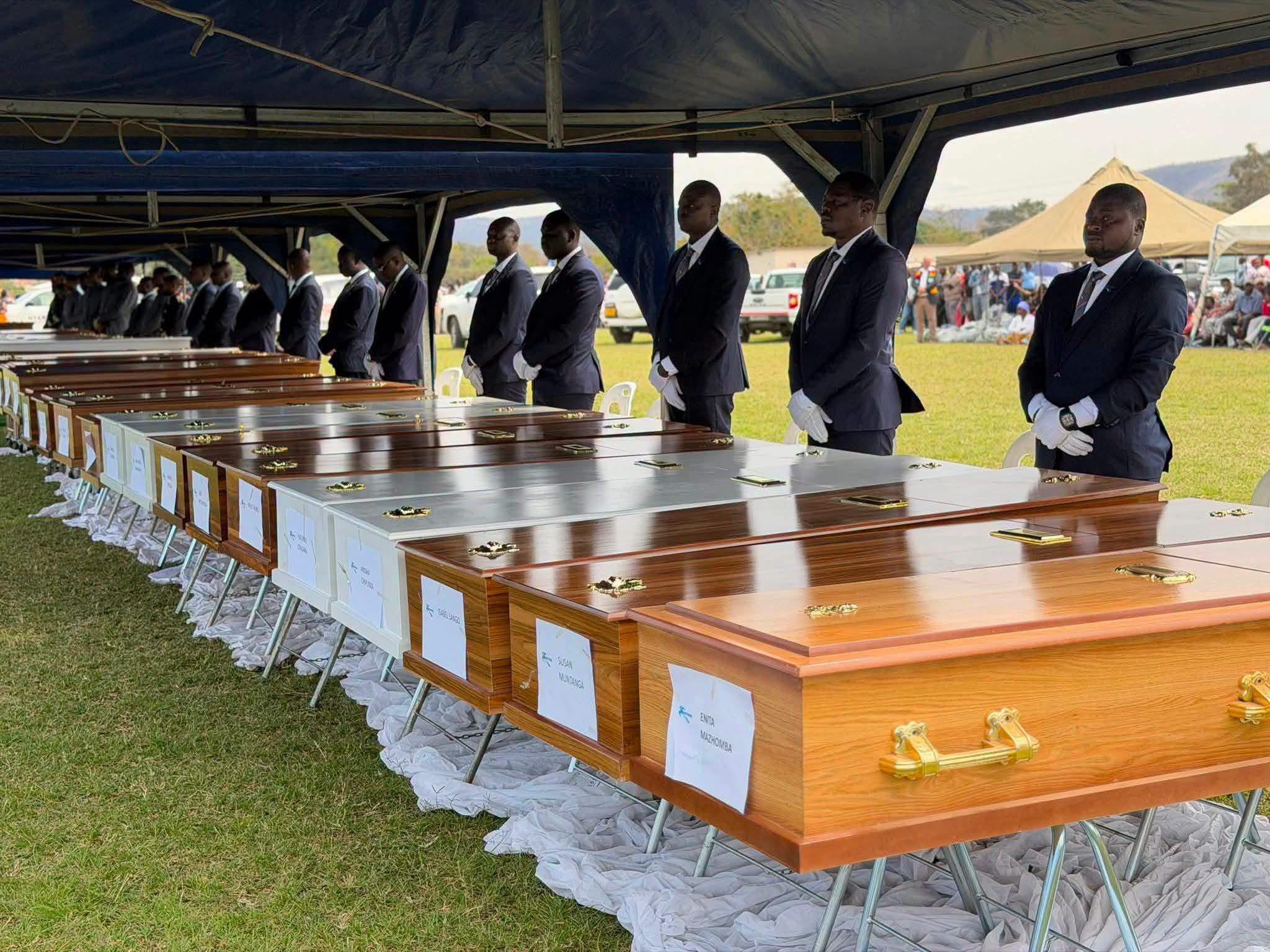
Meanwhile, Zimbabwe Republic Police spokesperson Commissioner Paul Nyathi confirmed on Wednesday that the death toll had risen to 95.
Nyathi said police had released the names of 10 additional victims, bringing the number of victims identified by their next of kin to 93.
Two victims remain unidentified.
The latest identified victims include:
- Vimbai Magiri (36) of Zvamoyo Village, Chief Mola, Kariba.
- Lina Mutale (6) of JSV Number 03, Padenga Holdings, Kariba.
- Muchengati Siamavu (25) of Mujokeri Village, Chief Mola, Siakobvu.
- Linah Siamandoga (8) of Siakanoka Village, Chief Mola, Siakobvu.
- Princess Mberikwenyanga (23) of D30 Shabanie, Mahombekombe, Kariba.
- Yolanda Prisca Chipunza (9) of 220 Nyamhunga 1, Kariba.
- Brace Shambo (2) of Siakanoka Village, Chief Mola, Siakobvu.
Police said they were continuing to work with affected families and other stakeholders as identification and recovery efforts continued.
Overcrowding at centre of disaster
One of the most disturbing questions surrounding the disaster is the number of people aboard the ferry.
The Mbuya Nehanda was publicly described as a 90-seater vessel, while accounts from surviving crew members indicate that the boat was authorised to carry only 45 passengers under its applicable operating arrangements.
Crew members told the media that more than 153 people who could be issued tickets were aboard. That figure did not include some children who were below the ticketing age.
The combined number of deaths and survivors already exceeds 153, reinforcing questions over the ferry’s actual passenger load.
The ferry was also reportedly carrying luggage and other goods, including goats, drums of fuel and materials destined for fishing communities in Binga.
The scale of the load has intensified scrutiny of how the vessel was allowed to leave harbour.
The questions that remain
The captain is dead and cannot respond to the accusations being made against him.
That makes the coming investigation critical.
Did the captain knowingly ignore an official weather warning? Was the ferry legally cleared to sail? Who authorised the passenger load? Why was a vessel operating on such a crucial route apparently carrying more than twice its stated capacity?
And if the ferry was unsafe or overloaded, who was responsible for stopping it before it left harbour?
Those questions go beyond the actions of one captain.
The disaster has exposed a wider issue: communities around Lake Kariba depend on public transport to move people, food and goods across a difficult geographical area. Where safe alternatives are limited, an overloaded ferry can become less a choice than a necessity.
Mahere summed up her criticism bluntly.
“A nation rises or falls on the strength of its systems,” she said. “Zimbabwe has none. Everything is on autopilot.”
The Government now faces pressure to establish what happened through a credible, transparent and independent investigation, and, crucially, to determine whether the tragedy was simply the result of one captain’s decision or the predictable consequence of failures much higher up the chain of responsibility.
For the families still waiting for answers, the distinction matters. Ninety-five people are dead, two victims remain unidentified, and the lake is still holding unanswered questions.
Leave a Reply