
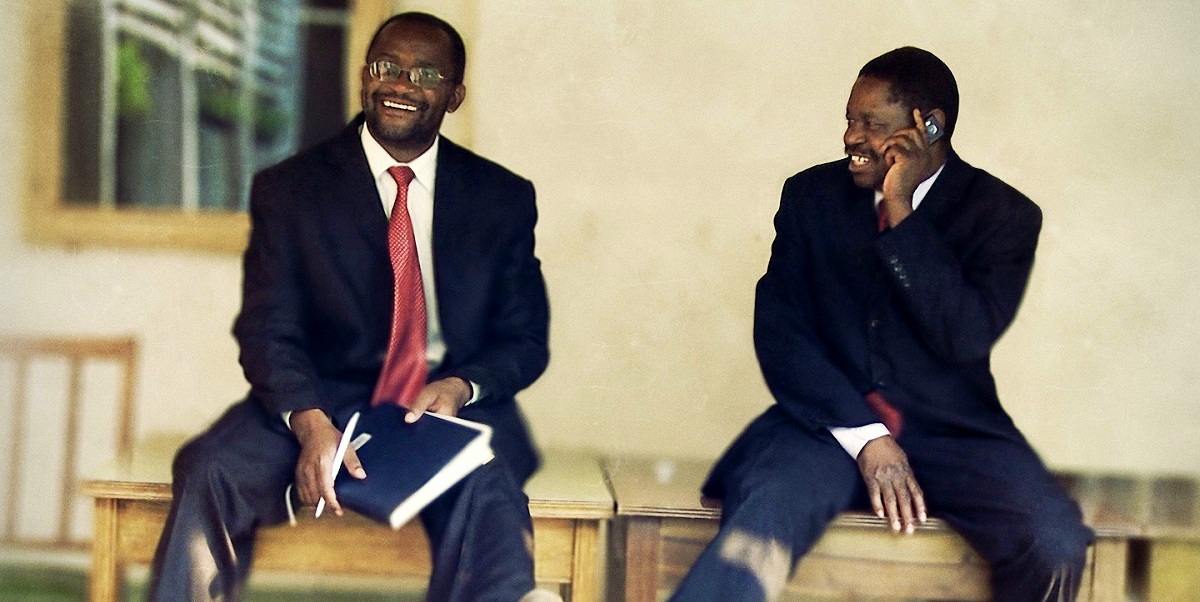
HARARE – Opposition leader Douglas Mwonzora has approached the Constitutional Court seeking to overturn key provisions of the newly enacted Constitution of Zimbabwe (Amendment) Act No. 3 of 2026 (CAB3), arguing that President Emmerson Mnangagwa failed to fulfil a constitutional obligation by signing the Bill into law without first calling for a referendum.
By Advent Shoko
The legal challenge comes days after President Mnangagwa assented to the polarising constitutional amendment, which has triggered fierce debate within Zimbabwe and beyond over its implications for democracy, constitutionalism and the country’s electoral system.
Court papers seen by ZiGoats show that the Movement for Democratic Change (MDC) is the applicant, while President Mnangagwa, Parliament of Zimbabwe, the Minister of Justice, Legal and Parliamentary Affairs, and the Attorney General are cited as respondents.
Mwonzora: Referendum Was Constitutionally Required
In his founding affidavit, Mwonzora, who played a key role in drafting Zimbabwe’s 2013 Constitution through the Constitutional Parliamentary Committee (COPAC), argues that CAB3 altered fundamental constitutional rights and therefore required approval through a national referendum before presidential assent.
“This is an application… for a determination that the 1st Respondent failed to fulfil a constitutional obligation by not calling for a referendum… before signing the Constitution of Zimbabwe (Amendment) Act No. 3,” the court application states.
The application is brought under Section 167(2)(d) of the Constitution, which empowers the Constitutional Court to determine whether the President has failed to fulfil a constitutional obligation.
Why Mwonzora Wants CAB3 Struck Down
According to the court papers, Mwonzora argues that one of the amendment’s most significant changes effectively removes the right of ordinary Zimbabweans to directly elect future Presidents under certain circumstances, transferring that responsibility to Members of Parliament (MPs).
He contends that this has the effect of limiting the voting rights guaranteed under Section 67(3)(a) of the Constitution.
“The effect of Section 92 as now amended is that Section 67(3)(a) has now been amended by implication to remove the right to vote in a Presidential election from the general populace to only Members of Parliament,” the affidavit reads.
He further argues that because the amendment affects rights contained in the Bill of Rights, Section 328(6) required it to be subjected to a referendum before becoming law.
“The 1st Respondent had an obligation to subject the Bill to a referendum. That he did not call for a referendum means that the 1st Respondent failed to fulfil his constitutional obligation.”
Relief Sought
Mwonzora is asking the Constitutional Court to declare that President Mnangagwa breached his constitutional obligations by signing the amendment without a referendum.
He is also seeking an order declaring Section 3 of Constitutional Amendment No. 3 unconstitutional and invalid.
Alternatively, he asks the court to compel the President to submit the amendment to a national referendum within three months.
Questions Over Timing
The court application has also prompted questions from some commentators, who ask why the MDC waited until after the Bill had already become law instead of challenging it while it was still before Parliament.
Although the party has not publicly addressed the timing, the application focuses on the President’s constitutional duty at the point of assent, arguing that the alleged constitutional breach occurred when the Bill was signed into law without first being referred to the electorate.
CAB3 Remains Deeply Divisive
CAB3 has become one of Zimbabwe’s most contested constitutional reforms since the adoption of the 2013 Constitution.
Supporters argue the amendments strengthen governance, improve institutional continuity and address practical constitutional challenges.
Among those defending the amendments is self-exiled former Information Minister and Political Science Professor Jonathan Moyo, who has argued that critics have misunderstood several provisions of the law and that some claims circulating publicly do not accurately reflect the text of the amendment.
Critics, however, contend that the law weakens constitutional safeguards, concentrates political power and reduces direct democratic participation. Opposition parties, constitutional lawyers, civil society organisations and regional political actors have all voiced concerns over aspects of the legislation.
What Happens Next?
The respondents have 10 days from the date of service to file notices of opposition and opposing affidavits.
If the Constitutional Court ultimately agrees with Mwonzora’s arguments, it could invalidate key sections of CAB3 or order that the disputed provisions be subjected to a referendum.
If the application is dismissed, the constitutional amendments will remain in force, further shaping Zimbabwe’s political and constitutional landscape ahead of the next electoral cycle.
Leave a Reply