
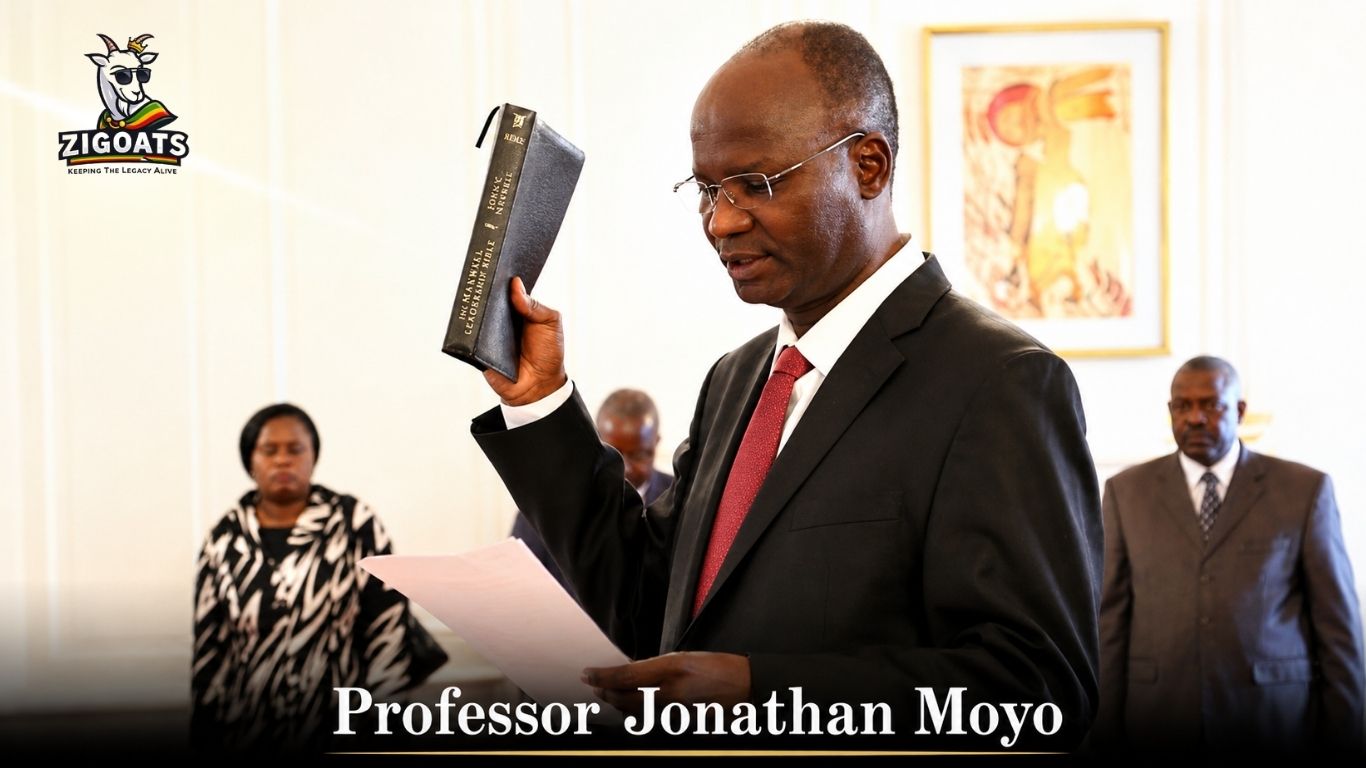
Former Information Minister Professor Jonathan Moyo has argued that the proposed Constitutional Amendment Bill No 3 of 2026 does not extend the personal terms of President Emmerson Mnangagwa or sitting Members of Parliament.
By Advent Shoko
The Bill, which is expected to be debated in Parliament this week, has triggered fierce opposition from critics who argue that it seeks to prolong the tenure of elected officials beyond the five-year term prescribed in the 2013 Constitution.
- ZANU-PF Cannot Be Reformed – Trevor Ncube Clashes With Jonathan Moyo’s Long-Held Views
- Jonathan Moyo Rejects Calls For CAB3 Referendum
However, Moyo says that interpretation is legally incorrect.
In a detailed constitutional analysis released on Monday, Moyo argued that the Bill does not create an additional two-year term for the President or MPs. Instead, he said it restructures Zimbabwe’s electoral cycle from five years to seven years, with the change applying from the beginning of the current term that started after the August 2023 elections.
“Under Clauses 4 and 9 of the Constitution of Zimbabwe (Amendment No. 3) H.B.1 Bill, 2026, the President and Members of Parliament will serve a seamless ‘Continuation in Office’ from 2023 to 2030,” Moyo said.
“This is not a two-year term extension from 2028 to 2030.”
The distinction lies at the heart of the national debate.
Opponents of the Bill argue that extending the tenure of current office holders would amount to changing constitutional rules midstream. Supporters, however, contend that the proposal amends electoral cycles as institutions rather than altering the personal eligibility or term limits of individual office bearers.
Moyo dismissed claims that the Bill was being rushed through Parliament before September 2026 to allow President Mnangagwa to secure another term.
“There is therefore no urgent deadline of 4 September 2026 to beat, nor any need for the current Parliament to re-elect the President. His mandate rests squarely and exclusively on the harmonised general election of 23/24 August 2023,” he said.
Another major criticism of CAB3 has been that it effectively gives the President and MPs a two-year “top-up” that would not count towards constitutional term limits.
Moyo rejected that argument, saying the Constitution’s term-limit provisions remain untouched.
“Section 91(2) therefore provides no authority for a two-year ‘top-up’ from 2028 to 2030 that would somehow evade the two-term limit,” he said.
“To read it otherwise would transform a constitutional safeguard into an open-ended licence for perpetual extension.”
To support his position, Moyo repeatedly cited the 2021 Constitutional Court judgment in the Mupungu case, which upheld amendments extending the retirement age of senior judges.
He argued that the court’s interpretation of “continuation in office” provides a legal foundation for applying a revised seven-year electoral cycle to officials already serving under the current constitutional framework.
“In truth, the Bill does not tamper with the personal tenure of the President or MPs as individuals,” Moyo said.
“Through Clauses 4 and 9, it does something far more transparent, principled and profoundly in the national interest: it amends the electoral cycles of the Presidency and Parliament as institutions.”
The comments come as Constitutional Amendment Bill No. 3 continues to divide opinion across Zimbabwe’s political and legal landscape.
While critics insist the proposal amounts to a de facto extension of the tenure of elected officials, supporters argue it is a lawful constitutional redesign backed by existing legal precedent.

Leave a Reply