
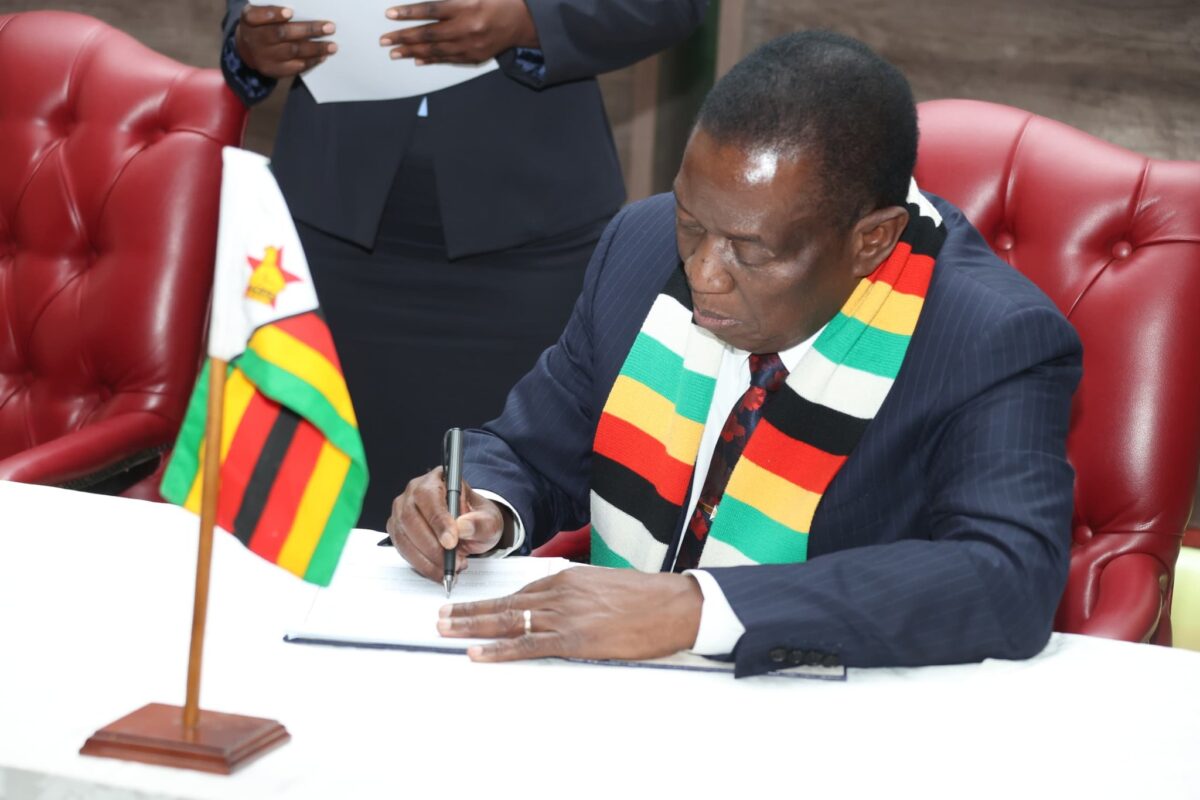
HARARE – President Emmerson Mnangagwa has officially signed the Constitution of Zimbabwe Amendment (No. 3) Act, 2026 (CAB3) into law, marking one of the most significant constitutional changes since Zimbabwe adopted its 2013 Constitution.
By Advent Shoko
The signing ends Parliament’s legislative process and gives legal force to a package of amendments that reshapes Zimbabwe’s governance system, extends the terms of office for elected leaders and alters several key constitutional institutions.
The law has been welcomed by the government as a step towards policy continuity and long-term national development. However, it has also drawn fierce criticism from opposition politicians, constitutional lawyers and civil society groups, who argue that it weakens democratic safeguards and concentrates more power in the Executive.
What Changes Immediately?
Among the biggest changes introduced by the new law are:
- The terms of office for the President, Members of Parliament and local authorities increase from five years to seven years.
- The amendments allow the new seven-year terms to apply to the continuation in office of the current President and the current Parliament.
- The Senate expands from 80 to 90 members, with 10 additional senators appointed by the President after consultation with the National Assembly.
- A new Delimitation Commission will be appointed by the President to oversee electoral boundary delimitation.
- Several provisions affecting judicial appointments, defence functions and constitutional commissions have also been revised.
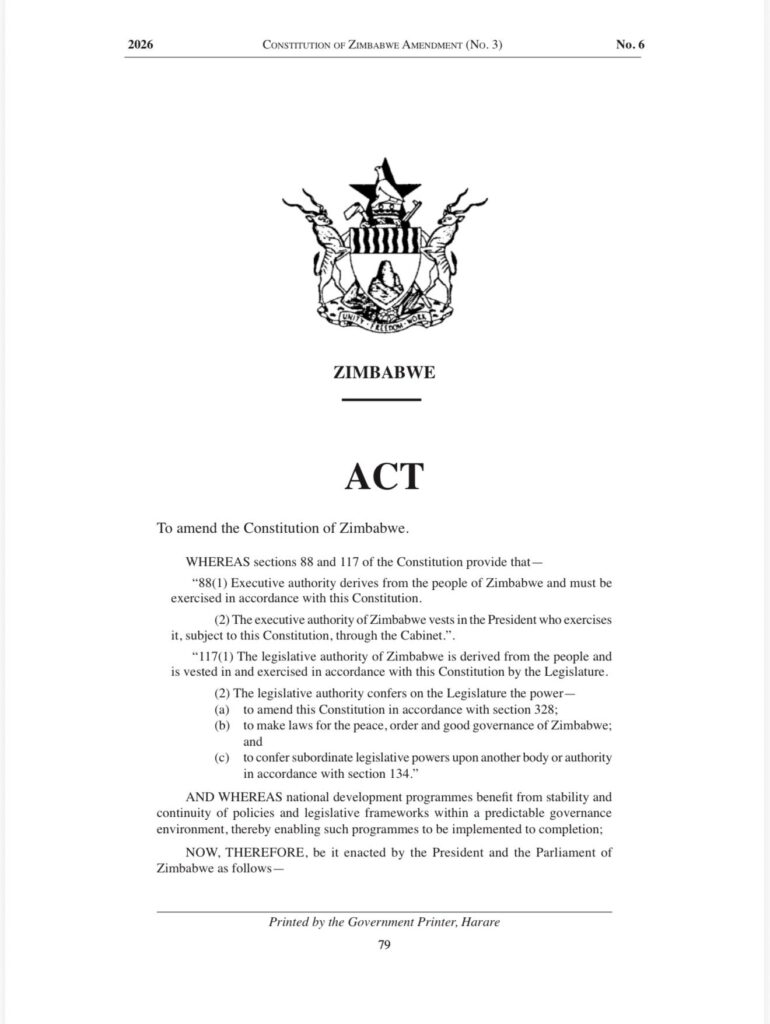
The amendments also repeal or alter provisions relating to institutions such as the National Peace and Reconciliation Commission and narrow some constitutional functions previously assigned to the Zimbabwe Electoral Commission (ZEC).
Why Government Says CAB3 Matters
The Act states that Zimbabwe’s national development programmes require “stability and continuity of policies and legislative frameworks within a predictable governance environment.”
Government has consistently argued that frequent elections interrupt development programmes and long-term investment planning.
Supporters say extending terms of office will reduce continuous electioneering, improve policy consistency and allow governments enough time to complete major national projects before returning to the electorate.
Why Critics Remain Concerned
Opponents argue that the amendments fundamentally change the balance of power established under the 2013 Constitution.
Former Citizens Coalition for Change leader Nelson Chamisa previously insisted that the constitutional battle was never simply about Parliament passing the Bill.
“Those claiming that CAB3 is a done deal are either deluding themselves or deliberately attempting to mislead. The citizens are the ultimate decision-makers; they alone have the authority to endorse, reject, or seal any deal.”
Chamisa maintained that constitutional legitimacy ultimately belongs to Zimbabwean citizens rather than political institutions.
Constitutional lawyer Lovemore Madhuku and former Finance Minister Tendai Biti have also previously criticised CAB3, arguing that it centralises power and weakens constitutional checks and balances.
Is the Fight Really Over?
Legislatively, CAB3 has now completed the process. Once the President signed the Bill, it became law.
However, that does not necessarily mean all legal challenges have ended.
Zimbabwe’s Constitution still allows affected parties to approach the courts if they believe constitutional procedures were violated or that certain amendments conflict with entrenched constitutional provisions.
Legal experts could challenge aspects of the amendment before the courts, although any successful challenge would depend entirely on the legal arguments presented and the courts’ interpretation of the Constitution.
Political opposition is also likely to continue through public campaigns, advocacy and future electoral processes.
Leave a Reply