
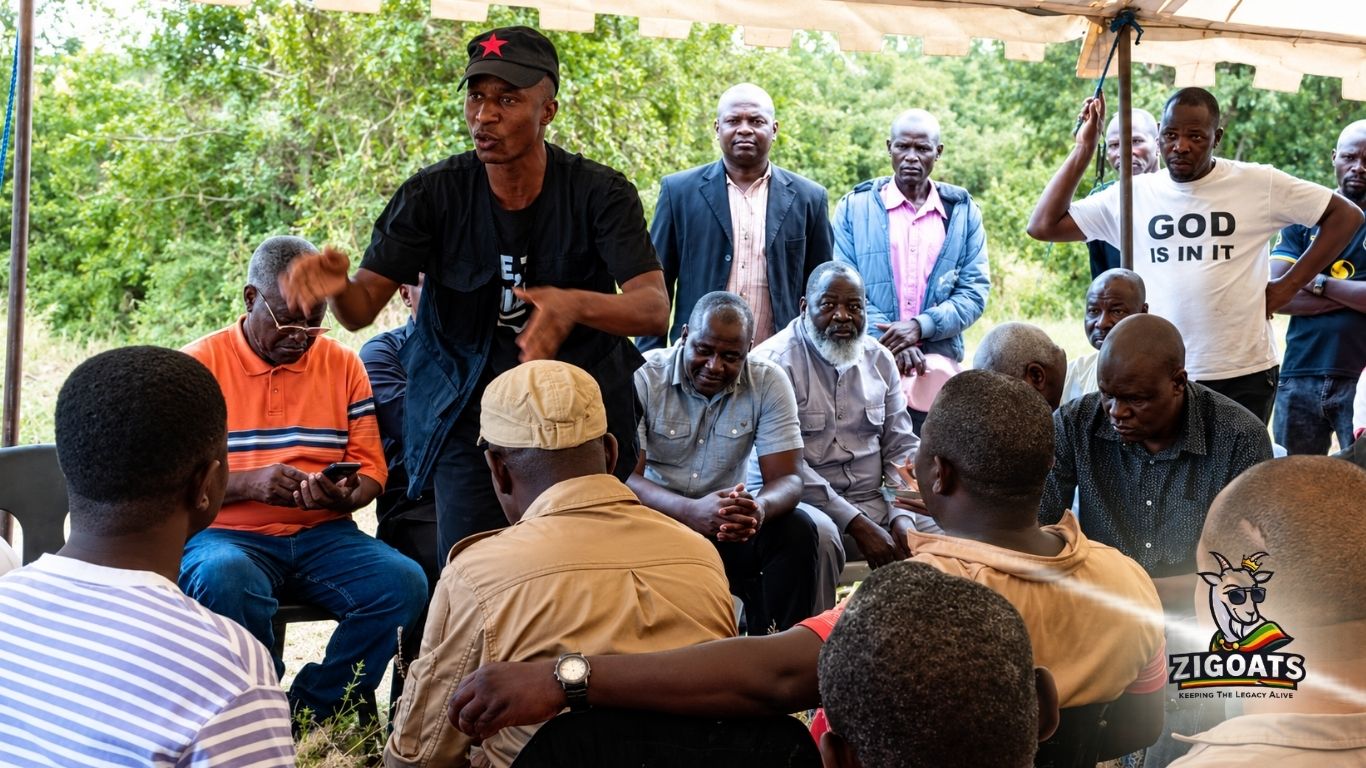
Former Citizens Coalition for Change (CCC) deputy spokesperson, Gift Ostallos Siziba, has called for the political education of the masses as a key strategy in the fight against dictatorship in Zimbabwe.
By Advent Shoko
Siziba, a lawyer by profession, said parochial political culture is largely to blame for the passive participation of citizens in political affairs and the failure by many Zimbabweans to identify political elites as the source of the country’s challenges.
Echoing sentiments often expressed by advocate Fadzayi Mahere that “we need new leaders”, Siziba argued that meaningful change will remain elusive if citizens continue looking to divine intervention for solutions to problems created by human actions. He said:
“Where we are guilty as charged is where Karl Marx says, to the extent that the masses are not educated, the vanguard, which is leadership, is to be blamed. So our blame is on us failing to build the political agency in the country and turning those conversations happening in ordinary people into the political expressions that are needed to resist dictatorship.”
Siziba also hinted at the formation of a new political movement. He said:
“So if we are forming a political organisation, we have had this debate internally within the democratic movement, that part of the huge investment we have to do is that if we are to have a movement to fight against dictatorship in the not-so-distant future, part of our investment is going to be dealing with questions of political literacy in the country.”
Siziba added that contemporary politicians need to take a leaf from the liberation struggle movements which conducted pungwe (all-night gatherings) to conscientise the masses about the goals and objectives of the war. They ensured the masses were aware of the grievances. Siziba said:
“If you go to the liberation struggle, and we take instructions from that effort, it says that you must be able to educate the people so that people can be able to understand, to say, look, if there is no water, if there are potholes, if there is no medicine, if I am unemployed, where is the problem? So our job and our task, our generational and ideological obligation, which we must fulfil with the urgency that it deserves, is to begin to educate the people to understand the crisis because the rise of Pentecostalism in the country is owed to that lack of political literacy. Definitely. That’s why you say it correctly so, that people are now looking for answers to a deity. People are looking for answers in heaven to say, look, as men who have tried our best, there are men with children, with families who have said, before God and before men, I’ve tried. I’ve tried to look for a job. Everything. So they’ve surrendered everything into the hands of God. If you see that, know that we have a problem in terms of political education.
He reiterated that the socio-political problems in Zimbabwe are not natural disasters, they are man made. Siziba said:
“We ought to educate the people of Zimbabwe, both in Zimbabwe and the diaspora, to say, look, God is not responsible for your misery. There is a man who has decided to inflict this pain on Zimbabweans. There are men and women who wake up every day and make sure that we lack things that must benefit the people. We must punish the people for choosing the other path…”
Siziba’s remarks come against the backdrop of a long-running struggle by opposition parties to dislodge ZANU PF from power. Despite years of political contestation, the ruling party has maintained its grip on power through a variety of political strategies.
The opposition has traditionally enjoyed stronger support in urban areas, where the electorate is generally regarded as being more politically conscious than their rural counterparts. Voting patterns over the years have shown that while opposition parties have gradually made inroads into some remote parts of the country, rural communities remain a key stronghold for the ruling party.
Leave a Reply