
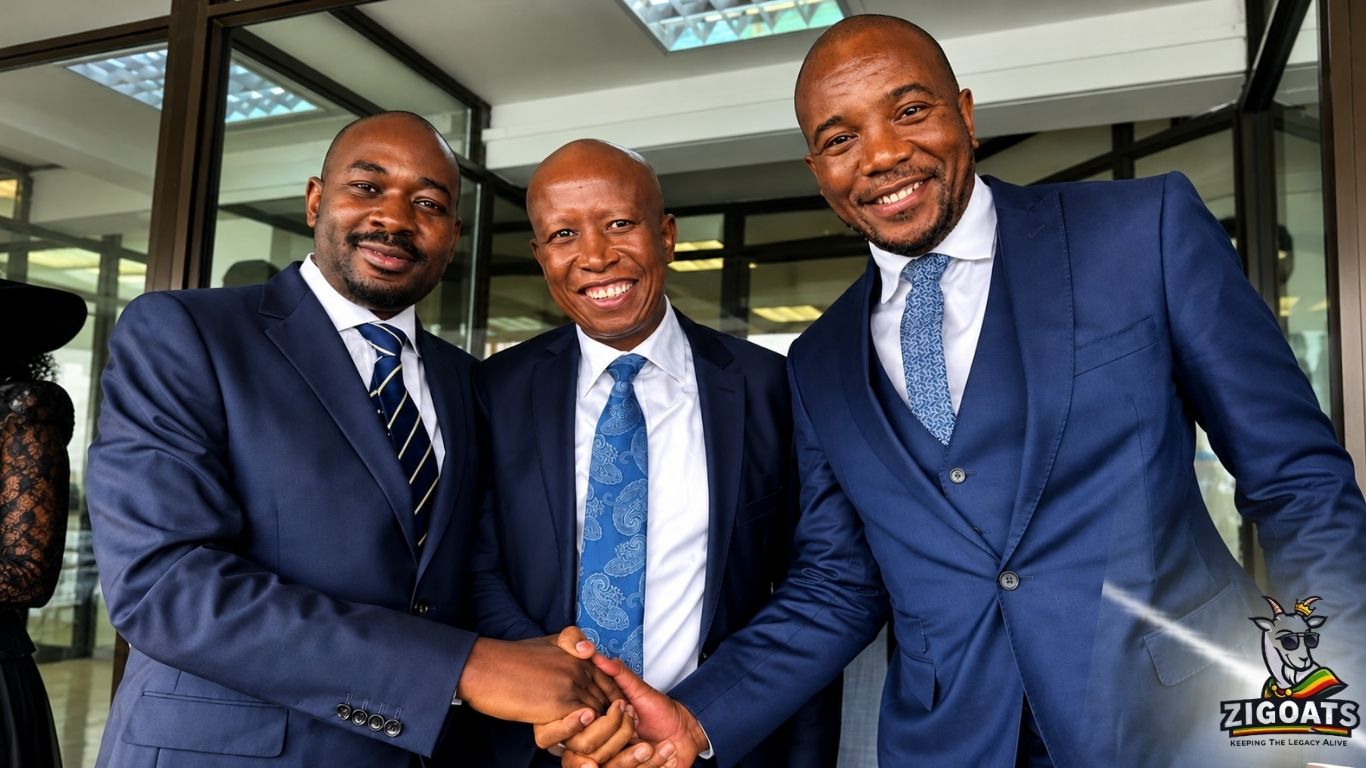
Few opposition politicians in Zimbabwe’s modern history have come as close to State House as Nelson Chamisa.
By Advent Shoko
For years, he carried the hopes of millions who believed he represented a generational shift in Zimbabwean politics, youthful, charismatic, energetic and capable of ending the ruling ZANU PF’s decades-long grip on power.
Yet every time he appeared to be within touching distance of political victory, something happened.
A court ruling.
An internal revolt.
A factional fight.
A disputed process.
An infiltration claim.
A political miscalculation.
Or simply what supporters call “bad luck.”
Now, after years of dramatic rises and painful setbacks, Chamisa’s political career has become one of the most debated stories in Zimbabwean politics: Is he an unlucky politician repeatedly blocked by circumstance, or a gifted mobiliser whose strategic decisions have repeatedly cost him power?
The Early Warning Signs Inside MDC
Long before court battles and election disputes dominated headlines, Chamisa’s political troubles were already unfolding quietly within the MDC itself.
In 2014, internal party tensions exploded during contests for key leadership positions, particularly the powerful Secretary-General post.
Chamisa lost to Douglas Mwonzora under circumstances that remain controversial among sections of the opposition even today.
Within the party, whispers quickly turned into open allegations.
Some senior members and analysts claimed MDC founding leader Morgan Richard Tsvangirai had allegedly influenced internal processes to prevent Chamisa from securing the position.
At the centre of those claims was fear.
Political analysts at the time argued Tsvangirai may have viewed Chamisa’s rapid rise, youthful appeal and growing influence as a long-term threat to his authority.
The comparisons with former MDC Secretary-General Tendai Biti soon emerged.
Biti had previously become powerful enough within the MDC structures to challenge Tsvangirai’s authority, creating one of the biggest internal crises the opposition had faced.
Critics argued Tsvangirai did not want history repeating itself with another ambitious, articulate and highly educated younger leader.
Fuel was added to the speculation when the party constitution was amended around the same period, reducing some of the powers of the Secretary-General position.
To critics, the timing appeared too convenient.
To supporters of Tsvangirai, however, the reforms were necessary to strengthen party unity and avoid concentration of power in one office.
For Chamisa, the aftermath was politically humiliating.
The man once viewed as the future of the opposition reportedly became little more than an ordinary card-carrying member before later being reassigned to a less influential role within the party hierarchy.
For many of his supporters, that moment planted the first seeds of a belief that Chamisa was constantly being blocked just as he approached major political breakthroughs.
Tsvangirai’s Death Changed Everything
When Morgan Tsvangirai died in 2018, the opposition movement entered one of the most chaotic periods in its history.
The succession battle was immediate and brutal.
Chamisa moved quickly to position himself as the political heir to Tsvangirai, but senior party figures including former Deputy Prime Minister Thokozani Khupe strongly opposed the process.
What followed was not just a leadership dispute, but a political civil war inside the opposition movement.
Khupe insisted constitutional procedures had been ignored. Chamisa’s camp argued the movement needed urgent unity ahead of national elections.
The split permanently fractured the MDC.
Chamisa then shifted focus toward building the MDC Alliance, bringing together smaller opposition parties in a high-stakes attempt to remove President Emmerson Mnangagwa and ZANU PF from power.
2018: The Year Chamisa Came Closest To Power
“State House kure (State House is very far),” sang the late Simon ‘Chopper’ Chimbetu. But, the 2018 elections remain the defining moment of Chamisa’s political life.
For the first time, many Zimbabweans genuinely believed an opposition leader could defeat ZANU PF at the ballot box.
Chamisa electrified rallies across the country.
“Ngaapinde Hake Mukomana, Kangene Umfana, Let the young man in!”
Young voters embraced him. Both rural and urban support surged. Social media amplified his campaign message. His energy contrasted sharply with the old guard image many associated with Zimbabwean politics.
Then came election night.
When the Zimbabwe Electoral Commission (ZEC) announced Mnangagwa as the winner, Chamisa rejected the results, alleging electoral manipulation and irregularities.
The dispute headed to the Constitutional Court in a case watched across the region.
Zimbabweans crowded around televisions, phones and radios following every moment of the hearings.
Advocate Thabani Mpofu, representing Chamisa, became a national talking point as legal jargon like “the pith” and “the fulcrum” suddenly entered everyday conversations and social media jokes.
But despite the drama, the Constitutional Court led by Chief Justice Luke Malaba ruled that Chamisa and his legal team had failed to provide sufficient evidence proving the election had been rigged.
For Chamisa’s supporters, it felt like power had slipped away at the final moment.
Again.
The Court Battles That Changed Everything
Just when Chamisa appeared to have maintained control of the opposition after 2018, another unexpected battle emerged, this time from within.
An obscure figure from Gokwe suddenly surfaced challenging Chamisa’s legitimacy as leader of the MDC.
Chamisa argued that the MDC Alliance was a completely separate political entity from the original MDC founded in 1999.
But rivals disputed that interpretation.
Mwonzora, once politically aligned with Chamisa before relations collapsed, argued that the opposition itself had publicly celebrated the MDC’s 20th anniversary, making it difficult to separate the two entities.
Eventually, the Supreme Court ruled against Chamisa.
The judgment declared that he was not the legitimate leader of the MDC structures and ordered the party to hold an extraordinary congress to choose a leader.
Chamisa refused to participate.
To his supporters, the process had already been compromised.
Mwonzora eventually emerged as leader under highly contested circumstances, in a process also marred by violence and internal accusations.
Ironically, even Khupe, once Chamisa’s rival, later accused Mwonzora of manipulating the process.
The Rise Of CCC – And Another Collapse
After abandoning the MDC structures, Chamisa launched the Citizens Coalition for Change (CCC) ahead of the 2022 by-elections.
The new movement exploded onto Zimbabwe’s political scene.
The yellow branding dominated rallies. Opposition supporters rallied behind Chamisa again. The CCC swept many by-election seats, reigniting belief that ZANU PF could finally face a serious electoral challenge.
Political analysts predicted the 2023 elections could become the tightest contest in years.
But beneath the excitement, internal cracks were already widening.
Critics accused Chamisa of dismantling formal party structures and concentrating power in the office of the president.
Supporters defended the strategy, “Strategic Ambiguity,” arguing formal structures had historically allowed infiltration by rivals and state-linked actors.
Senior figures, including Biti and Welshman Ncube, increasingly appeared sidelined.
Then came another political shock.
Tshabangu, Recalls And The Beginning Of The End
After the 2023 elections, Sengezo Tshabangu emerged claiming to be CCC’s interim Secretary-General.
He began recalling MPs and councillors aligned with Chamisa.
The CCC leadership dismissed him as an impostor and alleged he was part of a broader operation designed to destabilise the opposition from within.
But crucial state institutions accepted the recalls.
Parliament, led by Speaker Jacob Mudenda, processed them. Local government authorities recognised them.
Court attempts to stop Tshabangu failed to decisively end the crisis.
The recalls triggered by-elections.
Where opposition seats fell vacant, ZANU PF recovered ground and eventually secured the crucial two-thirds parliamentary majority it had initially failed to obtain.
For many opposition supporters, it was one of the most devastating political collapses in recent years.
Chamisa Walks Away
Initially, Chamisa promised resistance.
He spoke about regional and international escalation, mentioning bodies such as SADC, the African Union and the United Nations.
But eventually, he walked away.
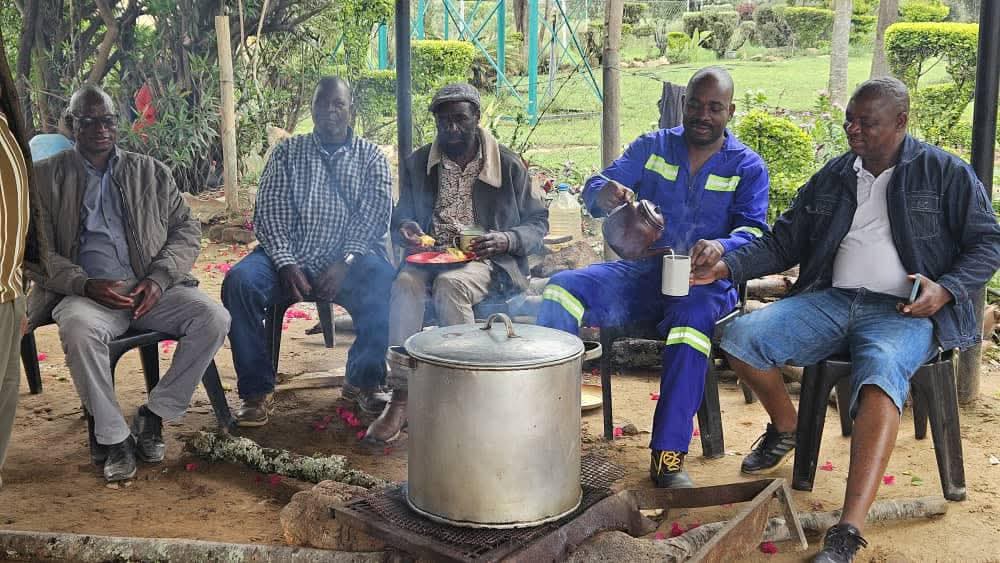
In a dramatic announcement, Chamisa declared he no longer recognised the CCC due to infiltration and political compromise.
Some allies resigned with him, including figures such as Fadzayi Mahere.
Others stayed.
Some argued they needed approval from their constituencies before resigning. Critics, however, claimed many feared losing by-elections if they vacated their seats.
The divisions weakened opposition momentum even further.
The Comeback – And Growing Skepticism
After nearly two years largely out of active politics, Chamisa resurfaced in January 2026 announcing the need to address the disputed 2023 elections first and plans for a new political movement aimed at challenging Mnangagwa and ZANU PF once again.
But this time, skepticism followed him more aggressively than before.
Critics accused him of disappearing at a crucial political moment and returning only when national attention had shifted toward debates around Constitutional Amendment Bill No. 3, proposals that could extend presidential terms, alter parliamentary structures and future electoral processes.
Some conspiracy theories even alleged Chamisa’s political breaks and return were coordinated to divide opposition attention.
Chamisa has repeatedly dismissed such allegations as propaganda designed to destroy his credibility.
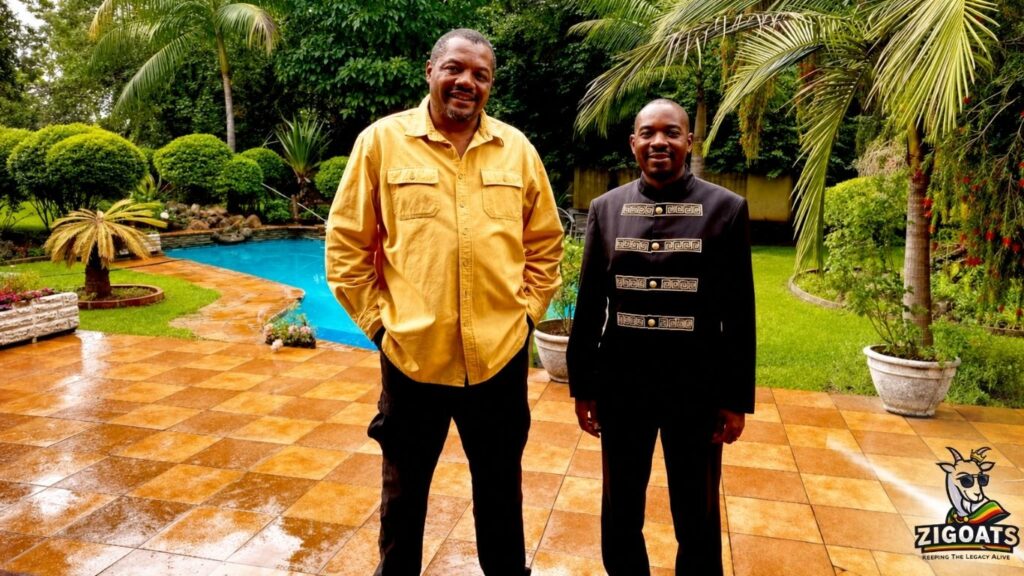
Bad Luck Or Political Misjudgment?
Chamisa’s political story is difficult to reduce to one simple explanation.
He has repeatedly demonstrated extraordinary mobilisation ability, unmatched opposition popularity among young voters and an ability to reinvent political movements.
But he has also repeatedly found himself trapped in internal disputes, structural collapses, legal defeats and strategic crises.
Supporters see a politician constantly blocked by powerful systems.
Critics see a leader whose emotional decision-making, centralised leadership style and political calculations have repeatedly backfired.
Perhaps the truth lies somewhere in between.
What remains undeniable is this: few opposition politicians in Zimbabwean history have come so close to power, generated so much hope, suffered so many dramatic reversals, and still remained politically relevant.
Whether history eventually remembers Nelson Chamisa as Zimbabwe’s unluckiest politician or a leader repeatedly outplayed by both allies and opponents may depend on what happens next.
“Chapwati, Citizenocracy“, he promised.
Leave a Reply