
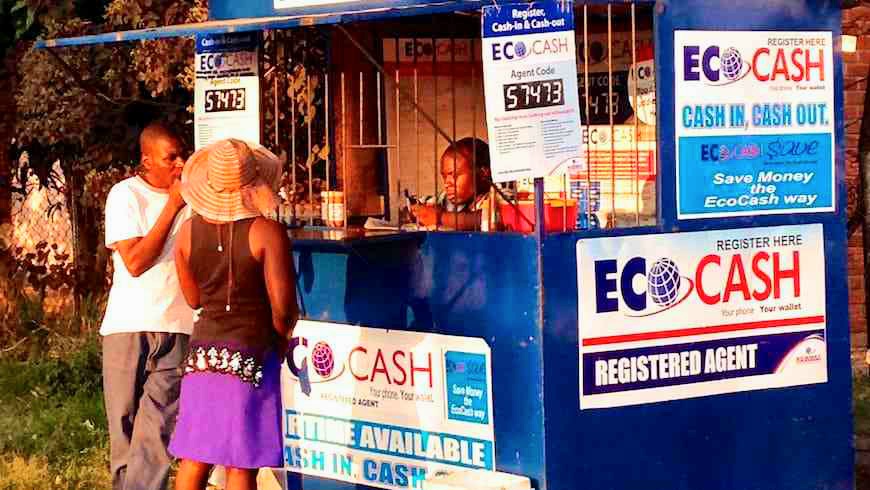
The Reserve Bank of Zimbabwe (RBZ) has mobile network operators including NetOne, Econet, and Telecel to tighten oversight of their mobile money platforms like EcoCash, OneMoney, Telecash, and Omari to audit all accounts and deactivate fraudulent or unauthorised lines, a move aimed at curbing money laundering, illicit financial flows and unregulated credit creation.
RBZ Governor John Mushayavanhu said the measures are necessary as mobile money accounts become integral to everyday commerce in a country where many citizens remain unbanked and rely on digital wallets for payments, savings, and remittances. Presenting his televised Monetary Policy Statement on Friday 27 February 2026 in Harare, Dr Mushayavanhu said:
“Before the end of June this year, mobile network operators must have, with the assistance of the Registrar General, screened all their accounts and eliminated any account that cannot be validated by a valid ID.”
He said the reform targets anonymous wallets widely blamed for obscuring illicit cash flows and manipulating parallel markets.
He went further, framing the clean-up as a core part of Zimbabwe’s fight against fraud:
“We cannot have an environment where people are laundering money through mobile money accounts. We will not allow that. So they must start cleaning up their databases with immediate effect.”
The RBZ also extended the existing zero-fee structure for small-value transactions, previously applied to banks, to mobile network operators. Dr Mushayavanhu said:
“When the banks agreed to charge no fees for transactions between zero and five dollars or equivalent, the mobile network operators thought they were not affected. They want to be banks when it suits them, but they don’t want to be banks when it doesn’t suit.”
He warned that any operator charging fees below five dollars will risk losing its licence.
You May Like This
A key concern has been “nano-loan” products, instant microloans that mobile operators have offered to users without proper underwriting. The Governor ruled such lending must be housed within the regulated banking system:
“All these nano-loans must be underwritten by a commercial bank, and the central bank is going to audit that.”
The move recalls earlier RBZ measures, including the 2020 directive that shut down all mobile money agents lines amid allegations of exchange rate manipulation and informal margin abuses. At the time, the central bank said mobile money was being used to circumvent financial controls and destabilise the market.
Analysts say the new audit could reshape Zimbabwe’s digital finance landscape, balancing convenience with accountability in an economy where mobile money has become a lifeline for many.
Leave a Reply