
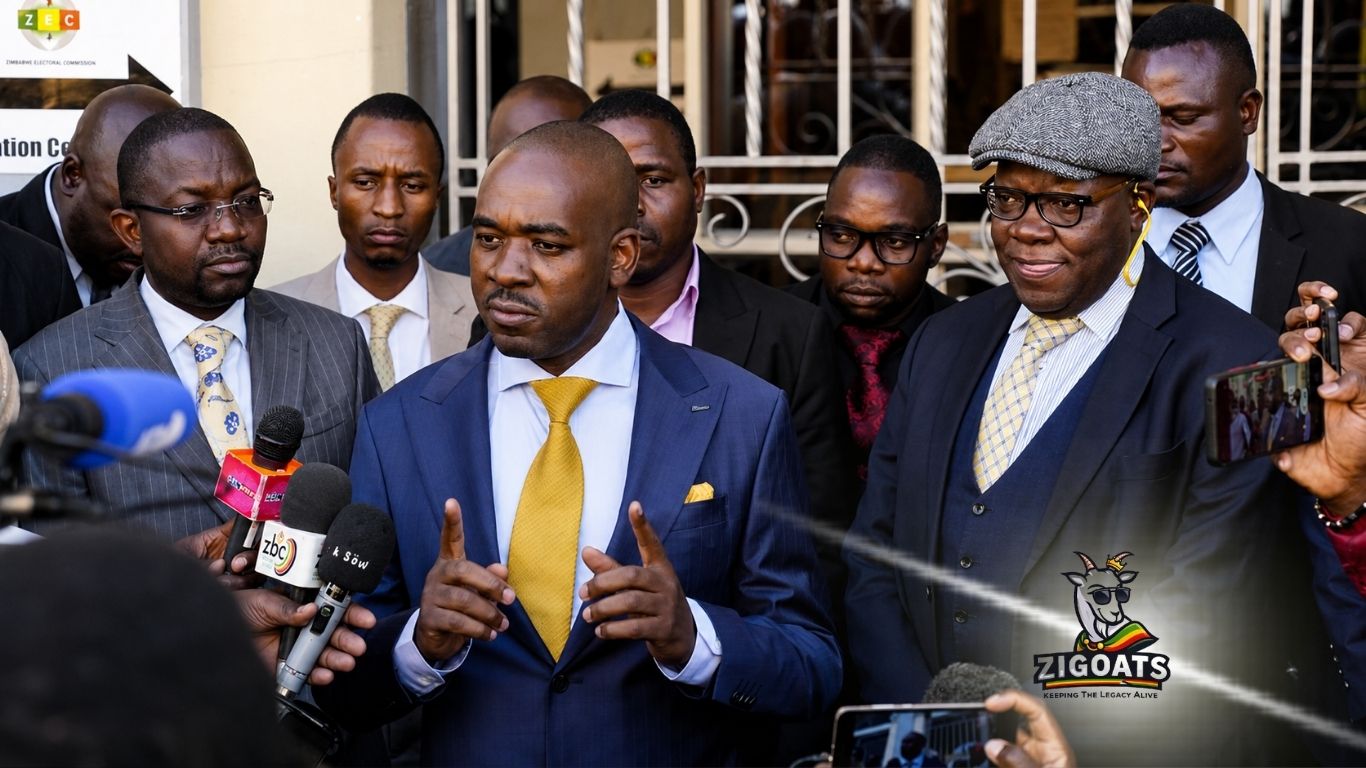
Zimbabwe’s opposition finds itself at a familiar crossroads. Former Citizens Coalition for Change (CCC) leader Nelson Chamisa has returned to active politics after nearly two years away, but his comeback has exposed a deeper question that has lingered for years: if not Chamisa, then who?
Across social media and in public debate, many frustrated Zimbabweans insist they no longer want Chamisa to lead the struggle against ZANU PF. Yet the same voices have, over the years, dismissed or rejected other opposition figures including Tendai Biti, Douglas Mwonzora, Jacob Ngarivhume, Elisabeth Valerio, Thokozani Khupe, Joyce Mujuru, Job Sikhala, Fadzayi Mahere, Welshman Ncube, Lovemore Madhuku, Dr Nkosana Moyo and several others.
The criticism raises an important question that extends beyond personalities.
If not Chamisa, President Emmerson Mnangagwa or Vice President Constantino Chiwenga, who exactly should lead Zimbabwe’s political transition?
For many, there is no clear answer. What is clear is widespread dissatisfaction with the country’s political and economic direction.
A Pattern That Predates Chamisa
Zimbabwe’s opposition politics has, for more than two decades, revolved around attempts to unseat ZANU PF.
When the Movement for Democratic Change (MDC) was formed in 1999, it rallied around Morgan Tsvangirai. The former trade union leader became the face of a movement seeking to end President Robert Mugabe’s long rule.
Although Tsvangirai never became president, many observers believe he came closest after the disputed 2008 elections. The MDC also mounted a serious challenge in 2013 before internal divisions weakened the opposition.
Following Tsvangirai’s death in 2018, Nelson Chamisa emerged as the movement’s most recognisable figure. Under the MDC Alliance banner, he challenged Mnangagwa in the 2018 election before later launching the Citizens Coalition for Change (CCC), which contested the 2023 harmonised elections.
Like Tsvangirai before him, Chamisa fell short of removing ZANU PF from power, although his supporters maintain the electoral playing field was uneven.
After the 2023 elections, Chamisa withdrew from frontline politics for almost two years. His silence fuelled speculation, including allegations from some critics like Jealousy Mbizvo Mawarire that he had been compromised by ZANU PF, claims he has consistently denied.
His return has not united the opposition. Instead, it has reignited debate over whether Zimbabwe needs a different opposition leader altogether.
Can A Political Movement Succeed Without A Leader?
History suggests that successful political movements rarely emerge without identifiable leadership.
Political theorists, including Karl Marx and later Vladimir Lenin, argued that major political change requires a “vanguard” – an organised leadership capable of educating supporters, coordinating strategy and providing direction.
Leadership does not guarantee success, but history shows that most transformative political movements have relied on individuals capable of articulating a vision and organising collective action.
Figures such as Nelson Mandela, Mao Zedong, Robert Mugabe and Martin Luther King Jr. became synonymous with broader movements, even though their successes depended on thousands of supporters working behind the scenes.
Mass mobilisation is important, but so is strategy.
Street demonstrations can generate pressure, but someone still has to decide what comes next. If negotiations become necessary, who represents the movement? Who develops policy? Who speaks with one voice on behalf of supporters?
These are practical questions that every political movement must answer.
Beyond Personalities
The debate, therefore, should perhaps be less about whether Nelson Chamisa deserves another chance and more about whether the opposition has produced a credible alternative capable of uniting its fragmented support base. Award winning journalist, Hopewell Chin’ono argues:
The struggle survived arrests, assassinations, imprisonment, exile, internal divisions and leadership changes because it was never about one person. It was always bigger than any individual.
So, if Zimbabweans today believe that Nelson Chamisa’s participation or absence will determine the success or failure of the struggle against oppression, then they have learned nothing from their own history.
Nelson Chamisa has already shown Zimbabweans who he is and what he is capable of. They know both his strengths and his limitations. I therefore do not understand why his name continues to dominate every conversation about resisting ZANUPF.
While I agree that it should not be about an individual, let me emphasise that rejecting one leader is relatively easy. Building consensus around another is considerably harder.
Zimbabwe’s opposition has experienced repeated splits over the past two decades, creating multiple parties and leaders but often diluting electoral strength. Whether that changes will depend not only on who leads, but also on whether opposition forces can agree on a common strategy and shared objectives.
The Bigger Question
This is not an endorsement of Nelson Chamisa, nor is it an argument against him.
In any democracy, citizens are free to support or reject political leaders.
The more fundamental question is whether those calling for change have identified a viable alternative capable of organising, inspiring and leading that change.
History suggests that political transitions rarely happen without leadership.
The debate now is not simply whether Zimbabwe needs change – it is who, if anyone, is best placed to lead it.
Leave a Reply