
By Advent Shoko
BULAWAYO – Bulawayo Mayor David Coltart has welcomed Cabinet’s approval of the proposed Municipal Police and Courts Bill, saying the legislation will strengthen the city’s ability to enforce its by-laws and improve public order.
His remarks came after Cabinet approved the Municipal Police and Courts Bill, 2026, which seeks to establish dedicated municipal police services with powers to enforce council by-laws, improve traffic management and enhance community safety.
The Bill also proposes the creation of municipal courts to handle cases involving municipal by-laws, minor offences and traffic violations, with municipal magistrates appointed to preside over such matters.
Coltart, a former Minister of Primary and Secondary Education, praised both Local Government and Justice ministries for advancing the legislation.
“I commend the Minister of Local Government the Hon. Daniel Garwe for securing Cabinet approval for the proposed Municipal Police and Courts Bill.
“This Bill when it becomes law will greatly enhance the City of Bulawayo Municipal Police’s ability to enforce our bye laws which in turn will lead to a cleaner, healthier and more orderly City.”
What the Bill proposes
According to the Cabinet decision, local authorities already have powers under the Urban Councils Act and Rural District Councils Act to formulate and enforce regulations within their jurisdictions.
The new Bill seeks to strengthen that legal framework by allowing municipalities to establish dedicated and professional police services focused on:
- Community safety;
- Enforcement of municipal by-laws;
- Traffic management; and
- Local crime prevention.
It also gives municipal police powers to arrest offenders, investigate breaches of municipal by-laws and support prosecutions through newly created municipal courts.
Cabinet said the legislation is intended to improve governance, service delivery, environmental management and access to justice while advancing Zimbabwe’s constitutional devolution agenda.
Concerns over possible abuse of power
Despite the positive reception from some local authorities, the proposed law has already sparked concern among sections of the public, with critics warning that expanded enforcement powers could lead to abuse if adequate safeguards are not put in place.
One commentator cautioned:
“Giving municipal police powers to arrest will create more chaos. If given they get trained and there are specific issues that leads to arrests. This will further deepen bribes mentality in our country if proper structures are put in place before handing them power.”
Another raised similar concerns, asking:
“Mr. Mayor, while this Bill may strengthen by-law enforcement, could it also increase the risk of abuse of power by municipal police? What safeguards will be in place to ensure these expanded powers are exercised fairly and are not abused?”
Long-running battle with street vendors
The debate comes against the backdrop of a years-long struggle by local authorities, particularly in Harare and Bulawayo, to regulate the growing number of informal traders operating in city centres.
As Zimbabwe’s economy has become increasingly informal, thousands of people have turned to street vending as a source of income. Councils have repeatedly tried to relocate vendors to designated trading sites, arguing this improves public health, reduces congestion and creates a level playing field for formal businesses that pay rates, licences and taxes.
However, those efforts have produced limited success.
Many vendors say the designated sites are located far from customer traffic, making it difficult to earn a living. As a result, many return to the streets even after being removed, leading to daily cat-and-mouse confrontations with municipal officers.

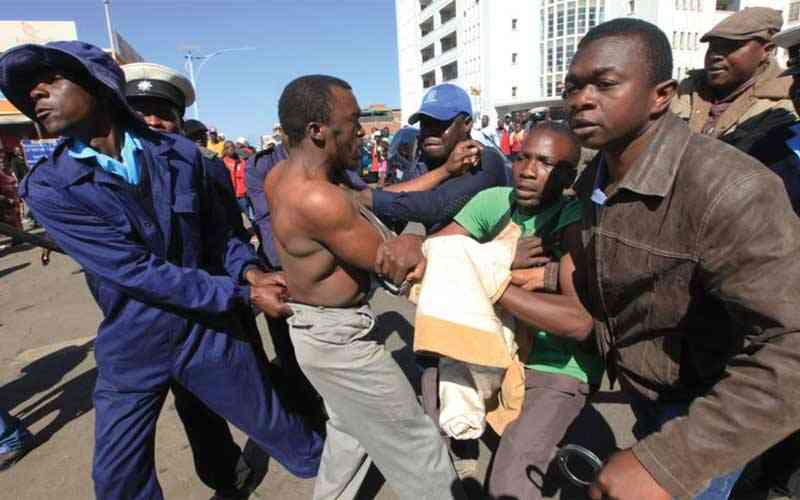
In recent years, reports of municipal officers using excessive force during operations against street vendors have become more frequent. Several incidents, including alleged assaults and the seizure of traders’ goods, have been recorded on video and widely circulated on social media, fuelling criticism of council enforcement methods.
Until now, councils have often relied on the Zimbabwe Republic Police to assist during major operations. If the Bill becomes law, municipal police will have broader legal authority to enforce by-laws themselves, potentially reshaping how local authorities deal with illegal vending and other municipal offences.
Whether the new powers result in cleaner, better-managed cities or intensify concerns over heavy-handed enforcement is likely to depend on how the legislation is implemented, the training municipal officers receive and the accountability measures that accompany the expanded powers.
Leave a Reply