
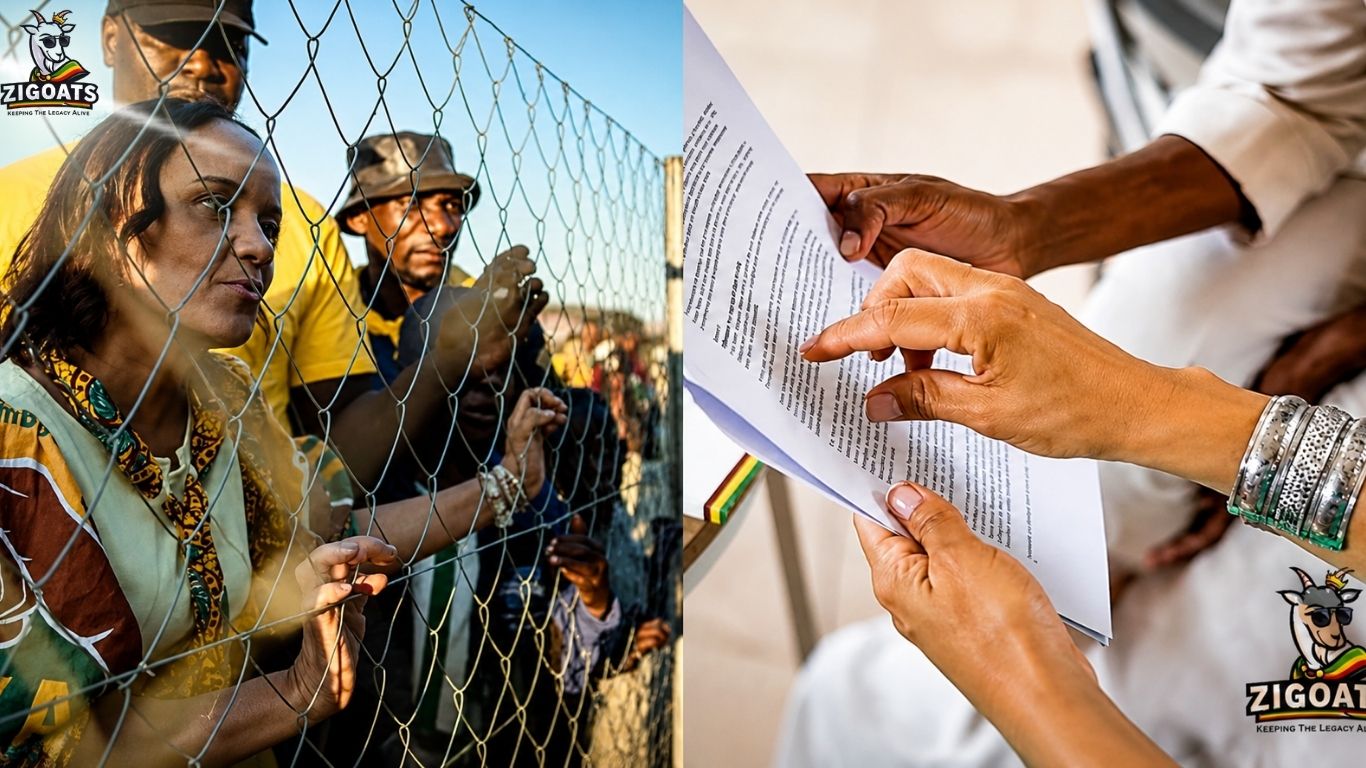
Elisabeth Valerio has launched a sharp attack on Zimbabwe’s proposed Constitutional Amendment Bill No. 3 of 2026, describing the controversial reforms as a calculated attempt to retain political power rather than solve the country’s worsening economic and governance crises.
By Advent Shoko
The United Zimbabwe Alliance (UZA) leader said ordinary Zimbabweans were battling unemployment, collapsing infrastructure, migration pressures and a failing public healthcare system while political leaders were focusing on extending terms of office and restructuring constitutional safeguards.
In a video shared with Zigoats.com, Valerio accused political authorities of prioritising self-preservation over national recovery.
“Fellow Zimbabweans, we need to talk with clarity and openly, the Constitutional Amendment Bill No. 3 of 2026 is not for the people, it is only meant for power retention,” she said.
Her remarks come at a politically sensitive moment as debate intensifies around one of the most far-reaching constitutional reform proposals since Zimbabwe adopted its 2013 Constitution.
The proposed bill seeks to extend the tenure of the President, Members of Parliament and councillors by two years. It also proposes major electoral and governance changes, including altering the future presidential election system, transferring management of the voters’ roll from the Zimbabwe Electoral Commission (ZEC) to the Registrar General’s Office, and establishing a Delimitation Commission.
Supporters of the bill say the reforms are necessary to ensure political stability, policy continuity and uninterrupted development programmes. They argue that constant election cycles consume state resources and shift focus away from national development priorities.
Critics, however, see the proposals as a major constitutional turning point that could weaken democratic accountability, reduce electoral transparency and consolidate executive authority.
Valerio said Zimbabwe’s Constitution was designed to restrain political power, not expand it.
“The constitution is there to limit the powers of the politicians and to make them accountable for their actions,” she said.
“Zimbabwe needs jobs, good health care system, good road networks, not extension of terms.”
English Version:
In emotionally charged remarks aimed at connecting with ordinary citizens, Valerio highlighted the social and economic hardships facing many Zimbabweans.
“People are dying on the roads which have become death traps. Many Zimbabweans are fleeing to the diaspora to become economic refugees. Unemployment rate is sky rocketing,” she said.
She warned that altering the supreme law to protect political interests risked deepening public distrust in governance institutions.
“Those in power want to change the constitution to protect personal interests at the expense of the whole nation. Zimbabwe deserves better,” she added.
Shona Version:
The debate surrounding Constitutional Amendment Bill No. 3 has rapidly evolved beyond Parliament, triggering intense discussion across political parties, legal circles, civil society groups, churches, universities and international diplomatic platforms.
Among the high-profile critics are Nelson Chamisa, constitutional lawyer Tendai Biti and the Constitutional Defenders Forum (CDF), Douglas Mwonzora, constitutional experts Lovemore Madhuku, and Fadzayi Mahere, and reported dissenting voices within ZANU-PF itself.
Vice President Constantino Chiwenga has also reportedly pushed for the preservation of the “one man, one vote” principle amid concerns over proposals linked to indirect presidential election systems.
Political observers say the growing criticism reflects broader anxieties over constitutionalism, institutional independence and the future of democratic governance in Zimbabwe.
The controversy has also attracted international scrutiny, spilling into the United Kingdom’s Parliament where British peer Catharine Hoey condemned the proposed reforms as “an attack on democracy.”
Speaking in the House of Lords, Hoey accused Zimbabwean authorities of suppressing dissent while reshaping the country’s governance framework in ways that could entrench political power.
“The proposed Constitutional Bill in Zimbabwe is an attack on democracy,” she said, while also alleging “continued brutality, beatings, torture and imprisonment against opposition figures.”
At the centre of international concern are proposals that could replace direct presidential elections with an electoral college system while extending presidential and parliamentary terms from five to seven years.
Critics argue such changes could weaken electoral accountability and reduce direct citizen influence over leadership selection. Supporters insist the reforms are intended to improve governance efficiency and provide adequate time for long-term development projects.
Responding on behalf of the British government, Foreign Office minister Lord Johnson adopted a more measured diplomatic tone, saying constitutional reforms remain a sovereign matter for Zimbabwe.
At the same time, he stressed that democratic freedoms remain essential.
“The UK officials remain in contact with the Government of Zimbabwe, civil society and other stakeholders,” Johnson said.
“Freedom of expression, peaceful assembly and association remain essential to democracy.”
His remarks also signalled a shift in Britain’s engagement strategy toward Harare.
“Twenty years of megaphone diplomacy didn’t get us anywhere and we are now in the business of engaging,” he added.
Meanwhile, questions have continued to emerge around the public consultation process linked to the bill.
A report by the Zimbabwe Human Rights Commission described the consultation hearings as “highly managed,” raising concerns over limited participation by civil society groups, dissenting citizens and sections of the media.
The report was later nullified due to lack of quorum after changes within the commission, a development that further intensified debate around institutional credibility and oversight mechanisms.
Analysts say Constitutional Amendment Bill No. 3 is increasingly becoming a defining test of Zimbabwe’s democratic maturity, constitutional culture and political trajectory.
For supporters, the reforms represent an opportunity to create governance stability and long-term planning certainty. For critics, they signal potential democratic backsliding and a dangerous concentration of power.
As parliamentary processes continue, pressure is mounting for broader citizen participation, with growing calls for any major constitutional changes to be subjected to a national referendum.
Leave a Reply