
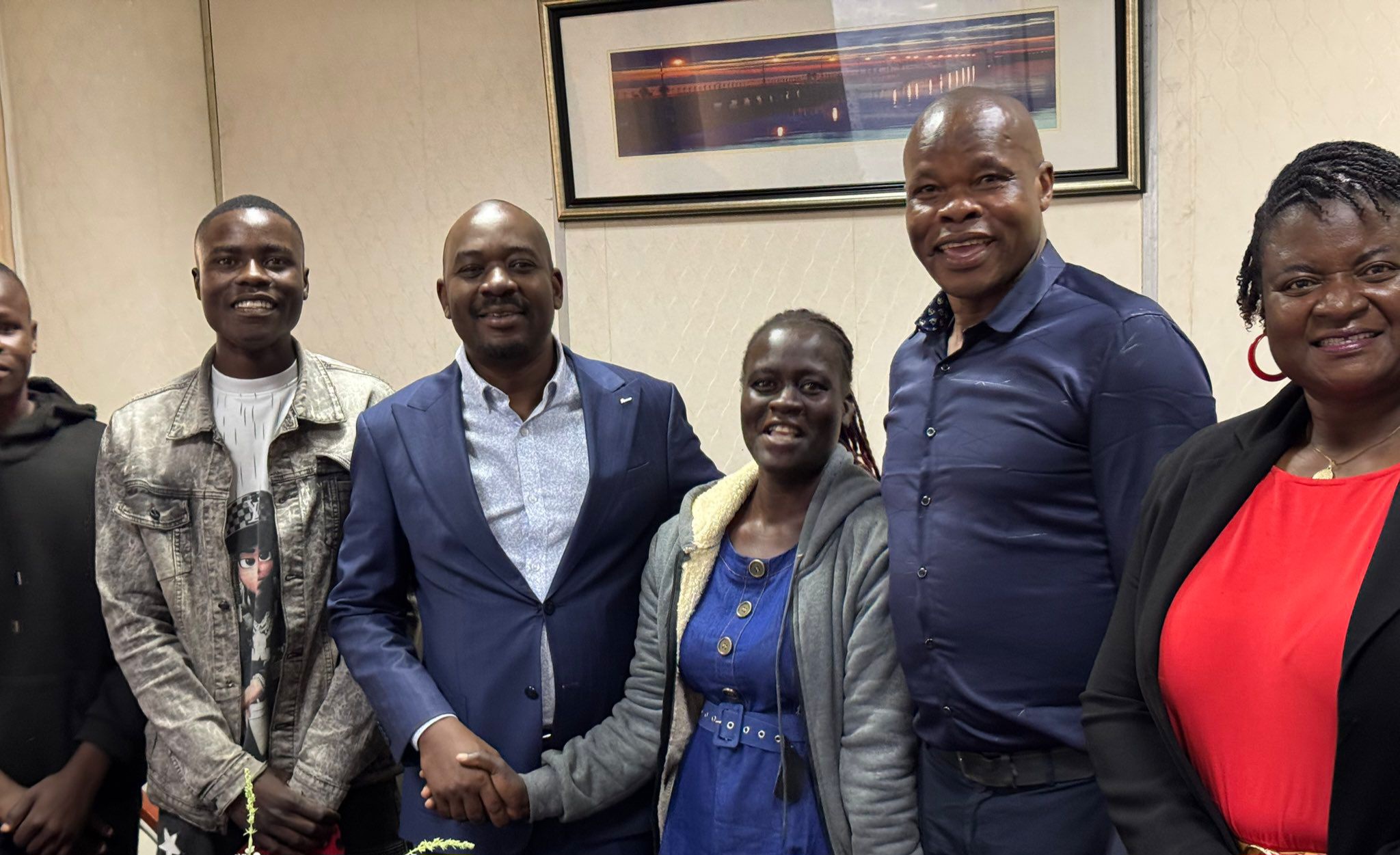
Former Citizens Coalition for Change (CCC) leader, Nelson Chamisa has said Zimbabwe is undergoing a “long, delayed transition” – a national shift he says is already underway but remains unfinished, contested and slowed by years of political and economic strain.
By Advent Shoko
In a statement blending political reflection, faith-based messaging and generational appeal, Chamisa said Zimbabwe is moving through what he called a “season of transition” spanning political systems, economic structures, demographics and national identity.
“Zimbabwe is in a season of transition… a generational, ideological, demographic, political and spiritual transition,” he said.
He argued that the country is effectively moving away from what he implied is an “old order” defined by prolonged economic instability, institutional stagnation and contested governance systems, toward what he called a “new Zimbabwe” anchored on renewal, justice and improved prosperity, though without laying out detailed policy mechanisms.
“It has been a long, protracted and delayed transition,” he said.
A narrative of two Zimbabwes
Chamisa’s framing reflects a familiar opposition narrative in which Zimbabwe is positioned as existing between two eras: one defined by economic fragility, high unemployment, currency volatility and public distrust in institutions; and another still forming, characterised by promises of stability, opportunity, accountability and generational renewal.
While he did not explicitly define these phases in policy terms, his language suggested that the “old Zimbabwe” is associated with a prolonged period of crisis management, economic contraction and limited upward mobility, particularly for younger citizens.
The “new Zimbabwe,” by contrast, was presented as an emerging future shaped by stronger governance, renewed national confidence and broader prosperity across generations.
“We remain steadfast in our conviction that God is redirecting the course of Zimbabwe… permanently and for the better,” Chamisa said.
He added that the transformation would not be temporary or cyclical, but foundational and irreversible.
Political messaging rooted in trust and mobilisation
Chamisa framed the transition not only as structural, but also moral, arguing that both citizens and political actors carry responsibility for shaping its outcome.
“The Lord and the citizens of Zimbabwe have entrusted us with a sacred responsibility to help shape the future of our nation. We will not betray that trust,” he said.
He urged supporters to remain organised and focused, reinforcing a message of sustained political engagement in a context where opposition movements have often argued that institutional reform has lagged behind public expectations.
“Organise. Mobilise. Pray. Keep strong. Remain steadfast and focused,” he said.
A country shaped by long economic strain
Zimbabwe’s political messaging continues to unfold against a backdrop of deep economic challenges that have defined much of the past two decades, including inflationary pressures, currency instability, unemployment, informalisation of the economy and persistent reliance on external support and remittances.
These conditions have shaped competing political narratives: the government’s emphasis on gradual stabilisation and infrastructure investment versus opposition arguments that structural reform has been slow and incomplete.
Within this environment, Chamisa’s language of transition taps into long-standing public sentiment that Zimbabwe’s post-independence promise remains unfinished, particularly among younger populations navigating economic uncertainty and migration pressures.
Between continuity and change
Chamisa’s remarks do not introduce new policy proposals, but they reinforce a broader political framing in which Zimbabwe is portrayed as standing at an inflection point, neither fully transformed nor static.
In that framing, the country’s current condition sits between endurance and expectation: a society still carrying the weight of past economic shocks, while simultaneously anticipating a future defined by renewal and expanded opportunity.
For now, the “new Zimbabwe” remains a political horizon rather than a defined programme, but one that continues to shape how opposition leaders articulate trust, legitimacy and national direction in an evolving political landscape.
Leave a Reply