
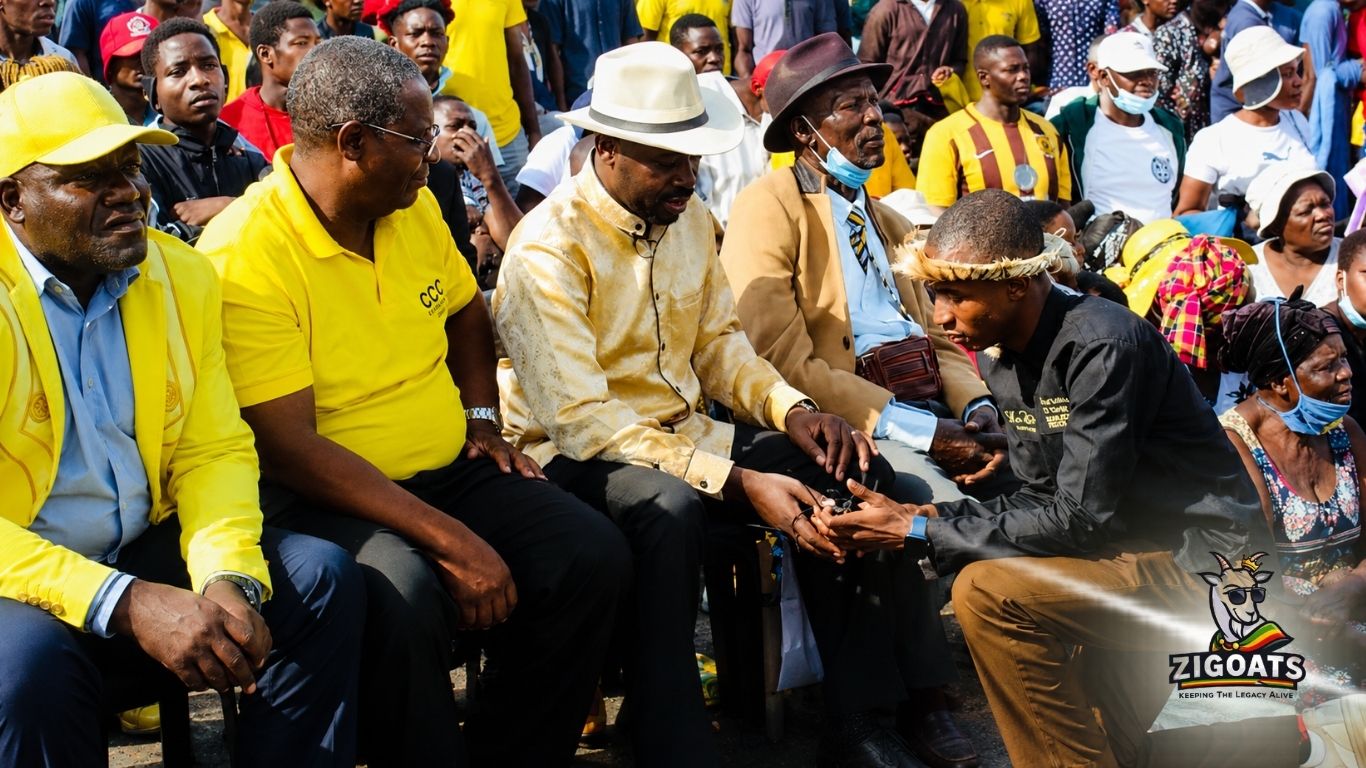
HARARE – Former Citizens Coalition for Change (CCC) leader Nelson Chamisa has renewed calls for a transitional government, aligning himself with proposals previously advanced by Tendai Biti, Ibbo Mandaza and Chipo Dendere as debate intensifies over Constitutional Amendment Bill No. 3 of 2026 (CAB3).
By Advent Shoko
The proposal comes at a time when Zimbabwe is sharply divided over the polarising constitutional amendment, which critics argue could extend the tenure of the incumbent President, Members of Parliament (MPs) and councillors until 2030.
Chamisa’s latest intervention adds another influential voice to a growing chorus calling for an alternative political arrangement to address what they view as deepening governance, economic and constitutional challenges facing the country.
In a statement shared on social media, Chamisa said Zimbabweans across the country were expressing concern about the nation’s direction.
“EVERYWHERE I GO, I meet Zimbabweans who are worried about the country’s direction and future. Regardless of age, profession, or location, many share a deep concern about the path the nation is taking and the dangers the country faces in the context of the unilateral, unpopular and anti-people constitutional amendment. The wisest thing is to withdraw this #CAB3 from parliament and constitute a transitional government that will address all the challenges our country faces. It’s doable. #WeTheCitizens.”
The remarks mirror positions that have been advanced in recent years by several opposition figures, academics and civic actors who argue that Zimbabwe requires a broad-based transitional authority to tackle political instability, economic challenges and governance concerns before the next election cycle.
Chamisa Intensifies Opposition to CAB3
Chamisa, who served as ICT Minister during Zimbabwe’s Government of National Unity (GNU) between 2009 and 2013, has repeatedly criticised CAB3, describing it as a threat to constitutionalism and democratic governance.
In previous remarks, he argued that leadership should be temporary and accountable to citizens.
“When leaders come, they must go. When leaders serve, they must leave. Unless they are dealers and crooks.
True leaders know when to leave. Dealers and crooks never do.”
He further argued that any government derives its legitimacy from the consent of the people and insisted that Zimbabwe needed what he termed a “citizens’ government.”
“There can be no legitimate government without the consent of #WeTheCitizens who are governed. There is nothing so useless as doing efficiently what is fundamentally wrong. CAB3 is the wrong move, a misguided initiative and a selfish national mistake.”
Chamisa also rejected both the process and expected outcomes of the proposed constitutional changes, framing opposition to CAB3 as a new phase in Zimbabwe’s democratic struggle.
The Growing Transitional Government Debate
Chamisa’s call comes months after political analyst Ibbo Mandaza publicly reaffirmed his long-standing proposal for a National Transitional Authority (NTA).
Mandaza argued that the proposal has existed in the public domain since 2016 and was intended to provide a peaceful pathway toward political stability and national reconstruction.
According to Mandaza, the proposed NTA would not replace the Constitution through force but would require approval through a national referendum.
The concept envisages an inclusive administration made up of political leaders, technocrats and civic actors tasked with stabilising the economy, reducing political tensions and preparing conditions for credible future elections.
Former Finance Minister Tendai Biti has also previously expressed support for transitional arrangements as a mechanism for addressing Zimbabwe’s recurring political and economic crises.
Political scientist Chipo Dendere has similarly contributed to discussions around governance reforms and transitional mechanisms aimed at strengthening democratic institutions.
Critics See Contradictions
The transitional government proposal has not been without controversy.
Critics argue that calls for a seven-year transitional authority and opposition to CAB3 raise similar constitutional questions.
Before her death former LEAD president Linda Tsungirirai Masarira, questioned how a lengthy transitional authority could be implemented without constitutional amendments.
Other commentators have argued that any proposal involving the suspension of elections, extension of political terms or restructuring of government authority must ultimately be subjected to the will of voters through a referendum.
The debate has exposed deep divisions within Zimbabwe’s political landscape, with supporters viewing a transitional arrangement as a practical solution to long-standing national challenges, while opponents warn that it could undermine constitutional democracy if not handled transparently and legally.
Echoes of the Government of National Unity
For many Zimbabweans, discussions about a transitional government inevitably revive memories of the Government of National Unity formed after the disputed 2008 elections.
The GNU brought together the Robert Mugabe-led ZANU PF and the MDC formations led by the late Morgan Tsvangirai and professor Welshman Ncube, fronted by Arthur Mutambara, following a period of intense political violence and economic collapse.
That arrangement, which lasted from 2009 to 2013, is credited by supporters with helping stabilise the economy, reducing hyperinflation and restoring basic public services.
However, critics argue that while the GNU delivered short-term stability, it failed to resolve many of Zimbabwe’s deeper political and institutional challenges.
Leave a Reply