
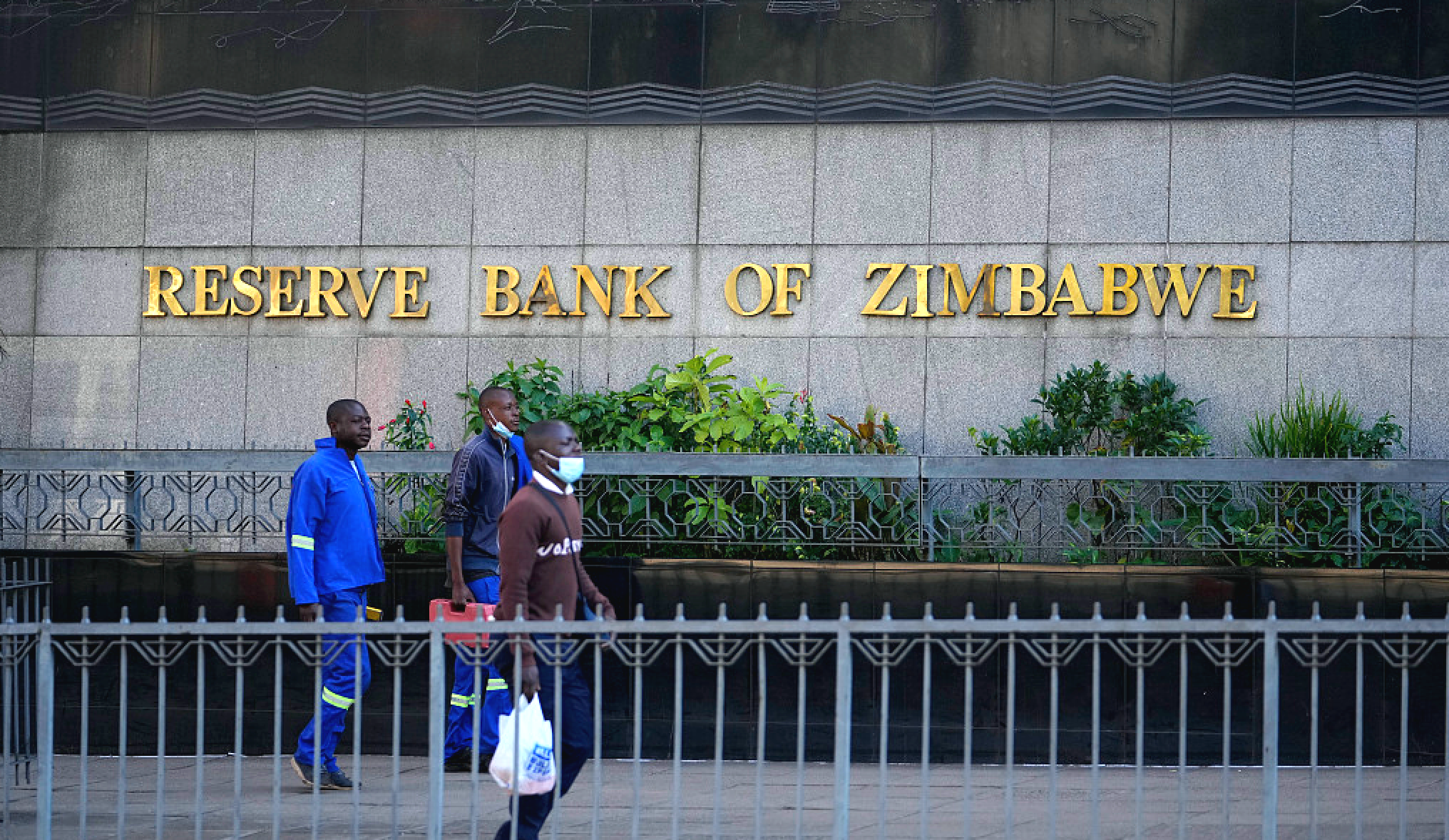
HARARE, Zimbabwe – The Reserve Bank of Zimbabwe (RBZ) has cut its benchmark interest rate for the first time since inflation fell into single digits, signalling growing confidence in the country’s economic stability and the performance of the Zimbabwe Gold (ZiG) currency.
By Advent Shoko
In resolutions announced after the Monetary Policy Committee (MPC) meeting held on June 15, 2026, the central bank reduced the Bank Policy Rate from 35% to 30%, citing a sustained decline in inflation and improved macroeconomic fundamentals.
The move comes as annual inflation remained below 5% for five consecutive months, a development authorities say reflects a structural shift in Zimbabwe’s inflation dynamics after years of price instability.
RBZ Governor Dr. John Mushayavanhu said the policy adjustment was designed to align interest rates with the country’s new inflation environment while supporting economic growth.
“Inflation expectations are now well anchored, and the economy has demonstrated resilience despite recent external shocks,” the apex bank said in its statement.
Inflation Remains Under Control Despite Oil Price Shock
The latest MPC assessment paints a picture of an economy that has largely weathered the global turbulence triggered by tensions in the Middle East and rising oil prices earlier this year.
While fuel prices increased following the international oil shock, the impact on the broader economy remained limited.
Monthly inflation briefly rose from 0.5% in March to 1.1% in April before easing back to 0.5% in May, indicating that price pressures were largely contained.
Annual inflation stood at 4.8% in April and 4.4% in May, remaining well below the levels recorded just a year ago.
The achievement is particularly striking considering that inflation had reached 95.8% in July 2025 before beginning a sustained downward trend.
According to the MPC, several factors helped cushion consumers and businesses from the full impact of rising global oil prices. Government reduced selected fuel taxes and levies, while businesses exercised restraint in passing higher costs to consumers. Increased use of alternative energy sources also helped soften inflationary pressures.
The committee further expressed optimism that easing geopolitical tensions, particularly following a reported peace agreement between the United States and Iran, could support lower global oil prices and help preserve Zimbabwe’s low-inflation environment.
Economic Growth Forecast at 5%
Despite global supply chain disruptions linked to the Middle East conflict, Zimbabwe’s economy is projected to grow by 5% in 2026.
Although lower than the revised growth estimate of 8.2% recorded in 2025, the forecast suggests continued expansion across key sectors of the economy.
The central bank believes strong foreign currency inflows will remain a major driver of growth.
Foreign currency receipts reached US$8.3 billion by May 31, 2026, compared to US$6 billion during the same period last year, representing a 39.1% increase.
The inflows exceeded total foreign payments of US$5.9 billion, creating a significant surplus that strengthened liquidity within the financial system.
Analysts have long argued that sustained foreign currency inflows are essential for exchange rate stability, import financing and investor confidence. The latest figures suggest that Zimbabwe is currently generating enough foreign currency to comfortably meet external obligations while supporting domestic economic activity.
ZiG Reserves Rise Above US$1.5 Billion
One of the most closely watched indicators remains the reserve backing of the ZiG currency.
The MPC revealed that foreign currency reserves supporting ZiG exceeded US$1.5 billion by the end of May 2026, equivalent to approximately 1.5 months of import cover.
The reserve build-up enabled the RBZ to intervene strategically in the foreign exchange market whenever necessary to ensure legitimate foreign payment obligations were met.
As a result, authorities say the ZiG maintained relative stability, trading within a narrow range of between ZiG25 and ZiG27 against the United States dollar.
The central bank also noted subdued activity on the parallel market, often viewed as a key indicator of confidence in the official exchange rate system.
For businesses and investors, exchange rate stability remains one of the most important signals that economic reforms are beginning to gain traction.
New Savings Instruments Gain Momentum
The MPC welcomed the rollout of the ZiG Denominated Term Deposit Facility (ZiGDTDF), a new instrument designed to strengthen monetary policy transmission and encourage domestic savings.
Initial uptake has been encouraging.
The 90-day instrument attracted ZiG367.2 million, while the 30-day facility secured ZiG110 million.
The committee believes the facility could play an important role in developing Zimbabwe’s money and capital markets while offering savers positive real returns in an environment where inflation has fallen sharply.
Economists have often pointed to weak savings culture and limited investment options as constraints to financial sector development. Authorities hope the new facility will help address both challenges.
IMF Programme and Forex Trading Reforms
The MPC also acknowledged ongoing discussions between Zimbabwe and the International Monetary Fund (IMF) under the Staff Monitored Programme (SMP).
The committee urged the central bank to continue meeting agreed targets and reform commitments to improve prospects for programme success and broader economic re-engagement.
In addition, the Reserve Bank reported significant progress in developing a new electronic foreign exchange management trading system aimed at improving efficiency, transparency and liquidity in the forex market.
The MPC called for the system’s completion to be accelerated.
What the Interest Rate Cut Means
Beyond the headline reduction in the policy rate, the MPC also lowered the interest rate on the Targeted Finance Facility (TFF) from 20% to 15%.
Banks lending through the facility will be required to cap all-inclusive lending rates to productive sectors at 25%.
The decision is expected to reduce borrowing costs for manufacturers, exporters, farmers and other productive sectors seeking capital for expansion.
However, the committee was careful to stress that the rate cut should not be interpreted as a broader easing of monetary policy.
Instead, officials described it as a technical realignment reflecting lower inflation and improved economic conditions.
Meanwhile, statutory reserve requirements remain unchanged at 30% for demand deposits and 15% for savings and time deposits in both local and foreign currencies.
The Bigger Picture
The latest MPC resolutions represent one of the strongest official endorsements yet of Zimbabwe’s recent monetary reforms and the stability of the ZiG currency.
After years of currency volatility, high inflation and economic uncertainty, policymakers argue that the economy is entering a more predictable phase characterised by low inflation, stronger foreign currency inflows and improving confidence.
Whether these gains can be sustained will depend on continued fiscal discipline, reserve accumulation, exchange rate stability and successful implementation of ongoing reforms.
For now, however, the Reserve Bank appears convinced that the foundations of a lower-inflation economy are taking shape, a development likely to be welcomed by businesses, investors and ordinary Zimbabweans alike.
Leave a Reply