
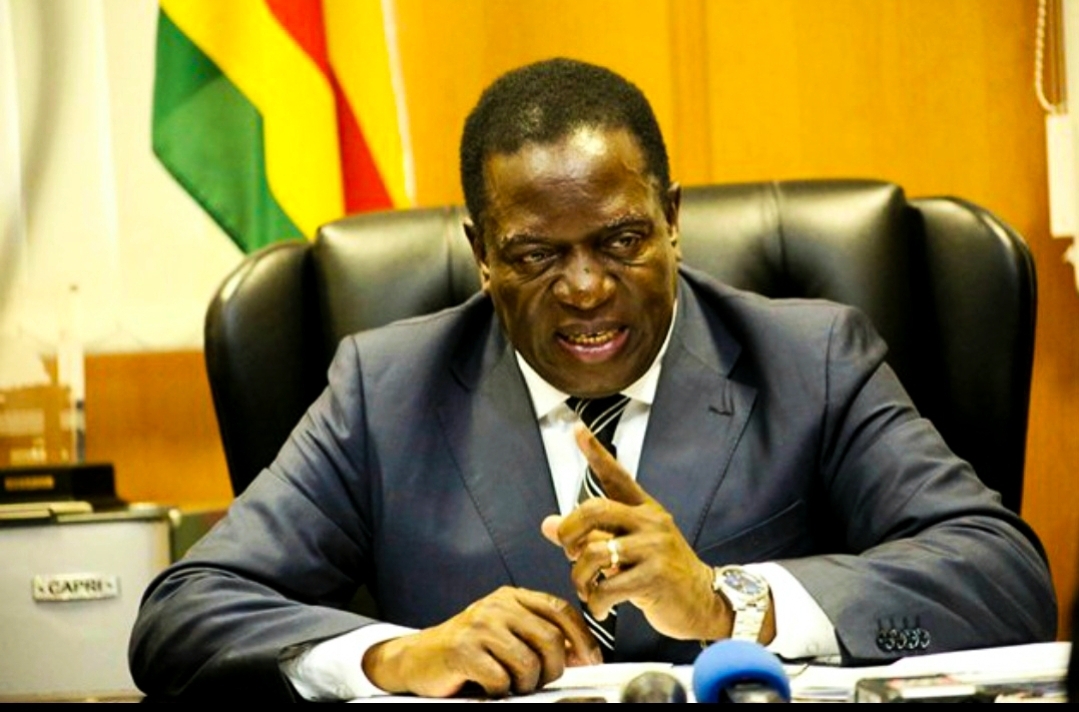
President Emmerson Mnangagwa has directed government ministries to discontinue negotiations on a proposed $350 million health support deal with the United States (US), arguing that the terms were “lop-sided” and threatened Zimbabwe’s sovereignty.
The directive was communicated through the Office of the President and Cabinet in a formal letter from Secretary for Foreign Affairs and International Trade, Ambassador A.R. Chimbindi, dated 23 December 2025.
The correspondence, addressed to the Secretaries for Finance and for Health and Child Care, referenced then ongoing engagements with the US Embassy in Harare over a Memorandum of Understanding (MoU) under the America First Global Health Strategy (AFGHS).
In the letter seen by ZiGoats.com, government made its position clear:
“Please be advised that the President, His Excellency Dr. Emmerson Dambudzo Mnangagwa, has directed that Zimbabwe must discontinue any negotiation, with the USA, on the dearly lop-sided MoU that blatantly compromises and undermines the sovereignty and independence of Zimbabwe as a country.”
The proposed agreement was being positioned by Washington as a future framework for health sector support, subject to specific terms and conditions. However, authorities in Harare appear to have concluded that the conditions attached were unacceptable.
You May Like This
Rare Praise From a Critic
The decision has sparked debate across political lines. Even government critic Ali Naka publicly commended the move, writing:
“Congratulations to @edmnangagwa and his team! It’s commendable”
His reaction is notable in a climate where executive decisions often draw sharp partisan criticism.
Sovereignty vs Support
The development reopens a broader conversation around bilateral agreements between African governments and Western partners. Critics of such arrangements argue that some deals are structured in ways that place African states in subordinate positions, limiting policy autonomy and framing support as conditional assistance rather than partnership.
For Zimbabwe, the message from the presidency is clear, any international cooperation must not come at the expense of national sovereignty.
Whether negotiations resume under revised terms remains to be seen. For now, the $350 million proposal is off the table.
Leave a Reply