
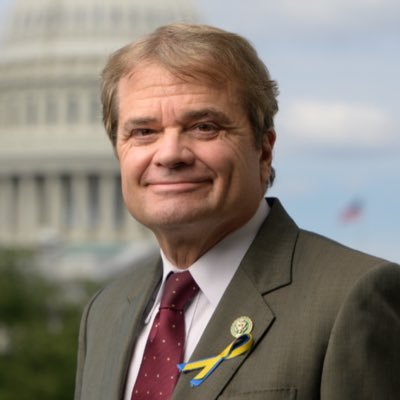
WASHINGTON, D.C. – A fierce constitutional and geopolitical storm erupted on Capitol Hill on Tuesday after Illinois Congressman Mike Quigley publicly called for President Donald Trump’s removal under the 25th Amendment, accusing him of reckless conduct after a threat directed at Iran that critics say has jolted markets, rattled allies, and intensified fears of a wider Middle East conflict.
By Advent Shoko
In a blistering statement released on April 7, Quigley said Trump had crossed what he described as a dangerous new line after posting that “a whole civilization will die tonight” in reference to Iran. Quigley said:
“Every day, Donald Trump commits acts unfit for the office of the President. This morning, he’s reached a new level of unhinged.”
Quigley also urged the Cabinet to remove the president under Section 4 of the 25th Amendment and, failing that, for Congress to reconvene immediately to begin impeachment proceedings.
The extraordinary call from Quigley adds to a rapidly growing chorus of lawmakers, legal commentators and even some conservative voices questioning whether the president’s rhetoric has now moved beyond brinkmanship into territory with grave constitutional and international consequences.
A Constitutional Flashpoint
At the heart of the crisis is Section 4 of the 25th Amendment, one of the most powerful, and rarely discussed, mechanisms in the U.S. constitutional framework.
Under the provision, the Vice President and a majority of Cabinet officials may formally declare that the president is “unable to discharge the powers and duties of his office.” Once that written declaration is sent to Congress, the vice president immediately becomes Acting President.
If the president contests the declaration, Congress must assemble within 48 hours if not already in session and has 21 days to decide the issue. A two-thirds majority in both the House and Senate is required to keep the president sidelined.
Legal scholars note that while the amendment has previously been used during medical procedures and moments of physical incapacity, it has never been successfully invoked to remove a sitting president against his will over questions of mental fitness or judgment.
That makes Quigley’s demand politically explosive and legally unprecedented.
Iran Threat Sends Shockwaves
The row comes against the backdrop of rising U.S.-Iran tensions, with Trump’s rhetoric being interpreted by many diplomats and market analysts as a signal of possible military escalation.
In the world of geopolitics, words from the White House are not mere statements, they can move armies, markets, and alliances.
Trump’s threat has already triggered alarm across diplomatic circles, with concerns centering on:
- possible escalation in the Gulf region
- renewed threats to the Strait of Hormuz
- risk of retaliatory moves by Tehran or proxy groups
- pressure on global oil markets and shipping routes
Given that a significant share of global oil flows through the Gulf, any suggestion of conflict with Iran immediately raises recession fears, inflation concerns, and investor anxiety.
Quigley himself explicitly linked the president’s remarks to economic risk, warning that the rhetoric was “driving us towards another Great Recession.”
That warning reflects a growing geoeconomic concern: conflict in the Middle East often translates into oil price shocks, higher freight costs, currency instability, and risk-off capital flows globally.
Political Reality: Can It Happen?
Despite the dramatic calls, the political path to removal remains exceptionally narrow.
For the 25th Amendment route to work, Vice President JD Vance and a majority of Trump’s Cabinet would need to break ranks. So far, there has been no public indication that such support exists.
That reality has led some analysts to view the calls as more politically symbolic than immediately actionable.
Still, symbolism matters in Washington.
The push increases pressure on Congress, raises questions about presidential fitness, and shapes public discourse ahead of any future legislative or judicial action.
Impeachment, meanwhile, would require a separate political process beginning in the House before moving to the Senate.
International Law Questions Emerge
Beyond domestic politics, Trump’s language is also likely to intensify debate in international law circles.
Threatening the destruction of an entire civilization touches on principles embedded in the UN Charter, particularly those concerning the prohibition of threats or use of force against sovereign states.
Even when framed as strategic deterrence, such rhetoric may be interpreted as undermining international norms designed to prevent aggressive war.
For allies and adversaries alike, this kind of language complicates diplomatic signaling.
In global affairs, ambiguity can deter, but it can also miscalculate.
And miscalculation in the Gulf has historically come at a heavy human and economic cost.
Leave a Reply