
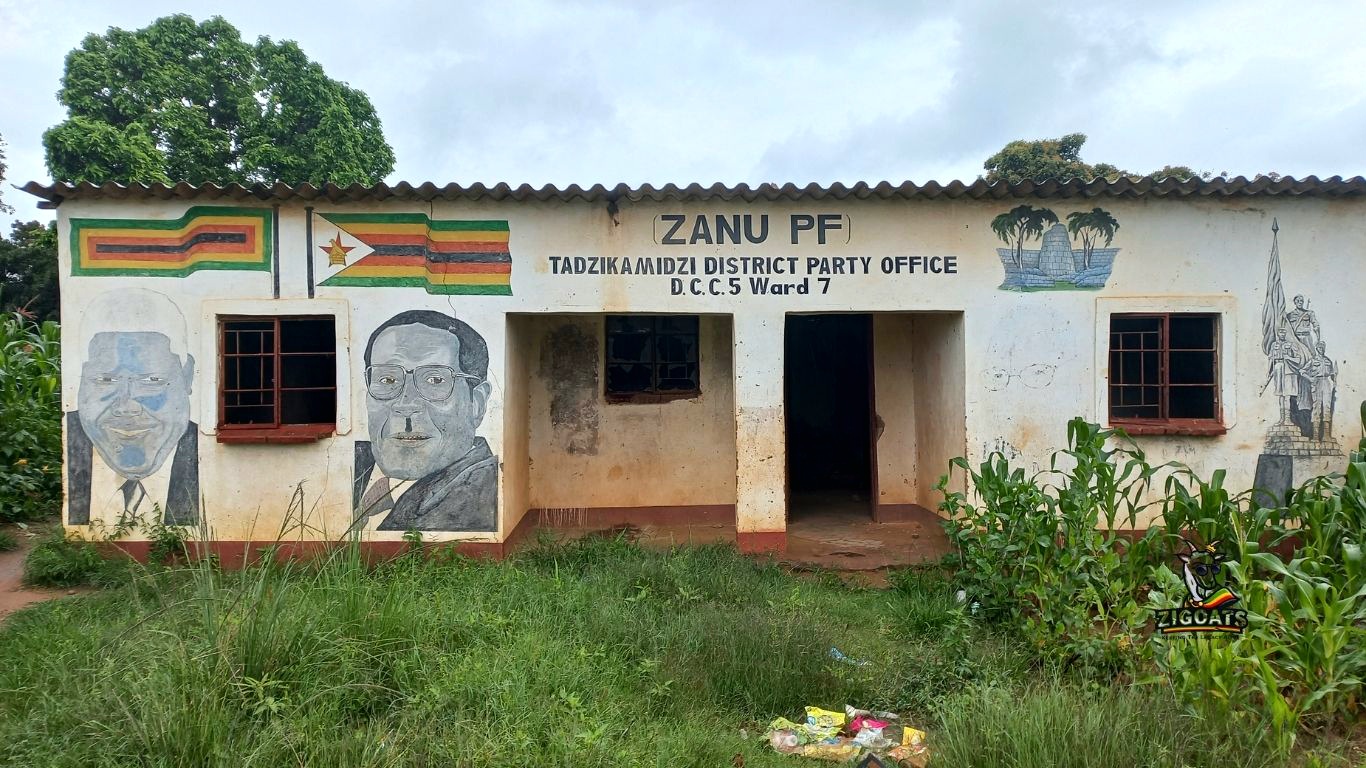
Epworth is falling apart. Literally.
By ZiGoats | Governance & Politics Desk
On Tuesday, 20 January 2026, ZiGoats joined the Epworth Local Board, the Ministry of Health, Oxfam and the Civil Registry on a field tour of the dormitory town following reports of collapsing “houses” and disease outbreaks linked to the ongoing rains. What we found went far beyond damaged structures. It exposed a long-running governance failure, a public health emergency and a political dilemma no one wants to touch honestly.
Mud Walls, Gravel Soil and Inevitable Collapse
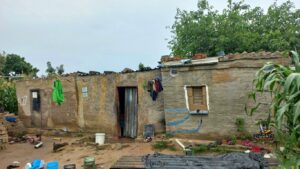
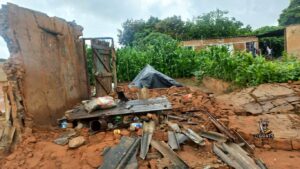
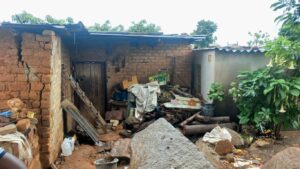
The first stop set the tone. A shaky mud structure had already lost one side. It wasn’t an exception. It was the norm.
Most “houses” in Epworth are built from mud bricks sitting on gravel soil, without foundations, proper drainage or approved plans. Even without heavy rains, these structures are accidents waiting to happen. With the current downpours, collapse is not a matter of if, but when.
These are not council-approved homes. People settled themselves. Even the place names tell the story. Magada, “we just sat here”. Tadzikamidzi, “we have put down roots, you can’t move us”. Informal settlement has been normalised over decades, while planning simply stopped.
Wells, No Toilets and Water That Isn’t Safe
Water and sanitation are a disaster.
Most households rely on shallow wells. Some wells sit lower than ground level, meaning running water can easily flow into them during rains, carrying faecal matter and waste. At one collapsed house, we asked a neighbour where the toilet was.
“Hapatorina,” he said. There is no toilet.
Not a pit latrine. Nothing.
Some residents are “fortunate” enough to draw water from a neighbour’s well or from community boreholes installed largely in the run-up to the 2023 harmonised elections. But proximity to a borehole does not equal safety. Harare’s groundwater is already widely contaminated, and Epworth is no exception.
Ghost Infrastructure and Abandoned Plans
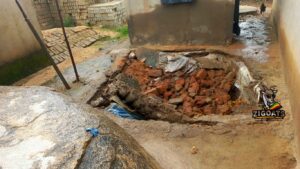
At another collapsed home, a deep trench ran across the yard. One of the six occupants said it was already there when they moved in around the year 2000.
“We believe it’s for water pipes,” he said.
“Who dug it?” we asked.
“I believe it’s the council.”
Probably dug in the 1990s. Then abandoned. Another plan that died quietly, leaving residents to build around it and on top of it.
When One House Falls, Another Follows
In one section, a house belonging to a member of the Africa Apostolic Church founded by the late Archbishop Paul Mwazha collapsed and slammed into the neighbour’s house. That house also collapsed.
The distance between the two? About 30 to 50 centimetres.
Asked about rebuilding, the owner was calm, almost resigned. He said:
“There’s regularisation taking place. Everyone is moving houses upwards. I won’t build mine here and my neighbour will move to pave way for me. That’s how all of us will do.”
It sounded organised. It isn’t. It’s survival by improvisation.
Community Taps, Standing Water and Silent Risk
We washed mangoes at a community tap. This is where residents collect drinking water. Nearby, water pooled and refused to drain. Residents said it was being used for gardening and construction.
Standing water. Open wells. No toilets. Heavy rains.
Public health professionals don’t need lab tests to predict the outcome.
A Granny, Six Grandchildren and No Identity
The most painful visit was to an elderly woman living with six grandchildren. Their house had also collapsed.
The children don’t know where their parents are. Two of them were present. The older one said he went up to Grade 2, then stopped. We asked:
“How old is your granny?”
He said she’s old. He said:
“Haa vakura.”
They couldn’t estimate her age. They are illiterate, undocumented and officially invisible. They have no birth certificates, no identity documents, no footprint in government systems.
This is not an accident. Illiteracy and exclusion do not just happen. They are produced by sustained neglect.
The “toilet” was a pit. The structure was a shack of scrap metal. ZANU PF regalia hung nearby. Avocado trees, maize plants, shade. That’s the entire safety net.
The images are too disturbing to publish.
Roads That Don’t Exist
Roads in Epworth are theoretical. Many are deeply eroded by running water. Others have disappeared because residents built houses in the middle of them. In some places, giant boulders block what should be access routes. You reach a dead end and turn back.
Even major roads are heavily potholed, slowing emergency response and making service delivery nearly impossible.
Clean-Up for VIPs, Then Back to Normal
We started the tour at Epworth High School. Grass was being cut. Surroundings were being fixed. We were told the First Lady, Dr Auxilliar Mnangagwa, was expected soon. One couldn’t help but wish that the urgency and order remained after the visit.
When Rain Isn’t the Cause
The final stop shocked even seasoned officials. A house near a road corner had been hit by a Toyota Vitz. At first glance, it looked like another rain-related collapse.
It wasn’t.
A drunk driver avoided mango trees, crashed into the house, ploughed through the wall and hit the bed where occupants were sleeping. They survived, but with serious injuries and are hospitalised.
A Ministry of Health official stepped on the floor. His foot sank. The house was old, but structurally weak. Like many others, it was built dangerously close to the road.
Epworth: Vote Bank or Time Bomb?
Epworth is a vote bank. Residents vote in large numbers. Everyone knows it.
This is the political trap. Government cannot simply issue title deeds when stands are unsafe, on wetlands, or when houses are structurally unsound and overlapping. But it also cannot relocate people without risking electoral punishment.
Who gets the deed when stands are 25 by 25 metres and encroach into each other? Who moves first? Who pays?
Civil society is also entangled. NGOs have operated here for years. Some households receive monthly stipends. The crisis is known. Documented. Funded. Yet solutions remain temporary.
This is not charity fatigue. It is policy paralysis.
Disease Outbreaks Were Inevitable
Like many informal settlements, Epworth is now experiencing disease outbreaks. Dysentery. Diarrhoea. Cholera scares. Sexually transmitted infections.
With contaminated water, open defecation, overcrowding and poor drainage, outbreaks are not emergencies. They are predictable outcomes.
What Can Be Done?
The touring team had no authority to decide. Only to report and recommend.
Immediate relief is needed: food, temporary shelter, clothes, bedding. Not as a solution, but as acknowledgment that people are suffering and seen.
Long-term solutions are harder but unavoidable.
Regularisation where it is safe. Relocation from wetlands and high-risk zones. Cluster housing built by the state, offered under rent-to-buy arrangements. Community income-generating projects that move people from survival to productivity.
Donations are not development. People cannot live forever as beneficiaries. Children must go to school. Families must prosper. Societies (taxpayers) cannot carry permanent vulnerability without collapsing themselves.
Crucially, land and housing decisions must be driven by planners, business minds and administrators, not politicians paralysed by electoral fear. Political messaging that quietly encourages illegal settlements only deepens the crisis.
A Disaster Years in the Making
Epworth is not a sudden tragedy caused by rain. The rain simply exposed what decades of indecision, politicisation and neglect have built.
Houses are falling. Diseases are spreading. Children are growing up invisible.
This is not just an Epworth problem. It is a mirror of how Zimbabwe manages poverty, power and people at the margins.
And the longer we look away, the harder the collapse will be to stop.
ZiGoats
Leave a Reply