
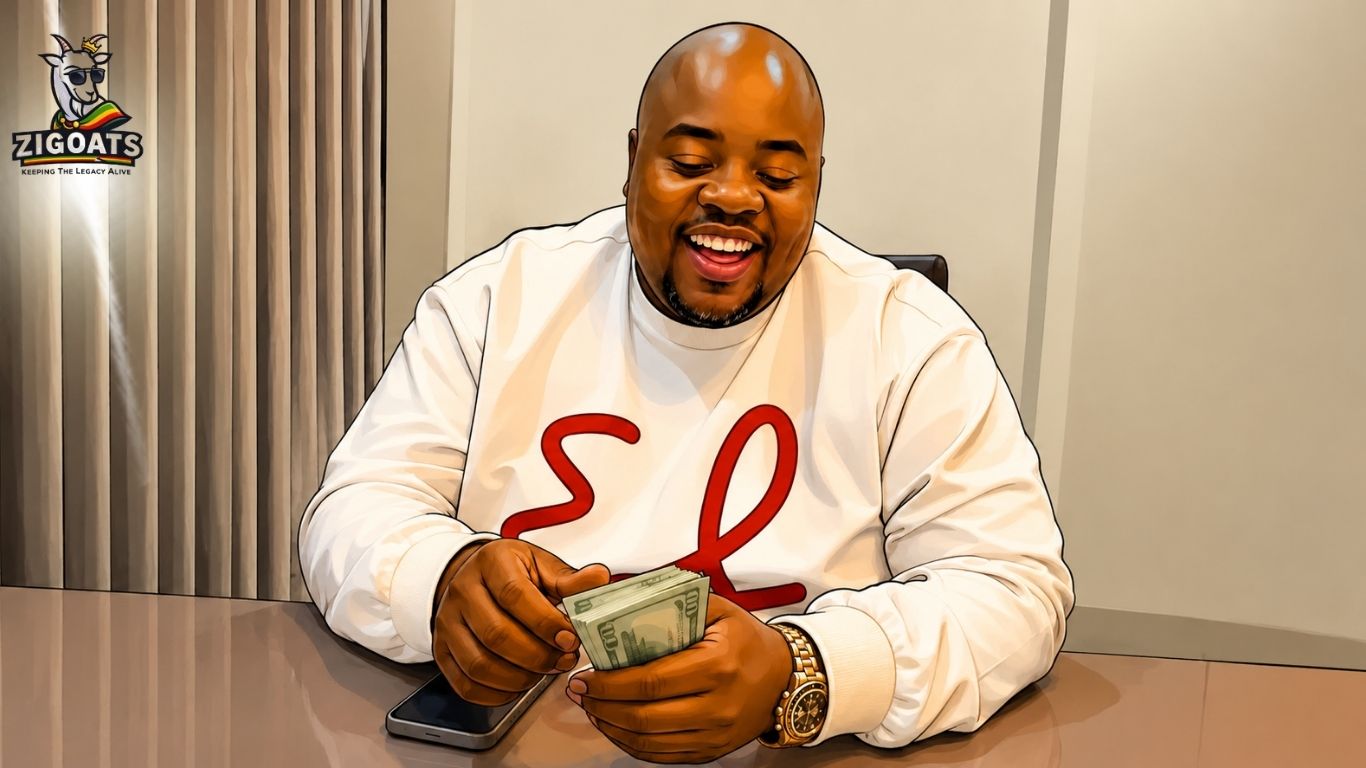
Zimbabwean businessman Wicknell Chivayo has defended his controversial religious title “Mukuru We Mazuva”, insisting it was not self-appointed but given by followers within the Johane Masowe apostolic sect, as debate intensifies over whether the phrase amounts to a blasphemous reference to God.
By Advent Shoko
The phrase, widely understood as the Shona interpretation of “Ancient of Days”, has triggered a sharp theological and cultural dispute online, with critics arguing that it is a biblical title reserved exclusively for God.
The controversy has now evolved beyond social media semantics into a wider question of how religious symbolism, celebrity influence, and apostolic traditions intersect in Zimbabwe’s public life.
Chivayo Rejects Divinity Claims
Responding to criticism, Chivayo said the title originated from his association with Johane Masowe followers and should not be interpreted as a claim to divine status.
“This title yekuti MUKURU WE MAZUVA was not self imposed, it was a name i was given ne VATENDI ku MASOWE,” he said.
He stressed that his public life remains rooted in Christian worship and reverence for God, adding that he does not attribute spiritual authority to himself.
“In everything I do i always give thanks and praise up above to the ALMIGHTY GOD,” he added.
Chivayo further argued that within apostolic traditions, spiritual figures are often addressed using honorifics that reflect respect rather than theological elevation.
Theological Lines Blurred In Public Discourse
The dispute has exposed a recurring tension in Zimbabwe’s religious space: the gap between mainstream Christian doctrine and the symbolic language used in African Independent Churches.
In orthodox Christian interpretation, the term “Ancient of Days” refers exclusively to God, drawing from the Book of Daniel in the Bible. Critics therefore argue that any human association with the phrase risks theological misrepresentation.
However, supporters of Chivayo say the term “Mukuru We Mazuva” functions within cultural and spiritual context, where language often expresses reverence, hierarchy, or spiritual leadership rather than literal divinity.
Public Division Over Faith And Power
Social media reactions reflect a divided public. Some users insist the title crosses a sacred boundary and should be rejected outright, arguing that only God can be described as eternal or sovereign over time.
Others frame the controversy differently, suggesting that Zimbabwe’s religious landscape often blends spiritual language, charisma, and material influence in ways that defy strict doctrinal interpretation.
The debate has also drawn attention to how wealth, visibility, and religious association can amplify spiritual claims in the digital age.
Wider Meaning Behind The Controversy
Beyond the immediate argument over terminology, the controversy highlights a broader issue: how religious authority is perceived when it intersects with public influence and economic power.
In Zimbabwe’s apostolic movements, titles and honorifics often carry symbolic meaning tied to spiritual leadership structures, but their interpretation outside those circles frequently generates misunderstanding.
The result is a growing cultural tension between internal religious language and external public scrutiny.
Leave a Reply