
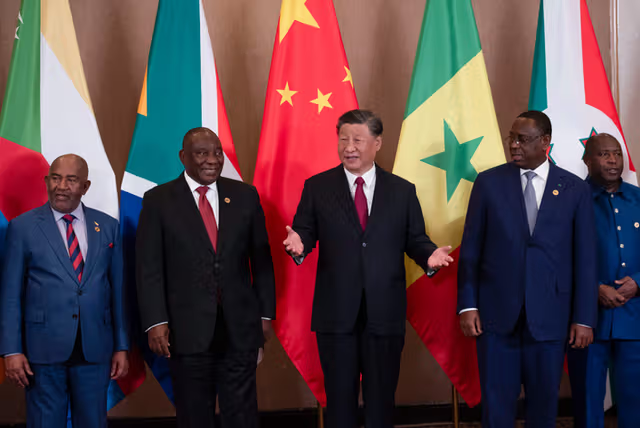
China’s Vice President has launched a high-level three-nation tour of Africa, visiting South Africa, Kenya, and Seychelles, skipping Zimbabwe, a move analysts link to Harare’s recent ban on raw lithium exports.
The tour underscores Beijing’s continuing influence across the continent, highlighting infrastructure investments, trade deals, and strategic partnerships through the Belt and Road Initiative. In Kenya, Chinese-backed projects like the Standard Gauge Railway revival demonstrate Beijing’s sustained impact on regional development. South Africa and Seychelles are also benefiting from Chinese investment in ports, energy, and industrial projects.
Zimbabwe’s exclusion comes after its policy to halt lithium exports, a key mineral in global electric vehicle and battery markets. Chinese firms dominate Zimbabwe’s mining sector, and analysts say the tour sends a clear signal of Beijing’s displeasure, warning investors of policy risks.
Observers note this move may be both geoeconomic and geopolitical. By linking high-level diplomacy with investment, China is consolidating influence in countries seen as reliable partners, while signaling that unilateral policy changes in resource management can carry costs.
For Zimbabwe, the development highlights the delicate balance between asserting national economic sovereignty and maintaining crucial foreign partnerships. Experts say the lithium policy could ultimately benefit the country if paired with mineral beneficiation and value addition, but in the short term, it may limit access to critical Chinese investment and technical support.
The tour is a reminder that resource policy decisions in Africa are now deeply intertwined with global diplomacy, and Zimbabwe will need careful engagement to navigate potential fallout while securing long-term benefits for its strategic minerals.
Leave a Reply