

By Advent Shoko
HARARE — Zimbabwe has launched a nationwide drive to improve children’s literacy and numeracy through a UK-funded education programme that aims to identify learning gaps, strengthen teaching and ensure more pupils acquire foundational skills needed for lifelong learning.
The Ministry of Primary and Secondary Education said it is conducting a baseline study across eight provinces with technical support from the Education Development Trust (EDT) under the UK-funded Education System Strengthening Programme (ESSP).
The initiative, themed “Supporting Foundational Learning and Systems Performance in Zimbabwe,” is expected to establish the country’s current literacy and numeracy levels while providing evidence to guide interventions in struggling primary schools.
For decades, Zimbabwe has been recognised as one of Africa’s most literate countries, with the government consistently reporting a literacy rate of over 90 percent. The achievement has largely been attributed to education reforms introduced after independence in 1980, which expanded access to schooling through massive investments in public education, teacher training and school infrastructure. However, education authorities say maintaining high enrolment alone is no longer enough, with greater emphasis now being placed on whether children are acquiring the foundational literacy and numeracy skills needed to succeed in later years of learning.
According to the ministry, the study will generate a reliable baseline for measuring learners’ reading and mathematics abilities and help shape targeted support where it is needed most.
“The study will provide an evidence-based starting point for understanding learners’ literacy and numeracy levels. It will identify learning gaps to inform interventions in low-performing primary schools, including the roll-out of the Ministry’s National Reading Strategy across the country,” the ministry said.
Officials said the exercise also marks a shift towards evidence-based planning by using modern data collection tools and targeted evaluation to improve decision-making, strengthen school support and raise learning outcomes.
National Reading Strategy gathers momentum
The baseline study comes as Zimbabwe accelerates preparations to roll out its National Reading Strategy, a nationwide programme designed to reduce learning poverty through structured teacher support, reading interventions and continuous assessment.
The programme received another boost this week after the Director of Primary Education, Mrs Ophyllia Zava, officially opened a materials-writing workshop at Jameson High School in Kadoma.

Addressing education specialists gathered for the workshop, Zava said the exercise would play a critical role in equipping schools with practical tools needed to implement the strategy.
She said the workshop was aimed at ending learning poverty by producing materials that would guide ministry structures during implementation.
“The National Reading Strategy seeks to improve literacy and numeracy skills in primary and secondary schools by coordinating reading and remediation,” she said.
Zava also thanked the Education Development Trust for providing both technical and financial support towards implementation of the programme.
Teachers develop practical learning tools
The writing workshop has brought together specialists from several ministry departments, including Curriculum Development and Technical Services, Primary, Secondary and Learner Welfare, Human Resources, Monitoring and Evaluation, and Communication and Advocacy, alongside education experts from EDT.
Participants include provincial education directors, inspectors, remedial tutors, school heads, deputy heads, teachers-in-charge and classroom teachers drawn from all provinces.
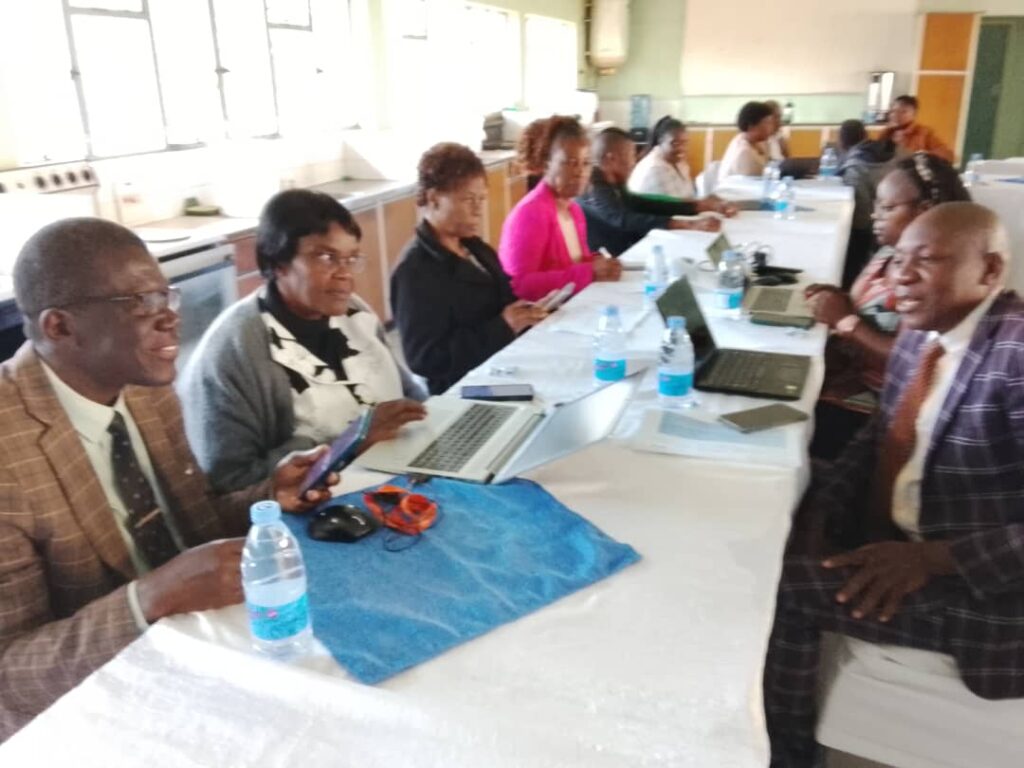
Working groups are developing a package of implementation materials, including:
- Teacher’s Guide to the National Reading Strategy (2026–2030);
- School Leadership Script;
- Literacy Script;
- Numeracy Script;
- Remediation Script; and
- Revised Diagnostic Tools and Scoresheets.
The ministry said the National Reading Strategy was developed with support from EDT, UNICEF and other stakeholders and has already been approved by ministry principals ahead of its official national launch.
Minister urges parents to play their part
The literacy campaign is also being taken directly to communities through nationwide awareness roadshows led by Minister of Primary and Secondary Education Professor Torerai Moyo.
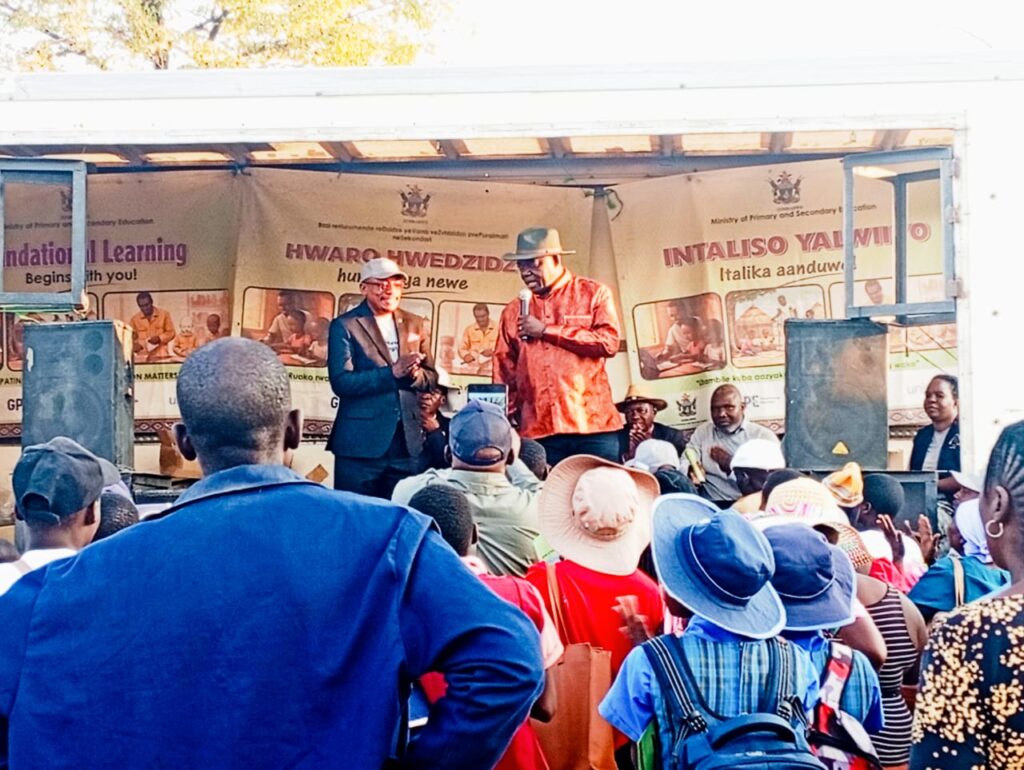
This week, Moyo concluded a community outreach programme in Nembudziya and later addressed residents at Zumba Business Centre in Gokwe North, his home town, as part of efforts to promote foundational learning across Zimbabwe.
Supported by Save the Children, the campaign encourages parents to enrol children in Early Childhood Development (ECD) from the age of four while taking a more active role in learning at home.
Addressing community members, Moyo stressed that education begins long before a child enters the classroom.
“Foundational learning officially begins at home through interactive play, storytelling and counting,” he said, urging parents to participate in their children’s education every day.
He described Early Childhood Development as the foundation upon which future academic success is built and reiterated that no child should be denied access to education because of unpaid school fees.
The minister also reminded school authorities that learners must not be turned away over outstanding fees, reaffirming the government’s commitment to ensuring every child has access to education.
The latest initiatives form part of Zimbabwe’s broader effort to improve learning outcomes, reduce learning poverty and strengthen the education system through partnerships with international development organisations while supporting the country’s Heritage-Based Curriculum.
Leave a Reply