
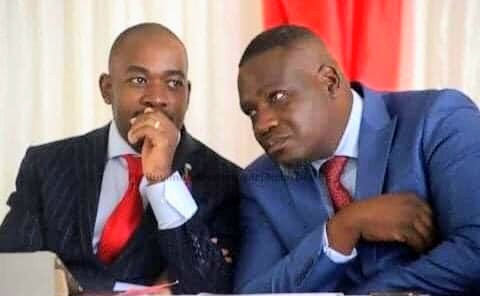
Former Citizens Coalition for Change (CCC) leader, Nelson Chamisa, has strongly condemned the Constitutional Amendment Bill No. 3 of 2026 (CAB3), describing it as “flawed”, a “waste of time” and a misuse of public resources.
By Advent Shoko
His remarks come as Parliament begins debating the proposed constitutional amendments, a development that has reignited national debate over the future direction of Zimbabwe’s governance framework.
In a statement, Chamisa said:
“ZIMBABWE NEEDS A CITIZENS’ GOVERNMENT..
There can be no legitimate government without the consent of #WeTheCitizens who are governed. There is nothing so useless as doing efficiently what is fundamentally wrong. CAB3 is the wrong move, a misguided initiative and a selfish national mistake. Far from delivering value, it is an absolute waste of time and resources. Its consequences will be severe and may ultimately consume those who conceived and championed it.
#WeTheCitizens reject CAB3, all its flawed processes and choreographed outcomes. This is the new front of the struggle for a New Great Zimbabwe.
The future belongs to organized citizens. We organize. We engage. We build. Come, let us reason together.
#NewLeaders #WeTheCitizens”
Chamisa’s comments have added fresh momentum to an already polarised debate, with supporters and critics of the Bill offering sharply contrasting views on the proposed constitutional changes.
Some social media users argued that Chamisa was disregarding the views of citizens who participated in public consultations conducted across the country.
One user responded:
“Citizens were consulted. Citizens participated. Citizens spoke.
The claim that Zimbabweans reject CA3 ignores the reality of the consultation process. Many citizens, communities, churches and organisations expressed support for constitutional reforms that promote stability, accountability and national unity.
No one group can claim to speak for all Zimbabweans. Many citizens are fully behind CA3 and the democratic process that produced it.
#CA3 #GoodGovernance #Zimbabwe“
However, critics maintain that the consultation process itself was deeply flawed and carefully choreographed to create the impression of broad public support.
At the time of the hearings, opposition leader advocate Fadzayi Mahere alleged that microphones were selectively given to ruling party supporters, denying opposition members the opportunity to express their views.
Mahere claimed that only supporters of the ruling party, many of whom she alleged had been transported to the venues, were allowed to contribute.
She said:
“Anyone who was deemed to be opposition was deprived the mic.”
The lawyer and university lecturer further alleged that violence broke out when opposition supporters attempted to participate.
“As soon as the mic came to our bay, ZANU-PF thugs came and started beating us up and saying that you’re not allowed to touch the mic.”
Reports from several public hearings across the country indicated that the consultation process was marred by intimidation, heckling and, in some instances, physical confrontations, raising serious questions about the credibility of the exercise and the extent to which dissenting voices were accommodated.
The Harare hearing also descended into chaos, with human rights lawyer Doug Coltart reportedly assaulted as tensions escalated at the venue.
The proposed amendments have also drawn criticism from constitutional experts, opposition politicians and civil society organisations, who argue that changes of such magnitude should be subjected to a national referendum before becoming law.
Among those expressing concern are constitutional law expert Professor Lovemore Madhuku and former Finance Minister Tendai Biti, both of whom have previously warned against altering key constitutional provisions without direct public approval.
Mahere echoed the same sentiment, saying:
“If they believe that the public supports them, they must expose this to a referendum. They’re banning a referendum because they know that the people aren’t supporting what they’re trying to do.”
Legal analysts note that CAB3 proposes significant changes affecting electoral processes, judicial appointments and the balance of power between key state institutions, making it one of the most consequential constitutional reform efforts since the adoption of Zimbabwe’s 2013 Constitution.
- Jonathan Moyo Rejects Calls For CAB3 Referendum
- Mahere Says Proposed Constitutional Amendments Reintroduce Mugabe Clauses
- Jonathan Moyo Says CAB3 Does Not Extend President Mnangagwa’s Term As An Individual
For many critics, the debate extends far beyond the issue of presidential terms.
Among other things, the Bill seeks to extend the terms of the incumbent President, Members of Parliament and councillors by two years.
It also proposes a significant change to Zimbabwe’s electoral system by shifting the election of future presidents from a direct popular vote to a parliamentary process. Under the proposed arrangement, citizens would elect Members of Parliament, who would then elect the President on behalf of the electorate.
Supporters argue that the model would strengthen representation, accountability and national unity by ensuring that the President is elected through Parliament. They contend that elected legislators would be exercising a mandate granted to them by voters and that the system could promote political stability.
However, critics fear the proposal could weaken citizens’ direct influence over the selection of the country’s leader. While indirect presidential elections are common in some countries within the SADC region and beyond, opponents argue that Zimbabwe’s political environment presents unique challenges.
Analysts, including political scientist Takudzwa Gwezuva, argue that Zimbabwean parliamentarians generally vote along party lines because of the party whipping system. They contend that this reality makes direct presidential elections a more effective way of reflecting the will of the people.
Proponents of the Bill disagree, insisting that Clause 3 introduces a stable, Parliament-led presidential election process designed to strengthen representation, accountability and national unity.
They also argue that concerns over presidential term limits are misplaced. According to supporters, extending the duration of a term is not the same as removing constitutional term limits. They maintain that the proposed amendments do not alter the constitutional restrictions on the number of terms a President may serve.
Supporters have further described CAB3 as a governance reform initiative aimed at enhancing institutional stability while preserving constitutionalism. They argue that the reforms should be judged on their long-term impact rather than through the lens of current political contests.
Leave a Reply