
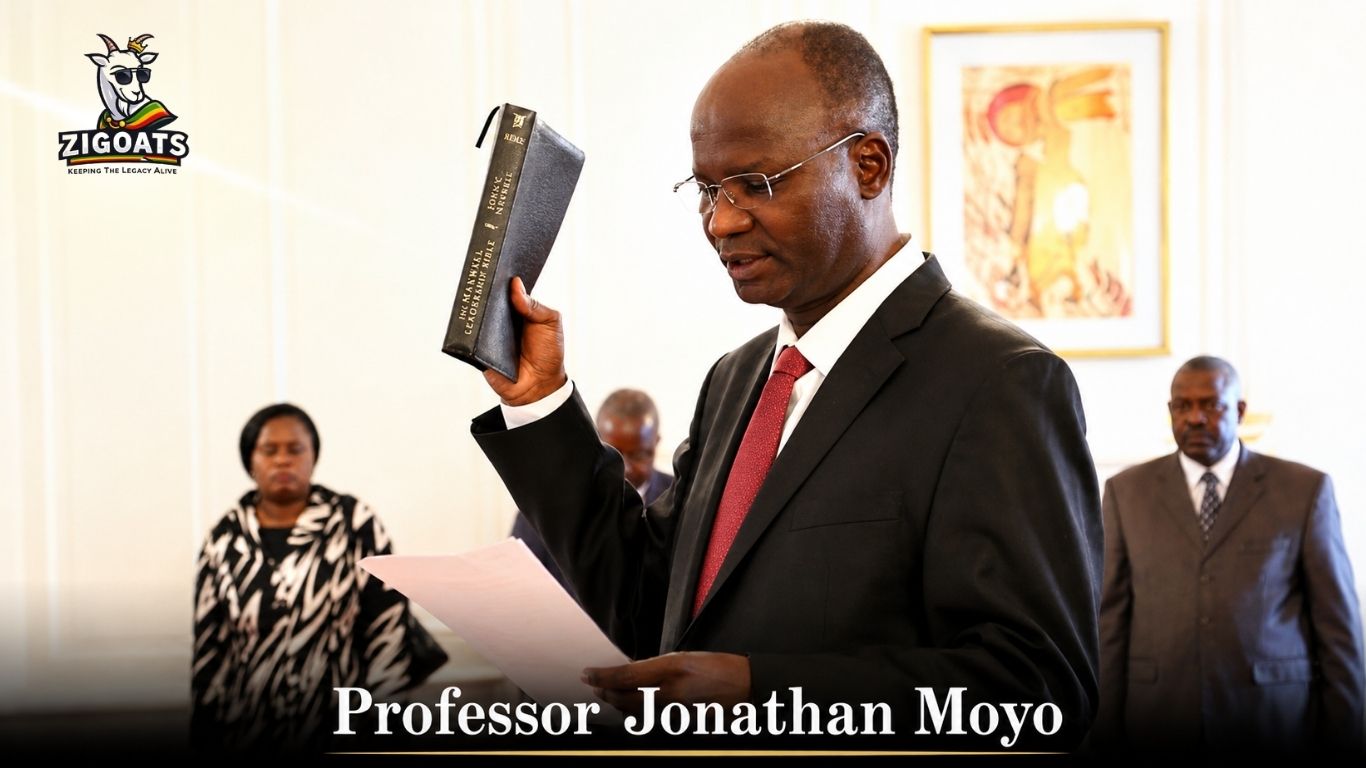
Zimbabwe’s self-exiled former Information Minister and Political Science professor Jonathan Moyo has weighed into the heated debate surrounding the proposed Constitution of Zimbabwe Amendment Bill No. 3 of 2026 (CAB3), insisting that there is no constitutional requirement for the Bill to go to a referendum.
By Advent Shoko
Moyo’s intervention comes as pressure continues to mount from opposition figures, church organisations, constitutional lawyers and civic groups demanding that the proposed amendments be subjected to a public vote before Parliament proceeds.
Critics of the Bill, including former Finance Minister Tendai Biti, constitutional lawyer Fadzayi Mahere and constitutional expert professor Lovemore Madhuku, argue that if the amendments are genuinely popular, the government should allow Zimbabweans to decide directly through a referendum.
- UK Baroness Slams Zimbabwe Constitutional Bill As “Attack on Democracy” As UK Turns To Quiet Diplomacy
- Zimbabweans In Uk Protest As Constitution Bill Sparks Democracy Fears, Chivayo’s $10k MP Donation Raises Eyebrows
- WATCH: UZA Leader Elisabeth Valerio Says Constitutional Amendment Bill No. 3 Is About “Power Retention”, Not The People
However, Moyo dismissed those calls, arguing that the matter is already settled by the 2013 Constitution itself.
In a lengthy constitutional argument shared online ahead of parliamentary debate on CAB3, Moyo said demands for a referendum were largely political and not grounded in constitutional law.
He argued that some individuals and organisations pushing for a referendum were attempting to “fill a vacuum in opposition politics” or revive fading political relevance.
Moyo also questioned calls coming from influential church bodies, including the Zimbabwe Heads of Christian Denominations, the Zimbabwe Council of Churches and the Zimbabwe Catholic Bishops’ Conference.
According to Moyo, Zimbabwe’s constitutional history clearly shows that referendums have historically been reserved for major constitutional transitions rather than ordinary amendments.
He noted that Zimbabwe has held only nine referendums between 1922 and 2026, with most linked to major constitutional or governance shifts such as independence arrangements, constitutional replacements or transitions in political systems.
“Not a single one of these nine referendums was ever held on a mere adjustment or amendment to an existing constitution,” Moyo argued.
He further pointed out that the Lancaster House Constitution was amended 19 times between 1980 and 2009 without any referendum being held.
According to Moyo, the current Constitution already provides a clear framework on when a referendum is mandatory.
He cited Section 328 of the Constitution, saying referendums are only required when amendments affect Chapter 4 (Declaration of Rights), Chapter 16 (Agricultural Land), or Section 328 itself.
“The Constitution requires referendum only for amendments to Chapter 4, Chapter 16, or Section 328 itself. That is the constitutional text, plain, deliberate, and binding,” Moyo said.
A major part of Moyo’s argument focused on Section 328(7), which critics say becomes relevant because CAB3 proposes extending presidential and parliamentary terms from five to seven years.
Moyo rejected that interpretation, saying detractors were misreading the Constitution.
He argued that Section 328(7) only applies to amendments affecting “term-limit provisions” tied to how long an individual can personally occupy office, not institutional electoral cycles.
To strengthen his case, Moyo relied heavily on the Constitutional Court judgment in the case of Marx Mupungu v Minister of Justice, Legal and Parliamentary Affairs & Others (2021).
According to Moyo, the court already clarified that constitutional protections under Section 328(7) only apply where amendments directly extend personal tenure limits for office holders.
He argued that CAB3 does not alter the two-term presidential limit contained in Section 91(2), but instead changes the institutional election cycle under Section 95(2).
“The provision does not impose any limit on the cumulative time any individual person may serve as President,” Moyo argued.
He added that changing the presidential term from five years to seven years should therefore be viewed as an institutional adjustment rather than a personal extension of office.
Moyo also compared the proposal to Constitutional Amendment No. 2 of 2021, which extended the retirement age of superior court judges from 70 to 75 without requiring a referendum.
The outspoken former minister concluded that Parliament should proceed with the Bill in line with constitutional procedures instead of responding to political pressure.
“The rule of law is not optional,” Moyo said.
“The sovereign will of the people, expressed in 2013 about when to hold a referendum, demands nothing less.”
The proposed CAB3 amendments are expected to trigger intense political and legal debate when Parliament begins deliberations next month, with supporters arguing the changes are constitutional and critics warning they could weaken democratic accountability and public participation in governance.
The Bill has already become one of the most divisive constitutional debates in Zimbabwe in recent years, exposing deep political and legal divisions over how far Parliament can go in amending the country’s supreme law without directly consulting voters.
Leave a Reply