
By Advent Shoko | ZiGoats
Zimbabwe has taken over the chairmanship of the Common Market for Eastern and Southern Africa (COMESA), with President Emmerson Mnangagwa pledging to push regional industrialisation, mineral beneficiation and stronger trade links among member states.
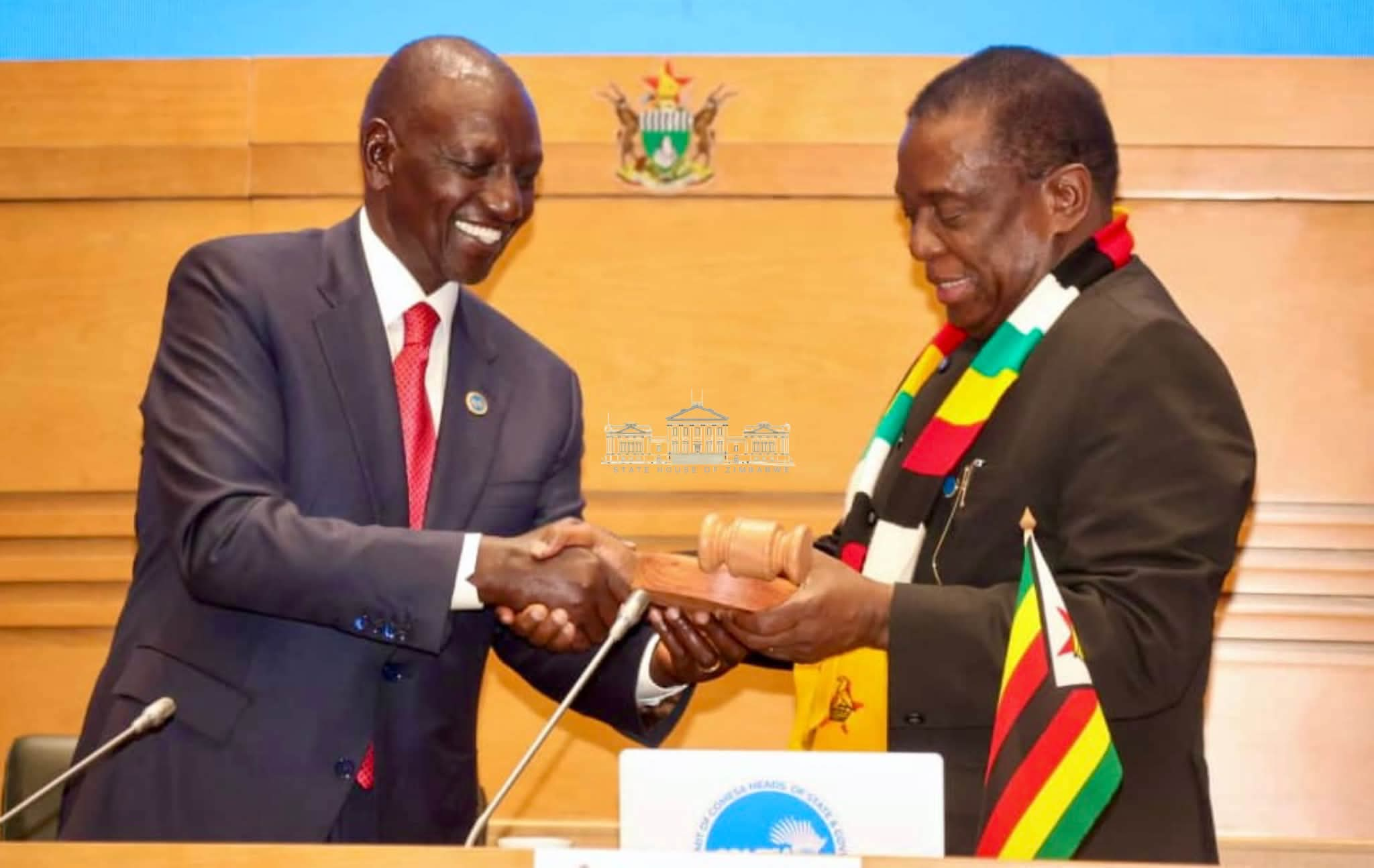
Mnangagwa assumed the rotating leadership from Kenyan President William Ruto during the 25th COMESA Heads of State and Government Summit at the New Parliament Building in Mt Hampden on Wednesday.
The summit is being held under the theme, “One Market, One Future: Advancing Inclusive Industrialisation, Investment and Regional Integration in COMESA.”
The new chairmanship places Zimbabwe at the centre of efforts to strengthen trade among member states, attract investment and build regional industries capable of processing more of Africa’s raw materials locally.
Speaking after the handover, Mnangagwa said he accepted the responsibility with “deep humility” and thanked Ruto for his leadership, particularly his focus on digitalisation and stronger regional value chains.
He also congratulated Zambian President Hakainde Hichilema on his appointment as COMESA vice-chairperson.
“Together, Zimbabwe and Zambia stand ready to lead our regional bloc toward unprecedented economic growth,” Mnangagwa said.
Zimbabwe Targets Mineral Beneficiation And Agro-processing
Mnangagwa said Zimbabwe would use its tenure to accelerate value addition and beneficiation, a key issue for African economies that continue to export many natural resources with limited processing.
Rather than relying heavily on raw commodity exports, the government wants more minerals and agricultural products processed into higher-value goods, creating opportunities for investment, jobs and industrial growth.
“During our tenure, we aim to work closely with all member states to fast-track value addition and beneficiation,” he said.
“The lessons from our policy decisions are clear: we must see the true value of our natural resources.”
He added that Zimbabwe would champion agro-processing industrial parks and climate-resilient agriculture to support regional food security.
For Zimbabwe, the agenda comes as the country seeks to expand the economic benefits of its mineral resources and strengthen agricultural production. Regional cooperation could help businesses reach larger markets, attract investment and develop supply chains that extend beyond national borders.
However, turning these ambitions into tangible economic gains will depend on investment, reliable infrastructure, access to finance and policies that encourage businesses to produce and trade competitively.
Infrastructure And Financing Remain Major Hurdles
The President identified transport bottlenecks as a major obstacle to regional trade, arguing that stronger road and rail networks are essential to connect producers with customers across COMESA markets.
He said governments must explore long-term financing models and work with development partners to fund infrastructure that supports industrial growth.
“Integration is only a success when it benefits the ordinary citizen,” Mnangagwa said.
He also called for new approaches to addressing financial barriers facing young people, women and small and medium-sized enterprises (SMEs).
Expanding digital trade systems, he said, could help businesses access regional markets and reduce some of the barriers that limit their participation in cross-border commerce.
For many smaller businesses, the ability to sell beyond their home markets could open new opportunities. But improved digital systems must be matched by affordable finance, efficient border procedures and reliable transport infrastructure.
Skills Development And Private Sector Role
Mnangagwa said regional integration must also deliver practical benefits through education and skills development.
He challenged member states to align their training systems with the needs of their economies, ensuring that young people acquire skills relevant to the production of goods and services.
“The challenge has been set upon us,” he said, adding that the private sector would remain an important partner in advancing the regional agenda.
His remarks put job creation and productive capacity alongside trade and investment as priorities for Zimbabwe’s chairmanship.
The emphasis is significant for a region seeking to increase manufacturing, strengthen agricultural value chains and create more opportunities for its growing workforce.
What Zimbabwe’s COMESA Chairmanship Means
COMESA is a regional economic bloc that brings together countries in Eastern and Southern Africa to promote trade, investment and economic integration.
Its wider market offers businesses an opportunity to reach customers beyond their domestic economies, while regional cooperation can support cross-border infrastructure, industrial development and more coordinated trade policies.
Zimbabwe’s challenge will be to translate its summit commitments into practical initiatives that improve the competitiveness of local businesses and expand trade across the region.
The focus on beneficiation is particularly relevant to African economies seeking to capture more value from their natural resources instead of exporting raw materials and importing finished products at higher prices.
Yet regional integration will require more than declarations at high-level meetings. Governments will need to address transport costs, financing gaps, trade barriers and weaknesses in infrastructure if businesses and ordinary citizens are to benefit.
Mnangagwa said Zimbabwe would work with fellow member states to advance the bloc’s economic ambitions.
“As we chart our own destination, we remind the world that Zimbabwe remains a friend to all and an enemy to none,” he said.
He called on African countries to work together towards a more prosperous future, with the success of the regional bloc ultimately measured by improvements in people’s lives.
Leave a Reply