
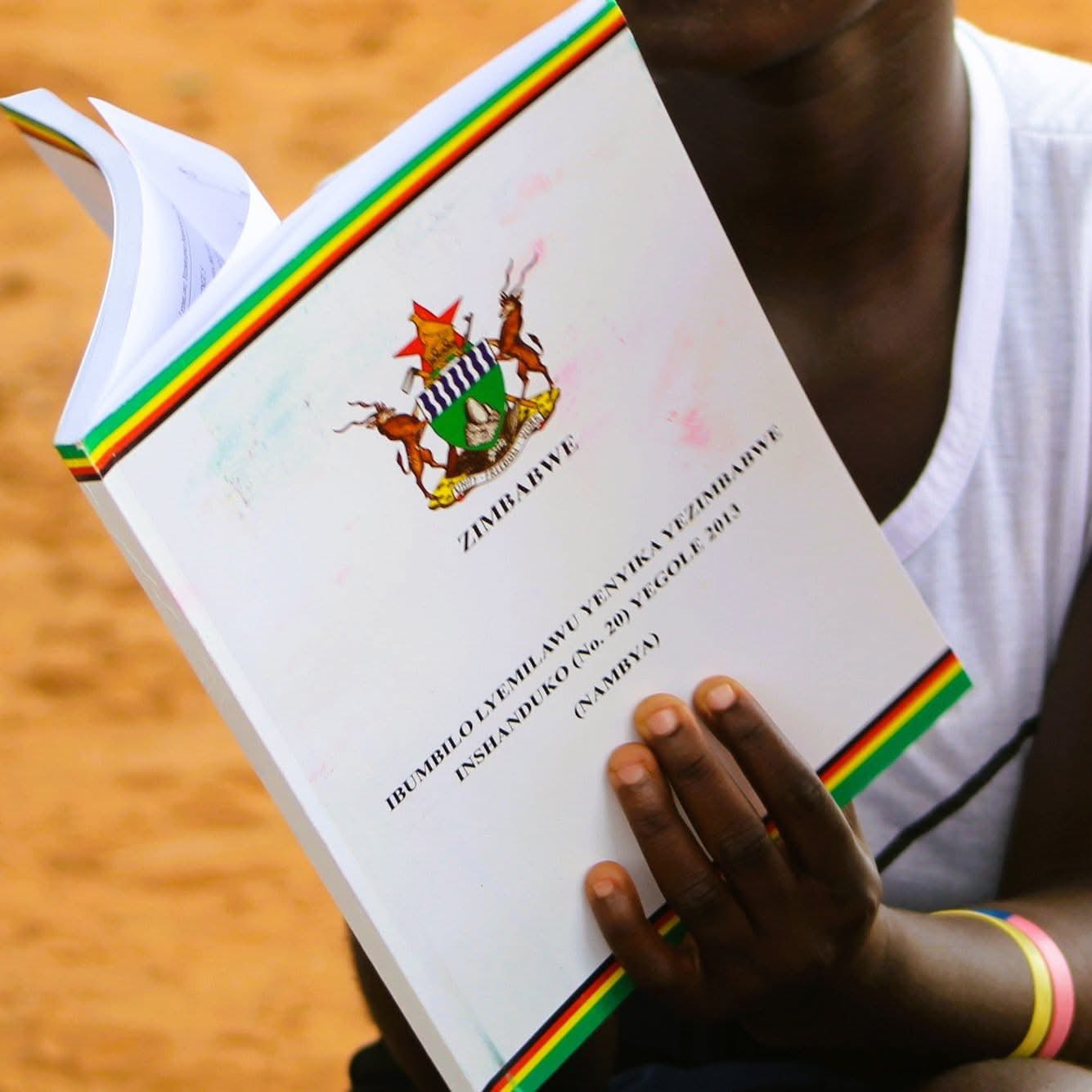
HARARE – A growing storm is brewing in Zimbabwe’s democracy debate, and at its center are student leaders who say they are being hunted, abducted, and silenced for opposing a controversial constitutional amendment that could extend presidential terms and delay elections.
By Advent Shoko
A new report by Human Rights Watch paints a troubling picture: young activists mobilising against Constitutional Amendment No. 3 are allegedly facing intimidation, arbitrary detention, and brutal assaults, raising fresh concerns about shrinking civic space in Zimbabwe.
At stake is a proposal that would extend presidential and parliamentary terms from five to seven years, effectively pushing elections from 2028 to 2030. For many students, that is not just a legal change, it is a direct threat to democratic accountability.
A Generation Under Pressure
For student leaders under the banner of the Zimbabwe National Students Union, speaking out has come at a steep cost. Said Idriss Ali Nass:
“Students who speak out to safeguard their country’s democracy should not face abduction, arrest, and ill-treatment.”
Yet testimonies gathered reveal a pattern that suggests otherwise.
Abductions, Beatings , And Fear
On March 30, what began as a routine public consultation in Bulawayo’s Nketa suburb turned violent.
Munashe Dongonda and Denford Sithole, both prominent student leaders, were reportedly attacked by men in civilian clothing after Sithole spoke against the amendment. Dongonda says they were beaten, while Sithole was forcibly taken away in an unmarked vehicle.
What followed reads like a script from Zimbabwe’s darkest political chapters.
Sithole alleges he was interrogated, assaulted, and threatened with death by suspected state security agents. At one point, he says, he was struck repeatedly with a bottle while being accused of plotting to overthrow the government.
Hours later, he was handed over to police and charged with “disorderly conduct.”
Now injured, traumatised, and fearing for his life, the final-year engineering student has gone into hiding, his education abruptly halted.
“You Are Being Watched”
The same day, in Bindura, another student leader, Tafara Magodora, says he was abducted in broad daylight while organising transport for students to attend consultations.
He describes being forced into a vehicle without number plates, beaten, and later handed to police, who detained him for two days before charging him with assault.
But the most chilling moment came after his release.
Magodora says suspected security agents warned him to leave town or face consequences.
He has since disappeared from campus life.
Arrests And Crackdown Widens
The crackdown has not stopped there.
On April 14, police arrested Emmanuel Sitima and Takunda Mhuka, accusing them of damaging property and distributing anti-amendment flyers branded “No to 2030.” Despite the alleged damage being valued at just $10, the two remain in custody after being denied bail.
Meanwhile, the legal watchdog Zimbabwe Lawyers for Human Rights reports that student leaders are now “under siege,” following a police raid on ZINASU offices in Harare.
ZINASU coordinator Ashlegh Pfunye did not mince words:
“All we are doing is to exercise our democratic right to speak out… but we are being hunted down like criminals.”
A Chilling Effect On Democracy
Even former senior public figures are sounding the alarm.
David Coltart warned that targeting students is meant to silence dissent. The former education minister said:
“We have had students abducted and detained… we have had to find safe houses.”
Observers say the strategy is clear: intimidate a generation that is increasingly vocal, connected, and politically aware.
A Pattern, Not An Isolated Case
The latest incidents are not happening in isolation.
From arrests of Midlands State University students in 2025 to reported abductions at Chinhoyi University of Technology, the crackdown appears systematic, targeting those challenging the proposed amendment.
For many, this raises urgent questions:
Is Zimbabwe sliding back into an era of repression?
Can constitutional reform happen freely under fear?
And what happens when the country’s youth, its future, are forced into hiding?
International Law And Local Reality Collide
Zimbabwe is a signatory to key human rights treaties, including the International Covenant on Civil and Political Rights and the African Charter on Human and Peoples’ Rights.
These guarantee freedoms of expression, assembly, and protection from arbitrary detention.
But rights on paper are clashing with realities on the ground.
The Bigger Picture: 2030 And Beyond
At its core, this is more than a student issue. It is a national moment.
The fight over Constitutional Amendment No. 3 is shaping up to be a defining test of Zimbabwe’s democratic trajectory, one that pits state authority against citizen voice.
And as the tension rises, one thing is becoming clear:
The battle for 2030 has already begun, not in Parliament, but on the streets, in classrooms, and in the lives of young Zimbabweans risking everything to be heard.
Search trends around “Zimbabwe constitutional amendment 2030,” “student arrests Zimbabwe,” “ZINASU protests,” and “human rights violations Zimbabwe” are surging, and for good reason.
This is not just a political story.
It is a human story, of fear, courage, and a generation refusing to stay silent.
And as the country moves closer to a decision that could reshape its democratic future, the question remains:
Will Zimbabwe listen to its students, or silence them?
Leave a Reply