HARARE, Zimbabwe – Zimbabwe is facing a potentially difficult 2026/27 rainy season, with the Meteorological Services Department (MSD) warning that most parts of the country could receive below-normal rainfall from October through March.
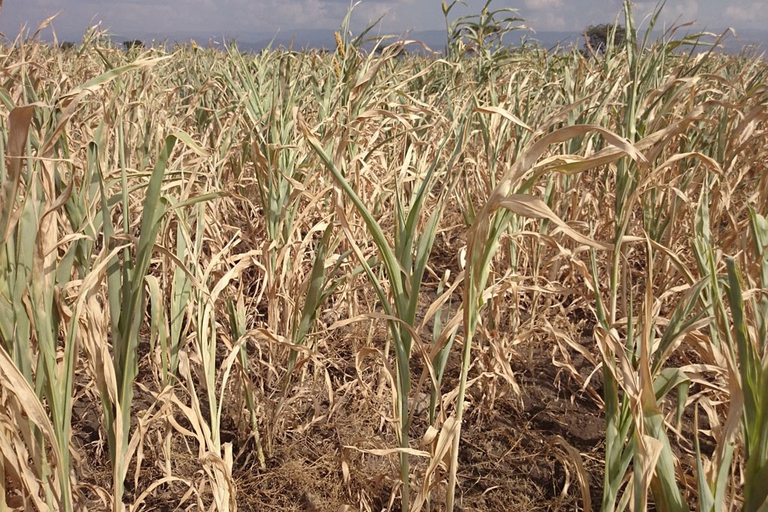
The forecast raises fresh concerns for farmers, water supplies, livestock and food security after Zimbabwe experienced the devastating effects of drought as recently as 2023/24.
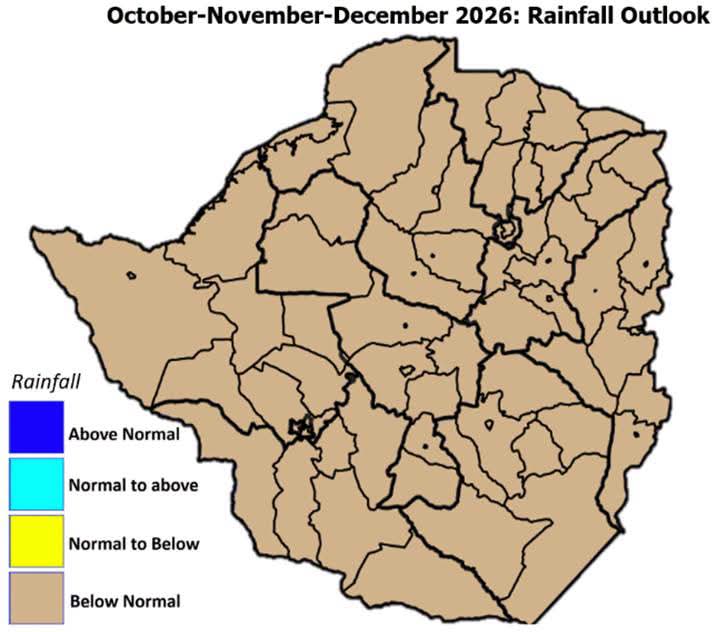
In its latest seasonal outlook, the MSD said the coming season could start badly, with October and November expected to be particularly dry across much of the country.
“There is an increased chance of below-normal rainfall across the entire country during this period,” the MSD said.
The department warned that the start of the season could be “highly erratic”, with a significant portion of Zimbabwe potentially experiencing no effective onset of the rains.
Northern areas could receive normal to below-normal rainfall in October, but the broader picture remains dry. December could bring some relief to parts of Matabeleland South, the extreme south of the Midlands and southwestern Masvingo, where normal to above-normal rainfall is expected.
For the rest of the country, however, rainfall is still projected to remain below normal.
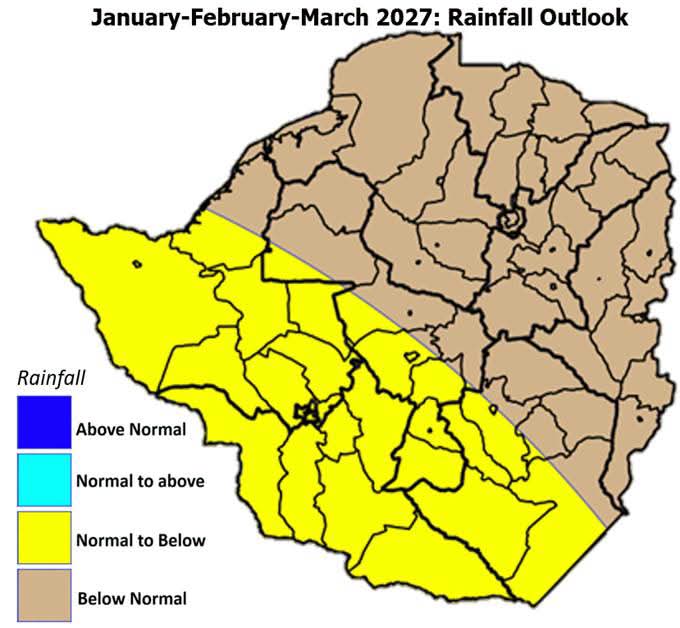
The outlook becomes little better in the first three months of 2027. The MSD expects southern and western Zimbabwe to receive normal to below-normal rainfall, while most of the remaining areas are forecast to receive below-normal rainfall.
Temperatures are also expected to be warmer than normal during January, February and March.
The forecast is being issued against a climate background that has historically produced difficult conditions for Southern Africa. The MSD says a warm El Niño phase is expected to influence the 2026/27 season, while the Indian Ocean Dipole is currently positive and is expected to remain so until the end of January 2027. The department says the combination increases the likelihood of below-normal rainfall across Zimbabwe.
That warning is significant because Zimbabwe’s agricultural calendar depends heavily on reliable rainfall between November and February. Rain during January and February is particularly important because staple crops such as maize are normally entering reproductive and grain-filling stages at that time.
Zimbabwe has seen how quickly poor rainfall can turn into a national food-security problem.
The 2023/24 season was severely affected by El Niño. FEWS NET reported that rainfall was delayed, followed by a prolonged dry spell and exceptionally high temperatures. Parts of Mashonaland Central, Mashonaland West and Midlands experienced their driest January-to-March period on record, while rainfall across much of the country was between 65% and 90% of the 40-year average. Some areas recorded only 45% to 60% of normal rainfall.
The consequences were severe. Zimbabwe’s 2023/24 maize production fell to about 635,000 tonnes, roughly 60% below the 10-year average, according to figures cited by FEWS NET. The country subsequently faced a cereal deficit of more than one million tonnes.
The drought also pushed food insecurity sharply higher, with FEWS NET projecting widespread Crisis-level food insecurity during the 2024/25 lean season. FAO and the Zimbabwean government declared the 2023/24 drought a national disaster and launched measures to support affected communities and livestock.
El Niño occurs when unusually warm ocean temperatures in the central and eastern tropical Pacific alter global atmospheric circulation. In Southern Africa, it has frequently been associated with reduced rainfall during the main agricultural season.
There is, however, an important difference between a seasonal forecast and a certainty. The MSD outlook describes the most likely broad rainfall pattern based on current climate signals; it does not mean that every district will remain dry or that drought conditions are guaranteed everywhere.
Zimbabwe also had a much better 2024/25 agricultural season in several areas, while the 2025/26 season was expected to support another favourable harvest. That recovery could provide some buffer for households entering the new season.
But the latest outlook puts renewed pressure on authorities, farmers and communities to prepare early.
The MSD says it will continue issuing shorter-term daily and 10-day forecasts as the season develops, while the government has been urged to use the seasonal outlook for planning in agriculture, water, energy and disaster management.
For millions of Zimbabweans who depend directly or indirectly on the rains, the message is therefore simple: the 2026/27 season could be another test of the country’s ability to prepare before the dry spell becomes a crisis.
The MSD is expected to update the outlook as the season progresses, particularly for the final three months.

Leave a Reply