
By Advent Shoko
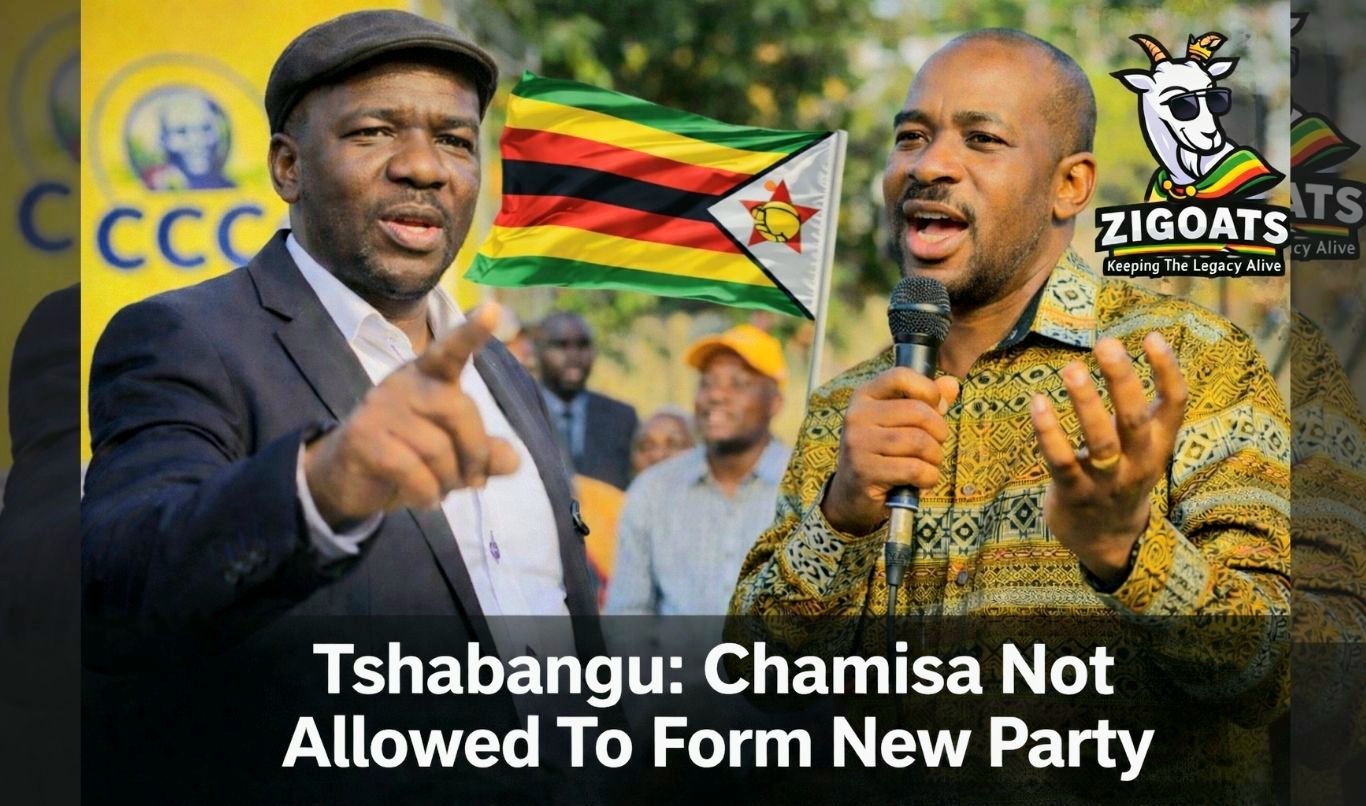
Zimbabwe’s opposition politics is in uncharted territory, with the spotlight now firmly on Sengezo Tshabangu and his audacious claim that Nelson Chamisa is prohibited from forming a new political party. The battle over legitimacy and leadership has thrown the Citizens Coalition for Change (CCC) into turmoil, leaving citizens and political analysts questioning the future of the country’s main opposition vehicle.
Chamisa’s Exit And CCC’s Power Vacuum
Nelson Chamisa, who launched the CCC in January 2022 as a fresh force to challenge ZANU PF, shocked the nation when he resigned from the party in early 2024, citing internal corruption, hijacking by rival factions, and systemic compromise. His resignation left a leadership vacuum that Sengezo Tshabangu quickly moved to fill, claiming authority as interim secretary-general.
Tshabangu’s moves were decisive and controversial. Under his watch, CCC legislators were recalled, triggering by-elections and sowing confusion within the opposition. This, combined with Chamisa’s absence, gave Tshabangu de facto control over the party machinery.
“Chamisa Can’t Form Another Party”
In a recent statement, Tshabangu struck a clear warning: Chamisa cannot form a new party because, in Tshabangu’s view, Chamisa remains the CCC’s leader. He added that Chamisa’s political comeback, framed as a “movement,” is legally constrained, and the CCC will approach the courts to prevent any attempt at creating a rival entity. Tshabangu said:
“We appreciate that @nelsonchamisa is back in active politics after leaving us orphaned for two years. He can’t form another party because he knows he’s still our leader. That’s why he chose to refer to his return as a movement. We’ll approach the courts to stop him from doing that.”
This claim has set the stage for an unprecedented legal and political showdown, potentially redefining the opposition’s capacity to challenge ZANU PF ahead of the next elections.
The CCC Under Tshabangu: Strategy OR Survival?
Tshabangu’s control of the CCC has not been without contestation. Critics argue his moves, including recalling elected legislators, are more about personal survival than party strategy. Yet within his faction, Tshabangu claims legitimacy, pointing to CCC documents that designate him interim secretary-general and the constitutional authority to act against what he terms “external political adventurism.”
Observers note that the CCC’s weak institutional structures, designed to avoid state infiltration, have ironically made it vulnerable to internal power grabs. For many, the CCC under Tshabangu is now a party lost in limbo, struggling to project unity while fending off legal and political threats.
Chamisa’s Comeback: Movement, Not Party
Chamisa has since returned to Zimbabwean politics, insisting that his focus is on a new political movement, explicitly avoiding the CCC framework. His supporters argue this is a strategic move to bypass Tshabangu’s legal claims, while detractors see it as a political gamble that could further fracture the opposition.
Chamisa frames his resurgence as a citizens’ project, a “new ship, new politics” approach aimed at revitalising opposition credibility and holding ZANU PF accountable. Still, Tshabangu and the CCC insist that any such venture will face legal challenges, citing party ownership of Chamisa’s political brand and his de jure position as CCC leader. (theobserverzim.co.zw)
What This Means For Zimbabwe
The standoff between Chamisa and Tshabangu is more than a personal feud, it exposes deep structural weaknesses in opposition politics. Legal battles, recalls, and leadership disputes have created an environment where the opposition risks fragmentation over personalities, rather than rallying behind ideas.
For Zimbabweans, the stakes are high: the CCC’s ability to challenge ZANU PF effectively is tied to clarity on leadership and legitimacy. Until courts and political processes settle the dispute, the opposition remains in flux, leaving voters uncertain about who truly represents the movement for change.
As Tshabangu asserts legal and institutional control, and Chamisa champions a new political path, the question remains: can Zimbabwe’s opposition survive the duel, or will the internal fight deliver ZANU PF a free run in the next elections?
Leave a Reply