
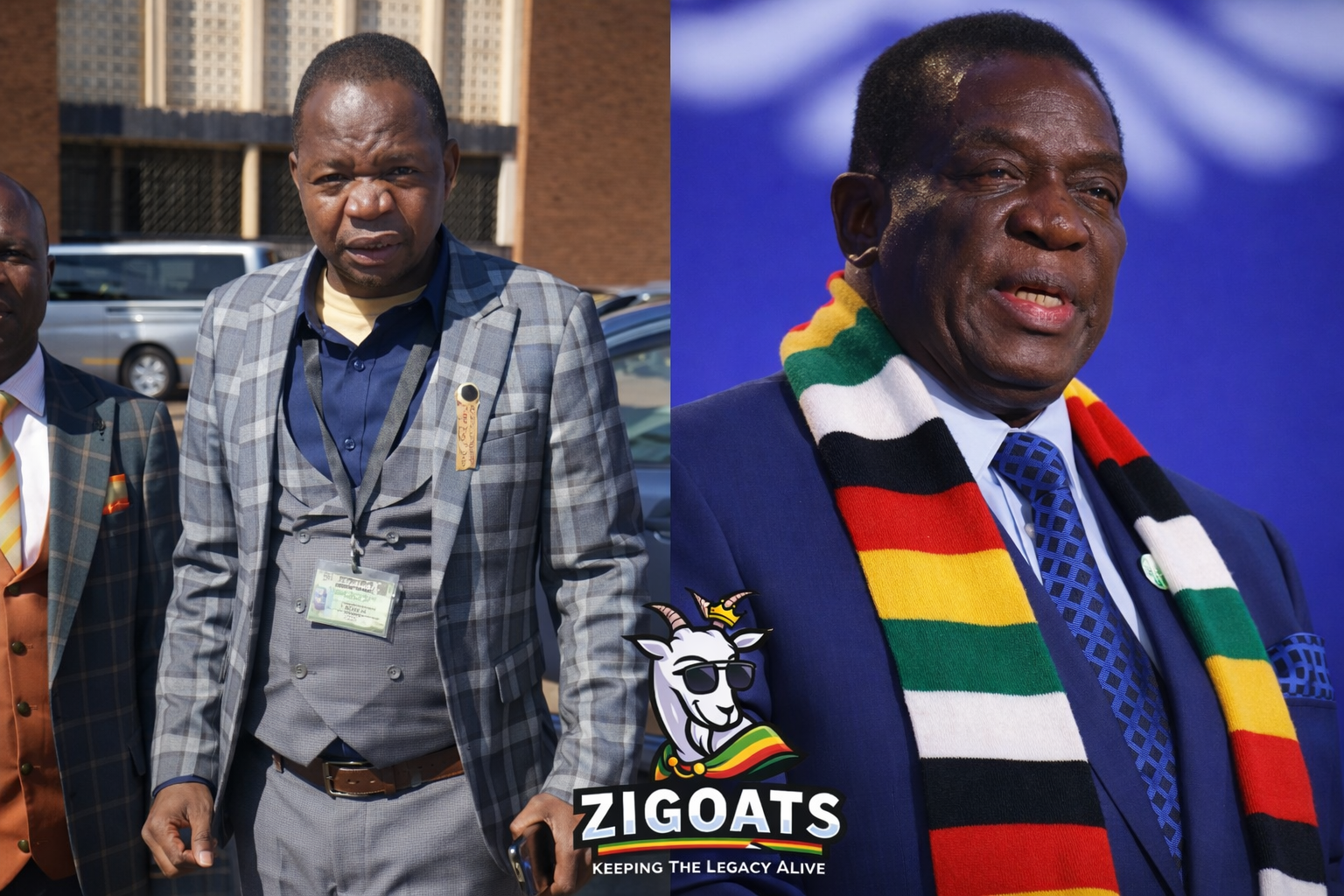
HARARE – In a development likely to reignite debate over symbolism, state power and the ownership of Zimbabwe’s pre-colonial heritage, Timothy Chiminya, who claims the historic title of King Munhumutapa / Mwene Mutapa / Monomutapa, has issued a sweeping legal warning against anyone using the title without his authorisation.
By Advent Shoko
But beyond the legal language, the timing of the declaration is already raising political eyebrows.
Arrest And That Acquittal ‘Restored’ his Legal Footing
This latest declaration comes in the wake of Chiminya’s legal victory at the High Court, which on 20 February 2026 overturned his conviction and 10-month custodial sentence imposed by the Harare Magistrates’ Court.
Chiminya had been arrested in Harare on 16 December 2024 after authorities accused him of undermining the authority of President Emmerson Mnangagwa, contrary to Section 33 of the Criminal Law (Codification and Reform) Act. Prosecutors argued that by styling himself as King Munhumutapa and allegedly purporting to appoint and remove traditional chiefs, powers constitutionally reserved for the President, he had unlawfully encroached on executive authority.
He was subsequently convicted on 10 November 2025 and sentenced on 13 November 2025 to 10 months in prison by magistrate Tapiwa Kuhudzai. However, in a significant legal reversal, High Court judges Justice Benjamin Chikowero and Justice Maxwell Takuva quashed both the conviction and sentence after upholding his appeal, effectively acquitting him and reopening public debate over the intersection of traditional authority, constitutional power and political symbolism in Zimbabwe.
Now, his latest warning appears to expand the battle from the courtroom into the realm of political symbolism and national identity.
In documents sent to ZiGoats, Chiminya revokes all prior powers of attorney and warns that any use of his name, signature or royal titles without permission will attract legal action, damages and possible prosecution. He said:
“Anyone claiming to be or referring to themselves as King Munhumutapa without my authorization will be held liable and face legal action.”
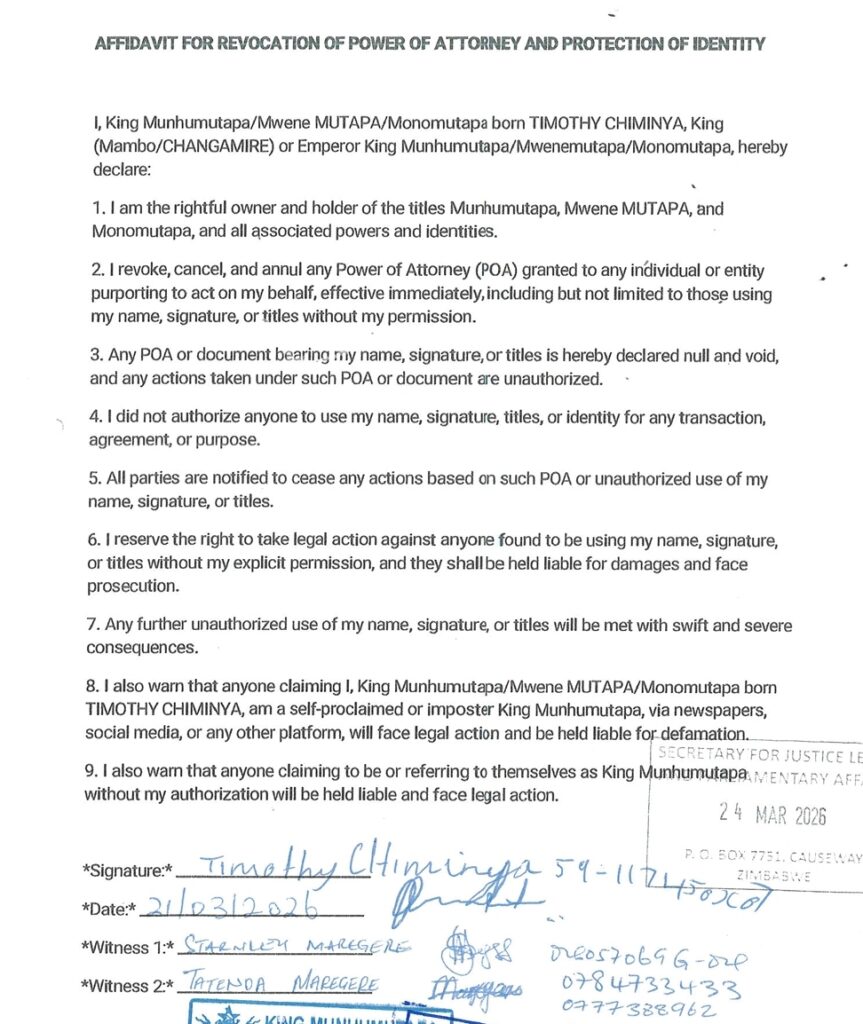
On the face of it, the warning appears broad.
But in Zimbabwe’s current political context, it may be read as carrying deeper implications.
Why Mnangagwa Enters the Conversation
President Emmerson Mnangagwa has, over the years, increasingly drawn on Munhumutapa imagery and state symbolism in nation-building rhetoric.
His birthday commemorations have at times been framed around Mutapa Day, while state-linked projects and public initiatives have also borrowed the historic title.
Most recently, the ZIFA Munhumutapa Challenge Cup, reportedly backed by the President, placed the ancient imperial name at the centre of a major national football project.
That makes Chiminya’s latest declaration difficult to separate from the broader political environment.
While he does not explicitly name the President in the documents, analysts may interpret the move as indirectly directed at the state’s use of the Munhumutapa identity, particularly given the sensitivity surrounding his previous prosecution.
This is what makes the timing significant.
Coming after his acquittal, the statement may be seen not only as a legal defence of personal identity, but as a challenge to parallel political appropriation of the same historical legacy.
A Title Larger Than One Claim
It is important, however, not to present Chiminya’s assertions as settled historical or legal fact.
The title Munhumutapa is not merely a personal name.
It refers to the ruler of the Kingdom of Mutapa, one of southern Africa’s most significant pre-colonial states, which flourished from the 15th to 17th centuries and controlled extensive trade routes stretching toward the Indian Ocean.
The title therefore carries civilisational, cultural and political weight far beyond one individual’s claim.
That is why questions around who can legitimately invoke it, culturally, ceremonially or politically, are deeply sensitive.
Governance, Law and Symbolism
This latest development also reopens wider governance questions.
- Can an individual claim exclusive legal rights over a title rooted in national history?
- How does such a claim interact with constitutional provisions governing traditional leadership?
- And what happens when political power and historical symbolism begin to overlap?
For now, Chiminya’s declaration has moved the Munhumutapa debate beyond heritage and into the heart of Zimbabwe’s politics.
Whether this escalates into a direct legal or symbolic confrontation with state actors remains to be seen.
Leave a Reply