
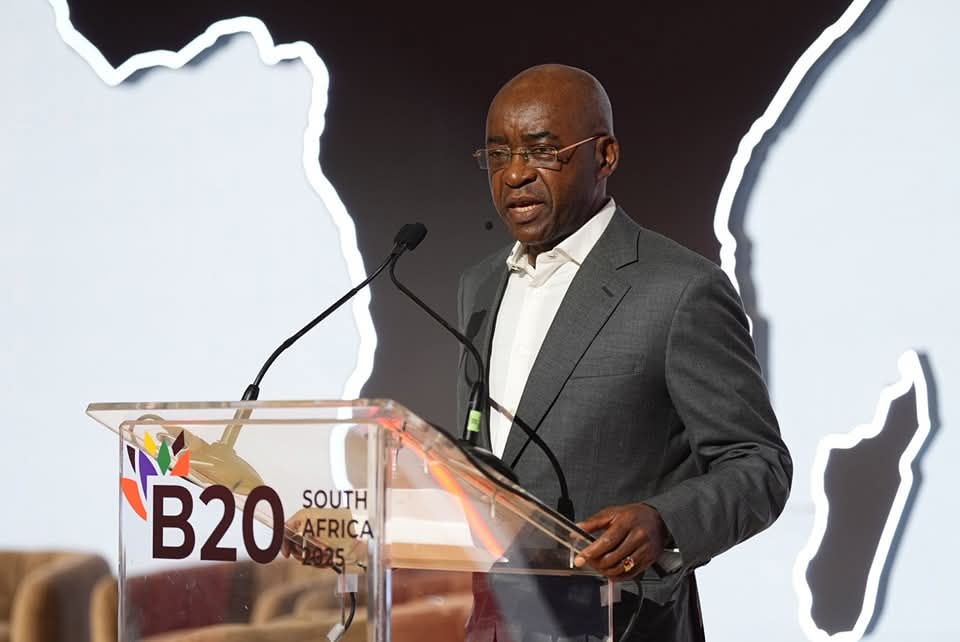
HARARE – Zimbabwean billionaire entrepreneur and philanthropist Strive Masiyiwa has shared a deeply personal reflection on success, passion and happiness, urging people to stop measuring their lives against others and instead find fulfillment in the work they genuinely love.
By Advent Shoko
Drawing from conversations with a wealthy Nigerian businessman and the late Desmond Tutu, Masiyiwa argued that true success is not defined by money, power or fame, but by satisfaction in one’s chosen path.
“Be happy and satisfied with what you [yourself] do; let it be a passion for you, and always see it as the best business in the world,” Masiyiwa said.
His message comes at a time when social media and the digital economy have intensified comparisons between individuals, often encouraging people to judge their achievements against the visible successes of others.
Masiyiwa recounted a pivotal moment during his efforts to raise capital for what would eventually become telecommunications giant “econetwireless.com” in Nigeria.
- Joanna Masiyiwa Launches AMAYI: Limited-Edition Luxury Womenswear
- Strive Masiyiwa’s Historic Call: How Nigeria’s $855M GSM Auction Sparked A Tech Revolution
According to Masiyiwa, one potential investor, a highly respected businessman who had built substantial wealth through rice trading, carefully studied the financial projections of the telecommunications venture before reaching a surprising conclusion.
“This is easily the most profitable business I have ever seen, if you can raise the substantial capital investment, but I’m not going to invest that kind of money in something I don’t understand,” the businessman told him.
For many entrepreneurs seeking investment, such a response might have been disappointing. For Masiyiwa, however, it became a lesson that stayed with him for decades.
The businessman later explained the principle that guided his decisions.
“When I invest in a business I don’t know anything about, I will only invest money I can afford to lose,” he said.
Masiyiwa said the encounter taught him to respect expertise and recognise that every successful enterprise contains knowledge, skills and experience that outsiders may not immediately appreciate.
The lesson became even clearer during a later conversation when the Nigerian businessman challenged him to think about the realities of running different types of businesses.
“Which business is easier, trading rice or running a telecoms business?” the businessman asked.
Masiyiwa admitted that despite his success in telecommunications, he would be intimidated by the prospect of managing a large-scale commodities trading operation.
“Sir, to be honest, I would be terrified of running your trading business at the scale that you run it. For me what I do is only complicated if you are not a trained engineer or someone who has spent years in the field,” Masiyiwa recalled responding.
The businessman replied with what Masiyiwa describes as one of the most valuable leadership lessons he has ever received.
“It is good to have healthy respect for the things that others spend every day doing because, whilst it may look simple from outside, there is always something the management and teams know and have learnt over time that makes them a success.”
The exchange highlights a reality often overlooked in modern discussions about wealth and entrepreneurship: success is rarely as simple as it appears from the outside.
Businesses that seem straightforward to observers are often supported by years of accumulated knowledge, technical expertise, relationships, operational systems and experience developed over decades.
Masiyiwa said another conversation years later reinforced the same message.
During a visit to Brazil with Archbishop Desmond Tutu, he asked the Nobel Peace Prize laureate whether he had ever considered running for president of South Africa.
Tutu’s answer surprised him.
“I have the best job in the world. When I was a young boy, I wanted to be a priest and as a priest I got to the top job… Archbishop.”
Masiyiwa said he immediately recognised the sincerity in Tutu’s response.
The Anglican cleric was not lamenting opportunities he had not pursued. Instead, he was celebrating the fulfillment he had found in achieving the dream he had cherished since childhood.
For Masiyiwa, the connection between the two conversations was unmistakable.
Both men had achieved extraordinary success in very different fields. Neither appeared preoccupied with competing against others. Instead, both measured success through purpose, passion and personal fulfillment.
“Don’t fall into the trap of measuring success against what someone else is doing,” Masiyiwa said.
“Be happy for those who succeed at what is their own passion.”
The businessman, investor and philanthropist said this philosophy has become more meaningful with age.
“As I have grown older, this is some of the wisdom I have picked up along the way, and by it I have found happiness.”
He added:
“Be happy at what you do. It’s not all about money, power, or even celebrity.”
The message resonates beyond business circles.
In an era dominated by online influence, status symbols and constant comparison, Masiyiwa’s reflections offer a counter-narrative: that fulfillment often comes not from chasing someone else’s dream, but from mastering and appreciating one’s own calling.
As millions pursue career advancement, financial security and recognition, Masiyiwa’s conclusion is strikingly simple.
Success, he suggests, is not necessarily about becoming the richest person in the room. It is about waking up each day convinced that what you are doing matters, and believing, as both the Nigerian businessman and Desmond Tutu did, that you already have the best job in the world.
“Cherish each hour of this day, for it can never return.”
Leave a Reply