
By Advent Shoko
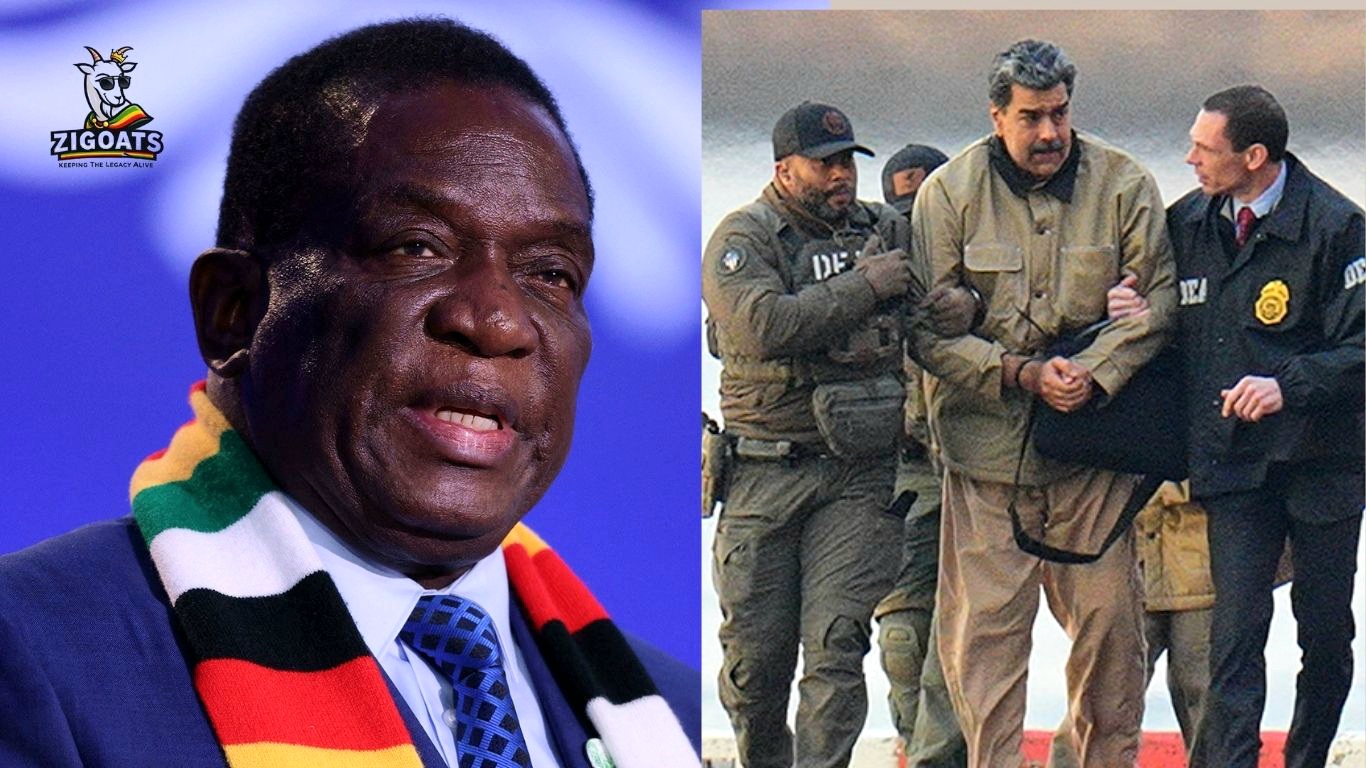
HARARE – President Emmerson Mnangagwa’s recent comments on the political turmoil in Venezuela have divided Zimbabweans and raised questions about whether Harare missed an opportunity to amplify its bid for a permanent United Nations Security Council seat, especially when contrasted with the fiery, confrontational foreign policy tone once associated with former leader Robert Mugabe.
Venezuela has endured a prolonged and complex political and economic crisis, with contested leadership, severe shortages, and sharp international tensions over oil and sovereignty. According to Reuters, the crisis in Venezuela escalated dramatically in early 2026 when U.S. forces conducted a military operation that captured President Nicolás Maduro and his wife in Caracas and flew them to New York to face federal charges, including alleged narcotics offences, charges Maduro’s supporters say are politically motivated. The operation followed years of mounting tensions between Washington and Caracas over accusations of corruption, drug trafficking and authoritarian rule. At a press conference after the operation, U.S. President Donald Trump said
“We will run the country until such time as we can do a safe, proper and judicious transition,”
and indicated that major U.S. oil companies would enter Venezuela to repair and operate its oil infrastructure, given the country’s status as having the world’s largest oil reserves, remarks that shifted the debate from purely legal charges to geopolitical and economic stakes involving energy resources. Critics say the focus on oil raises questions about whether the operation is truly about law enforcement or more about strategic control of Venezuela’s energy wealth.
During an interview at the World Government Summit in Dubai with American journalist Tucker Carlson, Mnangagwa was asked directly about the situation. He responded cautiously:
“Venezuela is very far away from Zimbabwe. I don’t know what we really read in Zimbabwe actually happens in Venezuela, but from what we read we are interested to know why it is happening.”
Is he really in the dark about world affairs, or just playing it safe? To critics, that answer was a classic diplomatic sidestep, safe, non-aligned, and non-committal. Supporters say it was prudent, given Zimbabwe’s delicate balancing act between rebuilding global partnerships and avoiding geopolitical entanglement.
A Chance to Sell Zimbabwe’s Global Vision?
What some observers say went missing was strategic opportunity. Zimbabwe is actively seeking to elevate its international stature, including a bid for a permanent seat on the United Nations Security Council, a rare platform to shape global peace, security, and norms. At moments like these, global leaders often use high-visibility forums to articulate clear principles on core international issues, such as sovereignty and international law.
Imagine if Mnangagwa had said:
“As a nation aspiring to a permanent seat on the Security Council, an organ charged with upholding international law, Zimbabwe believes the Venezuelan crisis underscores the need for respect for sovereign processes and international norms.”
That would have been diplomatic, consistent with principle, and aligned with Zimbabwe’s long traditions of non-alignment and advocacy for the Global South.
From Mugabe’s Fire to Mnangagwa’s Caution
For older Zimbabweans, Mnangagwa’s cautious answer contrasts sharply with the blunt rhetoric of the late President Robert Mugabe, who was known for confronting Western powers head-on. In one of his most remembered exchanges, Mugabe told then British Prime Minister Tony Blair,
“So Blair, keep your England and let me keep my Zimbabwe,”
forcefully defending national sovereignty and rejecting foreign interference. That stance became symbolic of Zimbabwe’s post-colonial assertiveness and anti-imperialist identity on the global stage.
If Mugabe had faced the same Venezuela question, many believe he would have framed it in stark anti-imperialist terms, condemning foreign pressure and positioning Zimbabwe firmly on the side of sovereignty over intervention. Whether one agreed with him or not, his positions were rarely ambiguous.
Mnangagwa’s response, by contrast, reflects the pragmatism guiding much of Zimbabwe’s recent foreign policy, avoid alienating major powers, protect economic interests, and continue re-engagement after years of relative isolation. This is the man who lifted tariffs on some US goods in hopes of reciprocal treatment, without much success.
But this cautious posture has trade-offs. Clear positions on international norms and sovereignty are exactly the kind of statements that can resonate with other nations, not just rhetorically, but in coalition-building for global governance roles. International relations expert Takudzwa Gwezuva said:
“The response was not the most ideal considering that Zimbabwe has been bidding for a seat in the Security Council, I thought he would call for the need of all nations regardless of status to respect International Law”
A Foreign Policy in Transition: Mnangagwa Knows What He’s Doing
Zimbabwe’s foreign policy under Mnangagwa appears to be evolving, from liberation-era assertiveness to contemporary cautious engagement. This balancing act between principle and survival will shape Harare’s global identity for years to come.
Whether Mnangagwa’s diplomatic restraint will ultimately help or hinder Zimbabwe’s global ambitions remains a debate, but in the arena of geopolitics, clarity of voice often matters as much as caution of stance.
Leave a Reply