
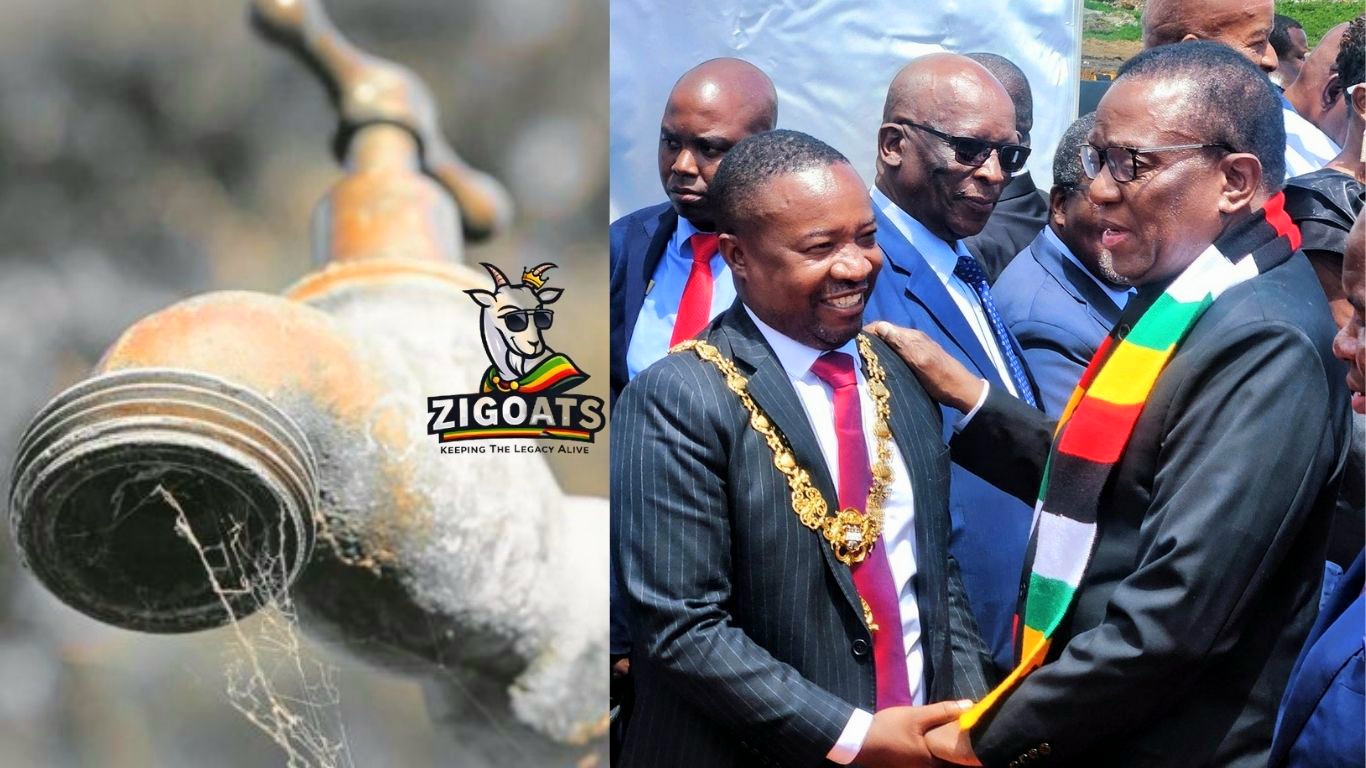
Harare – Harare Mayor Jacob Mafume has formally appealed to President Emmerson Mnangagwa for urgent intervention in the capital’s deepening water crisis, warning that the situation has spiralled beyond the city’s capacity to manage and now poses a serious threat to public health and safety.
In a letter addressed to the Chief Secretary in the Office of the President and Cabinet, Mafume said the contamination of Lake Chivero and the failure of key water infrastructure have created conditions that require “action at the highest level.” The Citizens Coalition for Change (CCC) Councillor wrote:
“The contents of the town clerk’s letter present a clear and compelling case that the current situation in Harare is no longer tenable and poses an imminent threat to public health, environmental sustainability and the overall wellbeing of our city.”
The mayor pointed out that Harare’s water problems are decades old, rooted in aging infrastructure, chronic underfunding, industrial pollution, and financial mismanagement. Residents across many suburbs now go days or weeks or months without reliable running water. When taps do run, the water is often discoloured or smells of sewage, forcing people to rely on unsafe shallow wells.
Kunzvi Dam: A Project Stalled by Funding Gaps
Mafume also highlighted the long-delayed Kunzvi Dam project, originally conceived in the 1970s, as a critical component of any long-term solution. The dam is intended to supplement Harare’s water supply, but construction has repeatedly stalled due to funding constraints. Defending his decision to write directly to the president, the Mayor said:
“Kunzvi Dam requires national intervention. We need to provide services to the people and therefore I need to get his attention.”
He urged that a state of emergency be declared for Harare’s water and wastewater systems to mobilise resources and expertise, bypass bureaucratic delays, and enable a coordinated response.
Working Together for Results
Speaking on the sidelines of the Edith Opperman project’s official commencement, Mafume stressed that seeking help from the national government is part of a “one government approach” to solving shared problems. Referring to the critical infrastructure supporting Harare’s water system, Mafume said:
“There are certain things that can be done at the national level… Morton Jaffray is the biggest water treatment plant in southern Africa. It requires national intervention.”
Mafume also noted that appealing to the president is not an admission of failure but a way to draw attention to a crisis competing with many others for limited resources. He said:
“You do not get the attention of the principal by whispering. You get the attention of the principal by writing as we have done.”
Politics, Funding and Accountability
Harare’s water woes have been worsened by political tensions between the city council, long controlled by opposition councillors, and the central government under ZANU PF. Critics have accused the national government of withholding funds entitled to the municipality, limiting its ability to address basic services as required under the Constitution.
At the same time, some residents and governance experts have raised concerns about corruption and poor prioritisation within the council, saying weak financial controls have contributed to the crisis.
Public Health and Civic Strain
With water supplies unreliable, many households resort to unsafe water sources, raising fears of waterborne diseases. Public frustration is mounting, especially among ratepayers who continue to pay for services they rarely receive.
For many Harare residents, Mafume’s appeal represents a critical effort by local leadership to confront a crisis that has lingered too long and affected daily life too deeply. The focus now turns to President Mnangagwa’s response and whether national authorities will provide the leadership and resources needed to stabilise the city’s water supply and protect public health.
Leave a Reply