
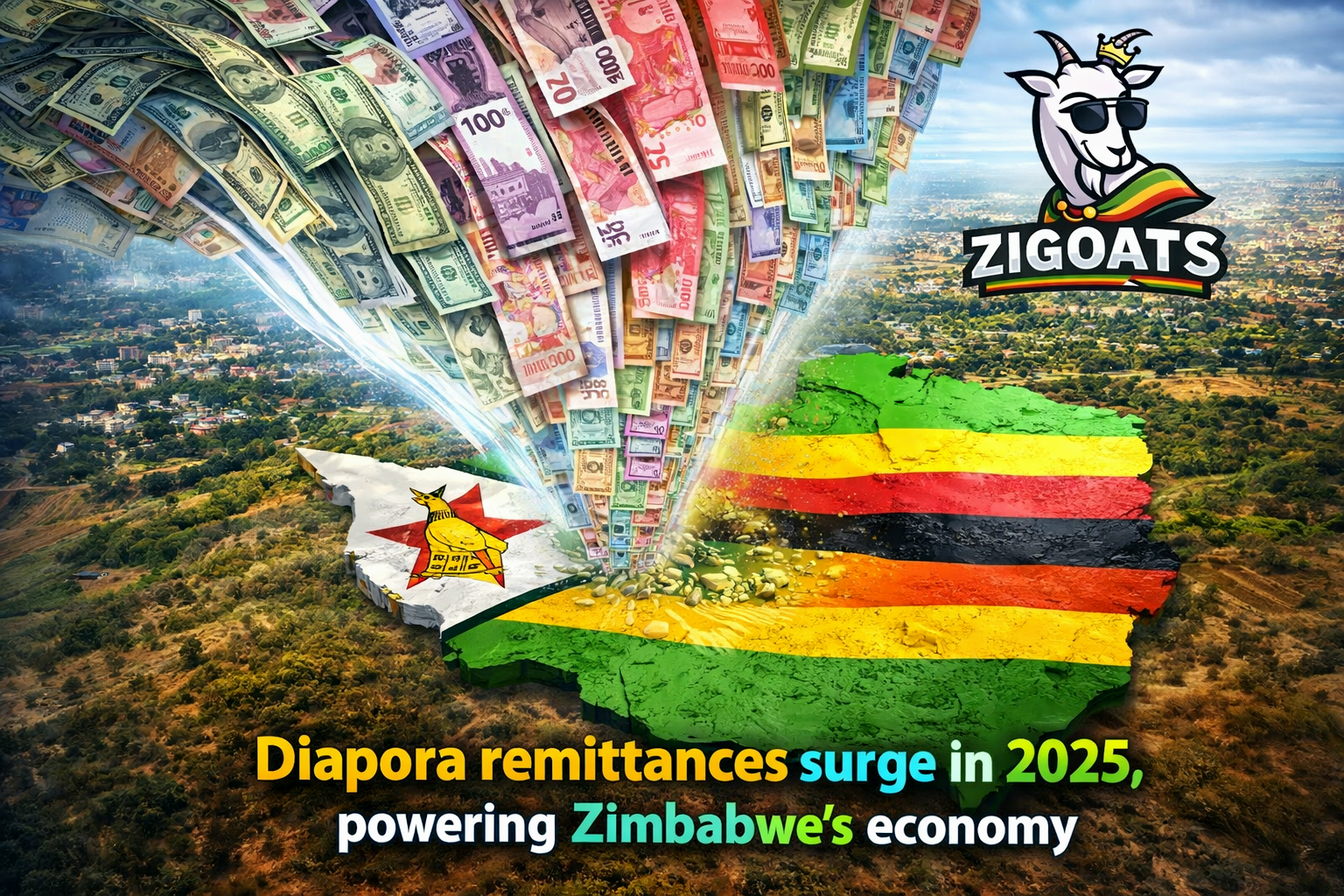
HARARE – Zimbabwe’s foreign currency earnings hit a historic high of US$16.19 billion in 2025, according to the latest Reserve Bank of Zimbabwe (RBZ) Monetary Policy Statement, marking a 21.6% rise from 2024. While export earnings remain the backbone of this inflow, diaspora remittances, funds sent home by Zimbabweans living abroad, played a crucial stabilising role in an economy buffeted by external shocks and structural imbalances.
The Reserve Bank of Zimbabwe data shows diaspora remittances injected US$2.45 billion in 2025, about 15.1% of total foreign currency receipts, up from US$2.15 billion in 2024. That rise reflects continued support from an estimated five million Zimbabweans overseas, with the largest groups residing in South Africa, the United Kingdom, Botswana and the United States.
Gold exports dominated the forex landscape, earning a record US$4.8 billion, nearly double the previous year, buoyed by high global prices and increased domestic output. Export performance, particularly in mining, helped cushion the impact of a poor 2025/26 agricultural season that dented tobacco and other crop revenues.
See table below.
| Type of FX Receipt | 2025 (US$ m) | % Share | 2024 (US$ m) | % Share | % Change |
|---|---|---|---|---|---|
| Export Earnings | 9,675.2 | 59.7% | 7,879.1 | 59.2% | +22.8% |
| Loan Proceeds (Private) | 2,534.3 | 15.6% | 1,589.8 | 11.9% | +59.4% |
| Diaspora Remittances | 2,453.1 | 15.1% | 2,152.5 | 16.2% | +14.0% |
| NGO Remittances | 1,083.6 | 6.7% | 1,182.5 | 8.9% | -8.4% |
| Foreign Investment | 256.6 | 1.6% | 387.1 | 2.9% | -33.7% |
| Income Receipts | 191.3 | 1.2% | 125.1 | 0.9% | +52.9% |
| Total | 16,194.1 | 100% | 13,316.2 | 100% | +21.6% |
Source: Reserve Bank of Zimbabwe, 2026
Trade Imbalance: Exports Vs Imports
However, despite strong inflows, Zimbabwe continues to grapple with a trade imbalance. Foreign payments, driven by merchandise imports, raw materials and energy costs, totalled more than US$11.4 billion, putting pressure on foreign reserves and the exchange rate. This dynamic underscores the economy’s heavy reliance on imported inputs and weak local industrialisation.
Impact and Implications
Economists and analysts say diaspora remittances are far more than money sent to Zimbabwe, they are a critical economic stabiliser and a lifeline for millions of households. Mukuru Zimbabwe Head of Sales and Operations Kevin Nyakotyo, underlining the shift of remittance use from consumption toward investment in housing and small businesses in Zimbabwe, said:
“Remittances are a growing line item in our national budget and there is a need to formalise these inflows because they are supporting the economy.”
CBZ Holdings Group CEO Lawrence Nyazema echoed the sentiment, noting the funds ease burdens on public services. He told local mefia:
“A lot of the remittances go to our social services like education and the health sectors, which puts less burden on the Government’s resources.”
Yet despite these gains, critics warn looming structural problems threaten long-term stability. Former Finance Minister Tendai Biti has repeatedly raised alarms about illicit outflows, telling Parliament that Zimbabwe is bleeding billions annually from smuggling and dodgy trade practices. Biti said in 2023,
“What we are losing in terms of illicit financial flows is actually more than what we are getting in terms of diaspora remittances US$1 billion… The major culprits are the mining houses, organisations such as the ZimPlats of this world, the Unkies of this world who are guilty of transfer pricing, thin capitalisation, under-invoicing and over invoicing.”
Similar concerns surfaced around the gold sector. Former Mines Minister Winston Chitando warned that gold smuggling still looms large, threatening to erode up to 40% of potential revenue despite high world prices. He told reporters:
“Foremost among these are illicit activities and the ongoing issue of gold smuggling.”
The implication is clear: while remittances help households and micro-businesses stay afloat, unsanctioned outflows and smuggling are siphoning off billions that should boost national forex liquidity and state revenue. That weakens Zimbabwe’s ability to fund local production, reduce import dependence, and build resilient domestic industries.
Experts say the focus now must be on expanding formal remittance channels, creating incentives for diaspora investment, and tightening enforcement to curb illicit outflows if the country is to move beyond survival and toward sustainable growth.
In sum, while diaspora remittances continue to shore up Zimbabwe’s foreign currency position, the broader economic picture underscores the need for export diversification, industrialisation, and stronger formal financial systems to secure sustainable growth and resilience in 2026 and beyond.
Leave a Reply