
By Advent Shoko | ZiGoats
The debate over Zimbabwe’s economic recovery has exposed a bigger question: are local manufacturers genuinely rebuilding the country’s industrial base, or are consumers simply seeing more small businesses filling gaps left by struggling industry?
Zimbabwe’s economic recovery is increasingly being judged by two very different realities.
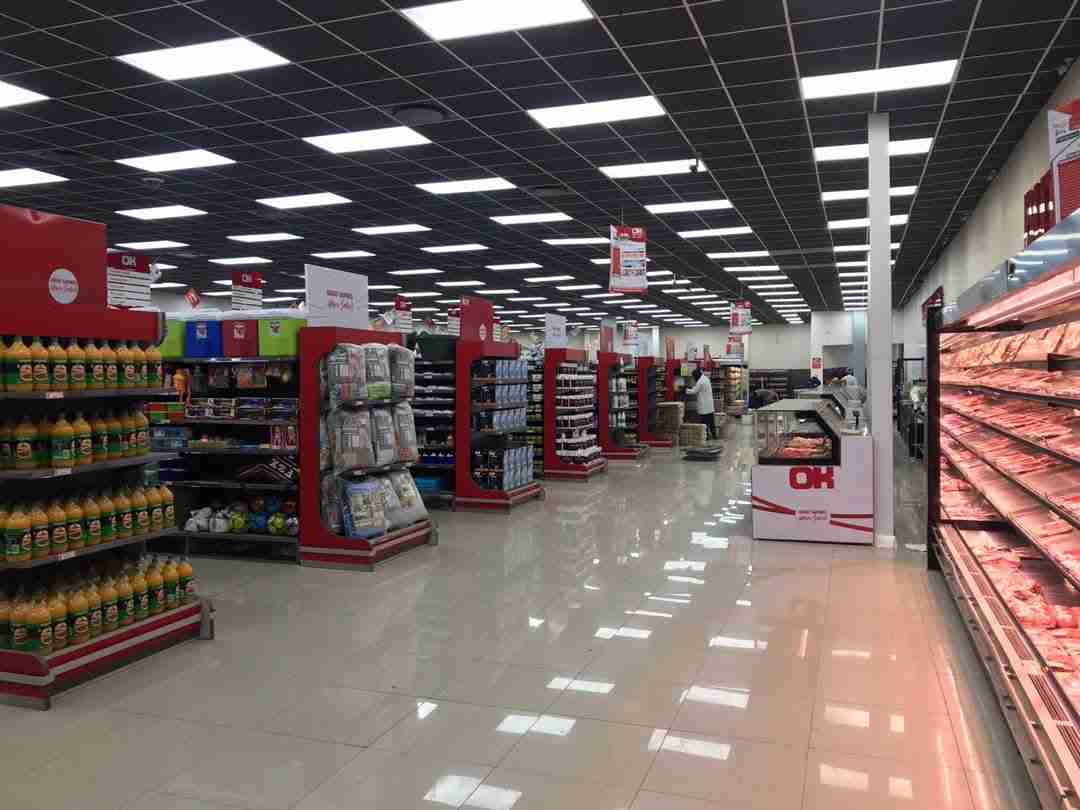
Walk into a supermarket and you will find cooking oil, butter, flour, beverages, detergents, building materials and other everyday products carrying Zimbabwean brands. Visit a small industrial workshop and you may find entrepreneurs making products that would otherwise have to be imported.
For James Majoni, a Monitoring, Evaluation, Accountability and Learning (MEAL) professional, this is evidence that Zimbabwe’s manufacturing sector is doing better than some economic commentators suggest.
But there is another side to the story. A product carrying a Zimbabwean brand does not necessarily mean that its raw materials, machinery or other essential inputs were produced locally. Nor does its presence on supermarket shelves establish that the country has rebuilt a competitive manufacturing industry.
That distinction has become central to a debate sparked by Jabulani Simplisio Chibaya, an MBA-qualified business and technology professional, whose assessment of Zimbabwe’s economic recovery has attracted responses from economists and development practitioners.
Chibaya argues that the country has made progress in stabilising its currency and controlling inflation but has yet to translate that progress into productive investment, industrial expansion and confidence in the financial system.
“Zimbabwe’s central bank has done what the country’s own history said was unlikely. Annual ZiG inflation fell to 2.9 percent in August, the lowest since independence in 1980, and is still below 5 percent,” he wrote.
He also pointed to international reserves exceeding US$2 billion and economic growth of 6.8 percent in the first quarter.
However, he questioned why manufacturers were operating at relatively low capacity despite these improvements.
“By the usual scorecard, this is a comeback. So why did manufacturers report running at about 52 percent of capacity in 2024? Why can banks barely lend? Why does everyone with savings still hedge?”
His argument is that monetary stability means little if the money circulating in the economy is not finding its way into factories, machinery, agriculture, energy and other productive investments.
The Supermarket Argument: Are Zimbabwean Manufacturers Really Thriving?
Majoni challenged the suggestion that Zimbabwe’s manufacturing industry is struggling, arguing that commentators should spend more time visiting supermarkets, farms and small industrial businesses.
“I don’t know which manufacturing you are talking about if you go into supermarkets the majority of products are Zimbabwean,” he said.
He added that Zimbabwe had moved away from multinational companies while smaller businesses were increasingly producing everyday commodities.
“Zimbabwe has moved from multinational companies. If you visit small industries they are manufacturing all sorts of goods from cooking oil, butter, most basic commodities,” Majoni said.
He argued that economic growth was increasingly coming from smaller companies, agriculture and mining rather than the traditional large corporations.
His Observation Deserves Attention.
Zimbabwe’s industrial story is not limited to the large companies listed on the Zimbabwe Stock Exchange. Across the country, smaller businesses are involved in food processing, clothing, furniture, metal fabrication, plastics, construction materials and other forms of production.
Some are filling gaps left by companies that closed, downsized or reduced their operations during years of economic instability.
However, the important question is whether this represents genuine industrial transformation or simply a survival economy adapting to shortages.
A supermarket shelf can show that a product was manufactured or packaged locally. It cannot, on its own, tell consumers how much of its value was created in Zimbabwe.
A cooking oil brand, for example, may be locally processed and packaged while depending on imported crude vegetable oil. A local manufacturer may produce plastic containers using imported resin, while another may assemble products using machinery and components purchased abroad.
Local production is important, but domestic value addition is what determines how much of the economic benefit stays in the country.
Where Does Zimbabwe Get It’s Imports?
The scale of Zimbabwe’s import dependence provides an important part of the answer.
According to World Trade Organization data based on UN Comtrade, Zimbabwe imported goods worth approximately US$9.53 billion in 2024.
South Africa was the country’s biggest import source, accounting for 39.5 percent of total imports, followed by China at 13.9 percent.
Other significant sources included the Bahamas, Mozambique, Singapore, Zambia and the United Arab Emirates.
These figures cover all merchandise imports, not just supermarket products. They include fuel, machinery, agricultural inputs, vehicles, food and industrial materials.
The Composition Of Imports Is Particularly Revealing.
Zimbabwe spent billions of dollars importing mineral fuels, machinery, cereals, vehicles, electrical equipment, fertilisers, plastics, vegetable oils, iron and steel products and pharmaceutical supplies.
In other words, the country imports not only finished consumer goods but also many of the materials and equipment required to manufacture products locally.
South Africa’s importance is especially significant because of its geographical proximity and established regional supply chains. China is another major source, particularly for machinery, electrical equipment and manufactured goods.
This creates an important distinction in the manufacturing debate: a locally manufactured product can still have a substantial imported component.
It also means that Zimbabwe’s industrial recovery cannot be measured simply by counting locally branded products on supermarket shelves.
The more revealing questions are how much of their raw material is sourced locally, how many production processes take place domestically, how many Zimbabweans are employed and whether manufacturers can compete with imported alternatives on price and quality.
The numbers show progress, but major weaknesses remain
Chibaya’s reference to manufacturing capacity utilisation of approximately 52 percent reflects the industry’s difficult performance in 2024.
The Confederation of Zimbabwe Industries’ 2024 manufacturing survey put capacity utilisation at 52.3 percent, down from 53.2 percent in 2023. Manufacturing output also declined by 0.5 percent.
However, the latest available 2025 survey presents a more encouraging picture.
According to CZI, manufacturing output increased by 13 percent in 2025, turnover grew by 12 percent and capacity utilisation improved to 55.9 percent.
That is meaningful progress, and it would be unfair to portray the entire industry as collapsing.
Yet, operating at 55.9 percent capacity also means that a substantial portion of installed industrial capacity remains unused.
Manufacturers continue to face high operating costs, unreliable infrastructure, limited access to affordable finance and dependence on imported raw materials.
The recovery is real, but it remains incomplete.
More importantly, the improvement raises another question: are businesses expanding because they are becoming more competitive, or are they benefiting from a temporary improvement in economic conditions?
Sustainable industrial growth requires more than an increase in production. It requires investment in modern machinery, reliable electricity, affordable credit, skilled workers, research, technology and efficient supply chains.
Are Local Products Competitive Enough?
This is where another contribution to the debate deserves attention.
Tinotenda Garise, a financial economics and investment graduate from Midlands State University, responding to Majoni’s argument, questioned whether local manufacturers could compete with foreign producers on price and quality.
He also raised concerns about outdated machinery, working conditions, wages and the ability of small manufacturers to compete when operating formally and complying with tax obligations.
His argument goes beyond whether Zimbabweans can manufacture products. It asks whether they can manufacture them efficiently, consistently and at a price consumers can afford.
That Is An Important Distinction.
Consumers do not necessarily choose imported products because they dislike local brands. They choose products based on price, quality, availability, reliability and personal preference.
A local manufacturer producing goods with outdated equipment, expensive electricity and costly imported inputs may struggle to compete with a foreign producer benefiting from economies of scale, modern technology and cheaper financing.
Protecting local businesses from competition without addressing these weaknesses could ultimately leave consumers paying more for inferior products.
At the same time, exposing struggling manufacturers to unrestricted competition without fixing the domestic operating environment risks accelerating deindustrialisation.
Zimbabwe needs competitive local industry, not merely local labels.
The bigger problem: Money is not translating into productive investment
Chibaya’s central argument draws on the economic thinking of French economist Jean-Baptiste Say, particularly the relationship between production, income, savings and investment.
His contention is that Zimbabwe’s problem is not simply a shortage of money. It is the limited flow of savings into long-term productive activity.
After years of currency instability, many Zimbabweans have become understandably cautious about keeping their wealth in financial institutions.
Some prefer cash, property, vehicles, gold and other tangible assets.
While these decisions may make sense for individual households seeking to protect their savings, they do not necessarily create the kind of capital needed to expand factories, finance irrigation schemes or build energy infrastructure.
Chibaya argues that Zimbabwe needs an environment in which people have confidence to save, banks can lend over longer periods and entrepreneurs can invest without constantly worrying about policy changes.
He wrote: “Zimbabwe doesn’t have a shortage of money. It has a shortage of reasons to put money to work.”
That is perhaps the most important question raised by his contribution.
However, rebuilding confidence also requires addressing the country’s unresolved financial injustices.
The savings question that cannot be ignored
Professor Ramos Mabugu, an economics professor at Sol Plaatje University, took the debate in another direction.
He argued that Zimbabwe cannot credibly claim to have achieved lasting financial stability while people whose savings, pensions and foreign currency accounts lost value remain dissatisfied with the absence of adequate compensation.
“If there are no plans to reimburse those whose savings, pensions and forex accounts were stolen overnight there can be no talk about stability,” Mabugu said.
“An injustice was done to hardworking Zimbabweans that had trusted and saved in the financial system.”
He argued that government must address the issue if it expects people to regain confidence in the banking system.
His intervention highlights a fundamental problem with Zimbabwe’s economic recovery narrative.
People who lost their lifetime savings during previous currency collapses cannot simply be expected to trust a new currency because inflation has declined or official reserves have increased.
Confidence is built through experience, credible institutions, respect for property rights and the protection of people’s earnings.
Without that trust, households may continue to favour cash and tangible assets over long-term bank deposits.
And without longer-term deposits, financial institutions face limitations in financing major industrial projects.
The government has made some moves towards addressing historical pension losses, including reported Treasury disbursements towards pre-2009 public pension compensation in 2026. However, the wider question of adequate and comprehensive redress remains important.
Zimbabwe needs more than locally branded products
The three perspectives expose different dimensions of the same economic challenge.
Majoni is right to draw attention to the resilience of small manufacturers, farmers and entrepreneurs who continue producing despite difficult conditions.
Chibaya is right to question whether improved monetary indicators are translating into productive investment.
Mabugu raises an equally important point: financial stability cannot be separated from the government’s responsibility to address historical losses and rebuild public trust.
Garise’s intervention adds another essential test: local manufacturers must demonstrate that they can produce goods that meet acceptable standards at competitive prices while providing decent working conditions.
Zimbabwe does not need to choose between supporting local industry and demanding quality. It needs both.
Government must create conditions that make local production commercially viable. This includes reliable electricity, affordable financing, predictable taxation, access to modern machinery, secure property rights and policies that encourage investment rather than discourage it.
Manufacturers, meanwhile, must invest in technology, improve productivity, develop local supply chains and treat workers fairly.
There is also a need to move beyond simply replacing imported finished products with locally assembled alternatives that still depend heavily on foreign inputs.
The ultimate objective should be to produce more of the raw materials, components and finished goods consumed in Zimbabwe, while building industries capable of exporting competitively.
The real measure of Zimbabwe’s economic recovery is not how many products carry local brands in supermarkets. It is how much value Zimbabwe creates, how many sustainable jobs its industries generate, how competitive its products become and how much of the money circulating in the economy finds its way back into productive investment.
A country can have stable inflation, busy supermarkets and thousands of small businesses yet remain heavily dependent on imports.
The challenge is to turn that entrepreneurial resilience into a modern, productive and competitive industrial economy.
Leave a Reply