
Former Zimbabwe Warriors stars Cephas Chimedza and Alois Bunjira have weighed into a growing debate at the 2026 FIFA World Cup, questioning the increasing use of hydration breaks and arguing that the stoppages are changing the nature of football.
By Advent Shoko
The discussion gained momentum following Mexico’s 2-0 victory over South Africa in a Group A match earlier this week. Despite temperatures being around 22 degrees Celsius, the game featured two hydration breaks, prompting reactions from former players who believe the interruptions are becoming excessive.
Chimedza, known for his tough and uncompromising style during his playing days, said modern football risks losing some of its traditional intensity if regular stoppages become standard practice.
“It was around 22°C during the Mexico and SA match yet they had 2 water breaks. Football is now like basketball ball, played in ¼s,” said Chimedza.
“When you’re a pro you’re at the pinnacle of the sport and should be able to push your body and show you are a different breed.
“Each and every match will be like that.”
His comments reflect concerns shared by some former players and supporters who believe elite athletes should be capable of handling moderate weather conditions without additional interruptions to play.
Former Warriors striker Alois Bunjira offered an even more blunt assessment, suggesting that the breaks serve commercial interests as much as player welfare.
“Ha these hydration breaks are just gimmicks to air adverts on TV. Kungowanza havo maAd breaks. Zvebhora chaizvo they are not necessary,” said Bunjira.
“We know a player who wants water can simply go to the touchline and get water while the match is on. I see these as commercial breaks rather. 22 degrees isnt that hot.
“Dzatove 4 quarters instead of 2 halves…kkkkk.
“Brazil bhora.”
Bunjira’s remarks have resonated with sections of football fans on social media, where debates over the balance between player welfare and maintaining the flow of matches continue to divide opinion.
The issue has become increasingly relevant during the ongoing World Cup, which is being staged across the United States, Canada and Mexico. Organisers have placed significant emphasis on player safety, particularly given the vast geographical spread of venues and the varying weather conditions teams are expected to encounter throughout the tournament.
Hydration breaks were initially introduced to help players cope with extreme heat and humidity, with medical experts warning of the risks associated with prolonged physical exertion in high temperatures. Football authorities maintain that the measures are designed purely to protect players and officials.
However, critics argue that frequent stoppages can disrupt momentum, affect tactical approaches and reduce the natural rhythm that has long been one of football’s defining characteristics.
Results So Far
The debate comes as the group stages continue to produce intriguing results across the tournament.
Mexico strengthened its position in Group A with a 2-0 victory over South Africa, while South Korea edged Czechia 2-1 in the same group.
In Group B, Canada and Bosnia and Herzegovina played out a 1-1 draw before Qatar and Switzerland produced an identical scoreline.
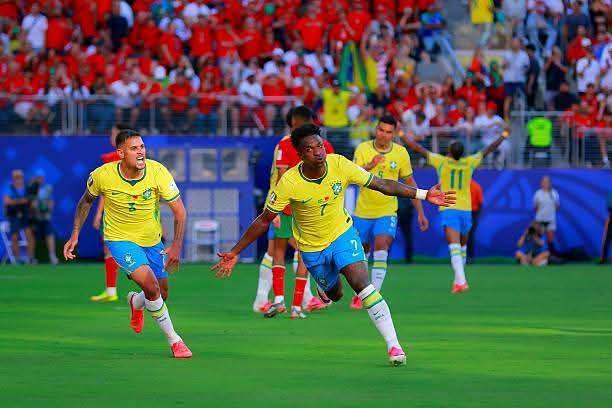
Group C saw tournament favourites Brazil held to a 1-1 draw by Morocco, while Scotland secured a narrow 1-0 win over Haiti.
Meanwhile, hosts United States delivered one of the most impressive performances so far, defeating Paraguay 4-1 in Group D.
While attention remains focused on results, goals and emerging contenders, discussions around hydration breaks have become an unexpected talking point among former professionals and supporters alike.
Leave a Reply