
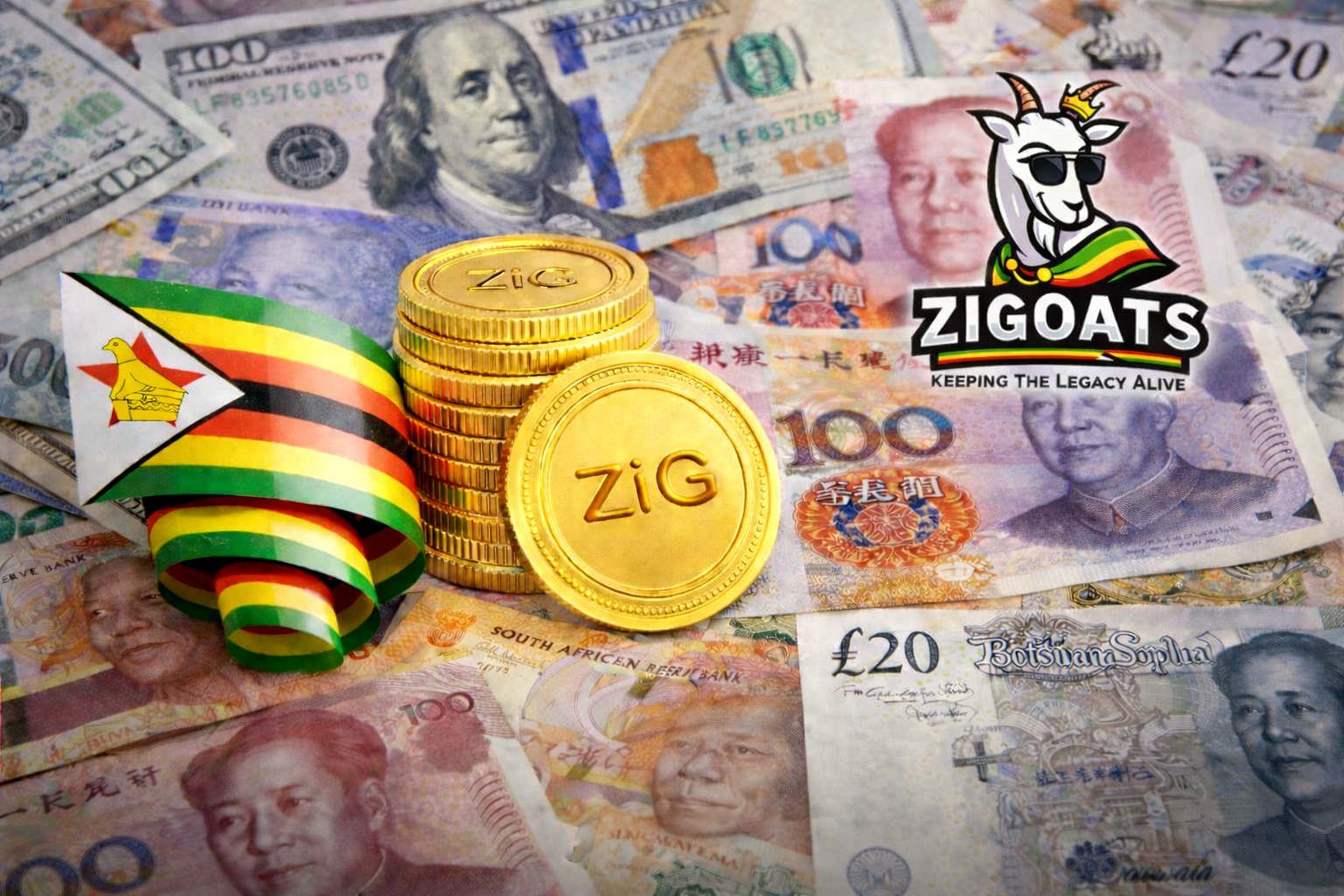
Zimbabwe will no longer operate under a rigid 2030 deadline to end the multi-currency system, marking a significant shift in the country’s monetary policy approach.
Reserve Bank Governor Dr John Mushayavanhu confirmed that the transition to a monocurrency ZiG system will now depend on economic conditions rather than an arbitrary date. Speaking while presenting his televised Monetary Policy Statement on Friday 27 February 2026 in the capital, Dr Mushayavanhu said:
“The shift will only happen once key benchmarks are met, including low inflation, stronger reserves, an efficient forex market, and import cover rising from 1.5 months to between 3–5 months,”
He clarified that even with full ZiG adoption, “USD contracts will still be paid in US dollars. Foreign currency accounts will remain unchanged,” ensuring continuity for households and businesses using dollars.
The announcement follows the 2023 statutory extension, when the government issued Statutory Instrument (SI) 218 of 2023, pushing the original 2025 deadline to 2030. The SI noted that foreign currency payments allowed under previous regulations would remain valid until 31 December 2030.
The new approach aligns the RBZ with the Ministry of Finance, whose Permanent Secretary George Guvamatanga previously stated the 2030 target “was influenced by private sector lobbying rather than firm government policy.” With most transactions still priced in USD, economists say removing a fixed deadline reduces policy risk and restores credibility.
Zimbabwe has used a multi-currency system since 2009, following hyperinflation that reached 231 million percent in 2008. Attempts to dedollarise have repeatedly stalled, highlighting how difficult it is to withdraw a dollarised economy. Former Finance Minister Tendai Biti says “Dedollarisation is a failed ritual.”
While new larger ZiG notes may encourage adoption, experts warn that dedollarising without strong fundamentals, particularly public confidence, could reverse gains made so far. Dr Mushayavanhu stressed that the central bank will focus on “building demand for ZiG organically rather than forcing the transition,” signalling a cautious, stability-driven strategy for Zimbabwe’s monetary future.

Leave a Reply