
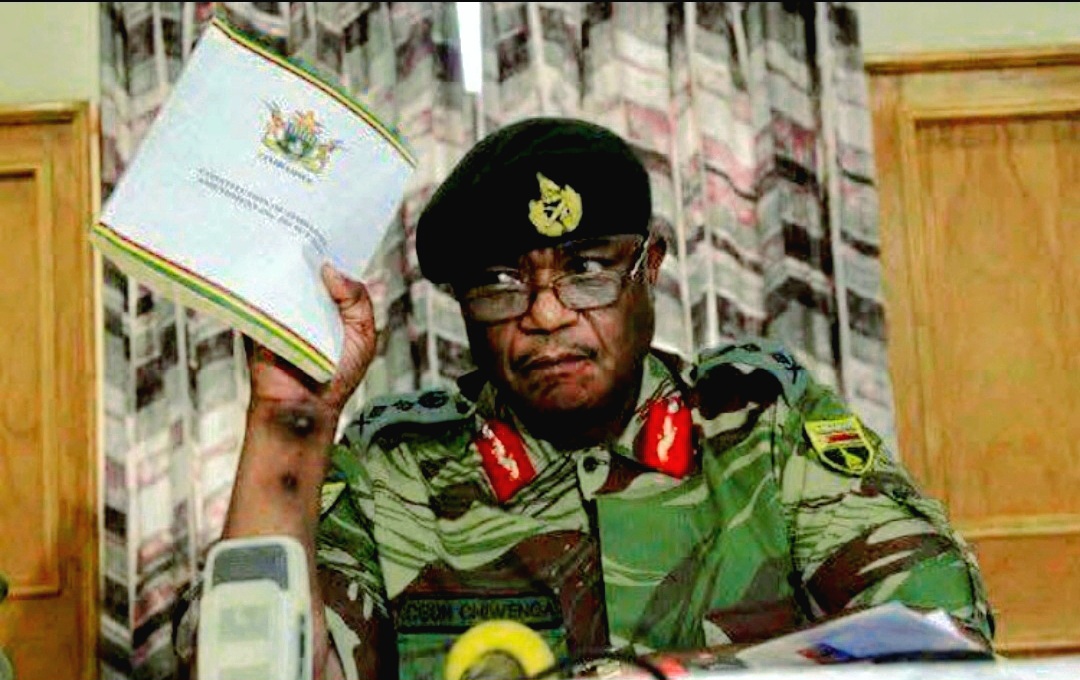
Vice President Constantino Chiwenga has openly pushed back against any move that could strip Zimbabweans of their right to directly elect a President, saying the liberation struggle was fought mainly for the principle of “one man, one vote.”
Chiwenga made the remarks at the funeral wake of Miriam Kangai, widow of national hero and former Cabinet minister Kumbirai Kangai. Miriam Kangai died in South Africa after battling cancer and was buried at Glen Forest Memorial Park in Harare.
Speaking before mourners, the former Army commander framed his message within the history of the liberation war, reminding the nation what he described as the core reasons Zimbabweans went to war. He said:
“It is imperative that our youth recognise the sacrifices made by our heroes to ensure that every voice counts and that land is returned to its rightful owners.
The liberation struggle was primarily fought for two fundamental reasons: the principle of ‘one man, one vote’ and the return of our land. While other issues were raised, they served merely as justifications rather than the core objectives of our fight.
It is essential for us to remember that this country was won through sacrifice. It is sacred. People died, blood was shed and we must never allow ourselves to forget that the freedoms we enjoy today came at a cost.”
Chiwenga also reflected on liberation figures such as Herbert Chitepo and members of the war council, linking their sacrifices to today’s constitutional debate.
Constitutional Amendment Bill No. 3 in Focus
His comments come at a sensitive political moment.
Constitutional Amendment Bill No. 3 of 2026 proposes extending electoral cycles from five to seven years. Critics argue that the changes could ultimately shift the power to elect the President from the general electorate to Members of Parliament.
Justice, Legal and Parliamentary Affairs Minister Ziyambi Ziyambi has insisted there will be no referendum, maintaining that the Bill only adjusts electoral timelines and does not tamper with the constitutional two-term presidential limit.
However, Chiwenga’s strong defence of direct voting rights is being interpreted by political observers as more than historical reflection. In the current climate, it reads as a clear warning that the principle of direct electoral choice must not be diluted.
As debate over the Bill intensifies, the question now confronting Zimbabwe is whether constitutional reforms will strengthen democratic participation, or reshape it.

Leave a Reply