
By Advent Shoko
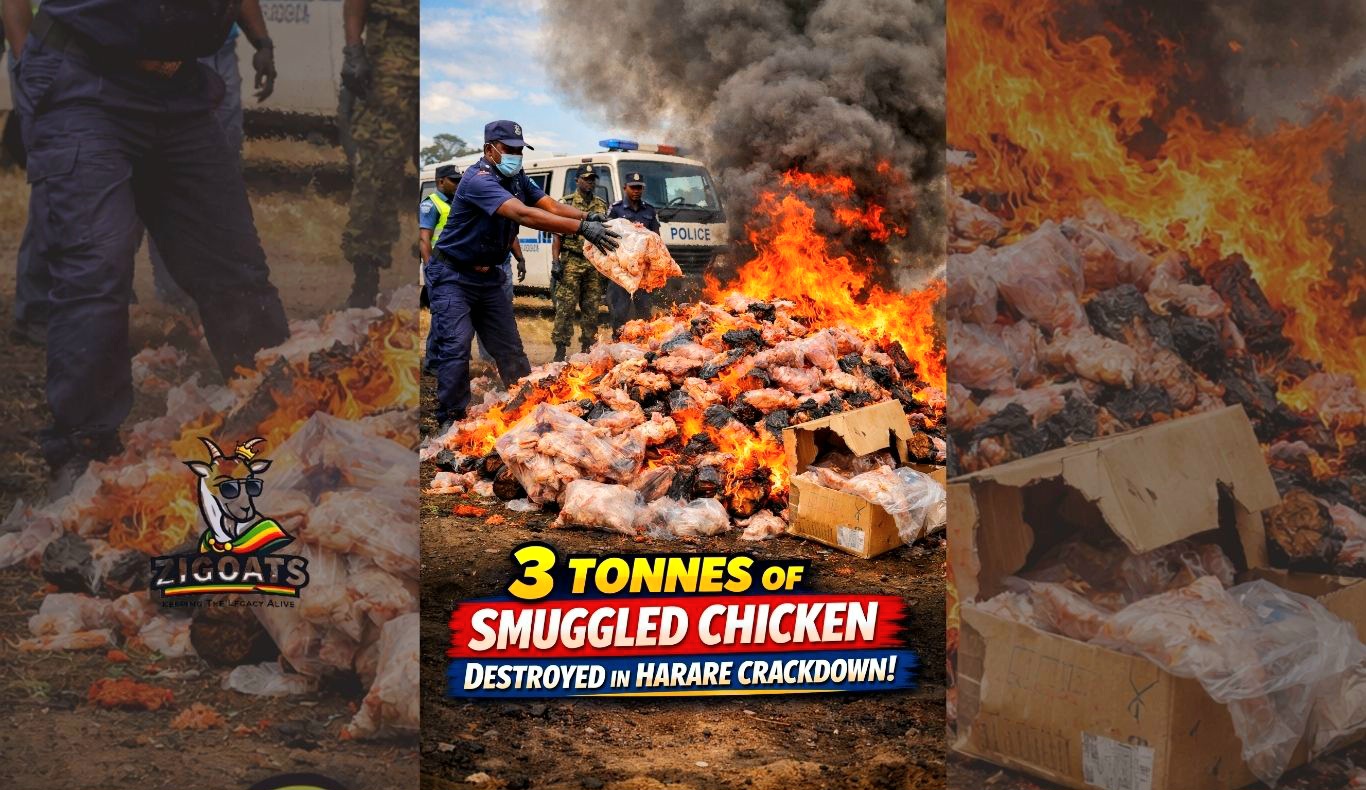
Zimbabwe’s fight against smuggling took a dramatic turn after police destroyed three tonnes of illegally imported chicken cuts in Harare, exposing a shadow food trade that threatens public health, cripples local farmers, and drains government revenue. The consignment allegedly entered the country without customs clearance, food safety inspections, or veterinary checks, safeguards designed to protect consumers.
- Service Station Robbed Of $12k After Cash Movement Details Posted On WhatsApp
- Walter Magaya Rape Case: What Really Happened With Bail And The Law
The Zimbabwe Republic Police confirmed the operation, stating:
“The ZRP confirms the destruction of three tonnes of smuggled chicken cuts in Harare after the recent arrest of three suspects, Lee Chakatama (21), Tafadzwa Makanganya (40) and Canaan Marimo (42) for evading customs and excise formalities. The suspects were also found in possession of dagga. #no to smuggling and drug and substance abuse in the country.”
Behind that statement lies a broader and more alarming reality. Food smuggling has quietly grown into a lucrative underground trade across Southern Africa, fueled by porous borders, high import duties, and demand for cheap protein. Smuggled chicken bypasses veterinary inspections, risking contamination from bacteria like salmonella or avian influenza. Without proper cold-chain storage, the meat can spoil, endangering anyone who consumes it. Says a food safety expert:
“This is not just an economic crime, it’s a public health threat. One contaminated batch can trigger outbreaks, particularly in densely populated suburbs with limited clinic access.”
The economic impact is equally severe. Zimbabwe’s poultry industry supports thousands of farmers who follow legal and safety standards. Smuggled meat sold at lower prices undercuts these farmers, driving some out of business and threatening livelihoods. Government coffers also suffer: evaded customs duties and taxes reduce revenue, yet authorities still absorb the costs of enforcement and potential health crises.
Police reports suggest smuggling operations often overlap with drug trafficking. In this case, the discovery of dagga alongside the chicken cuts underscores the intertwined nature of these crimes. Typically, smugglers use small vehicles, hidden storage, and bribes to bypass checkpoints before distributing goods to informal markets.
The law is clear: importing goods without clearance and selling uninspected meat is criminal. Destroying unsafe food is a costly but necessary measure to prevent public harm. Still, experts warn that enforcement alone will not end smuggling. High poverty, demand for cheap protein, and the profit potential of bypassing regulations ensure the trade will adapt and continue.
For ordinary Zimbabweans, the threat is invisible but real. A bargain at a roadside stall could carry hidden health hazards. For honest farmers, each smuggled shipment is another unfair blow. The destruction of three tonnes in Harare is a victory for law enforcement, but it is also a stark warning: the battle against smuggling is far from over, and vigilance, regulation, and public awareness remain key.
Leave a Reply