
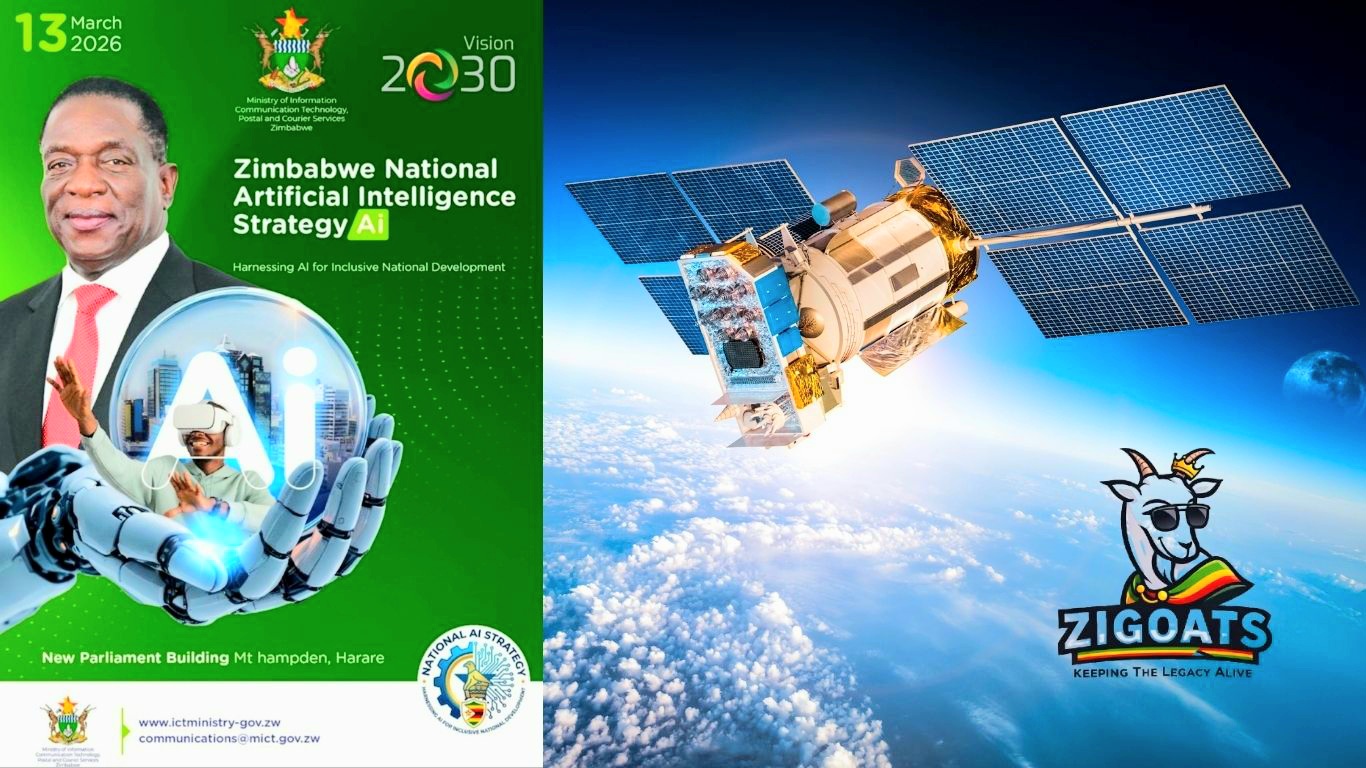
MT HAMPDEN, HARARE – Zimbabwe has officially launched its National Artificial Intelligence Strategy (2026–2030), a landmark policy blueprint aimed at positioning the country as a competitive player in the global digital economy.
Speaking during the launch at the Parliament of Zimbabwe in Mt Hampden on Friday, Minister of ICT, Postal and Courier Services Hon. Tatenda A. Mavetera said the strategy signals Zimbabwe’s determination to embrace the Fourth Industrial Revolution and build a modern, innovation-driven economy aligned with Vision 2030.
The launch ceremony was attended by President Dr Emmerson Dambudzo Mnangagwa, Vice Presidents Dr Constantino Chiwenga and Dr Kembo Mohadi, senior government officials, Members of Parliament, diplomats, technology industry leaders, academics and representatives from international organisations.
A Turning Point for Zimbabwe’s Digital Future
Addressing delegates, Mavetera said the new AI strategy reflects Zimbabwe’s readiness to adapt to the fast-changing technological landscape shaping the 21st century. She said:
“History shows that every generation must respond to technological change in its own way. As Zimbabwe pursues Vision 2030, we are ready to engage the global economy with confidence and innovation.”
The minister credited President Mnangagwa’s leadership for driving Zimbabwe’s digital transformation agenda.
In his foreword to the strategy, the President noted:
“We stand at the dawn of a new era, a time of unprecedented technological advancement that will reshape our world, where the 21st century is defined by the rapid pace of technological change and at its heart lies Artificial Intelligence. This is not merely a technological shift; it is a fundamental reordering of our societies and economies.”
Mavetera said the strategy is also inspired by the President’s guiding philosophy “Nyika inovakwa nevene vayo”, which encourages Zimbabweans to drive their own development through innovation and national capability.
Developed Through Nationwide Consultations
The National Artificial Intelligence Strategy was developed through an extensive policy process led by the Ministry of ICT, Postal and Courier Services.
The framework was informed by the UNESCO Artificial Intelligence Readiness Assessment for Zimbabwe, as well as the Kadoma draft strategy and nationwide consultations with stakeholders.
Participants in the consultations included:
- Farmers and agricultural experts
- Healthcare professionals
- Entrepreneurs and startups
- Educators and researchers
- ICT industry leaders
- Members of Parliament
- Universities and research institutions
According to the minister, this broad engagement ensured the strategy reflects Zimbabwe’s national priorities and development aspirations.
Six Pillars of Zimbabwe’s AI Strategy
The AI strategy is structured around six key pillars designed to guide Zimbabwe’s technological growth:
- AI Talent and Capacity Development – building a skilled workforce capable of designing and managing AI technologies.
- AI Infrastructure and Computational Sovereignty – strengthening computing infrastructure and national data systems.
- AI Adoption and Public Service Transformation – using AI to improve efficiency in government services.
- AI Governance, Ethics and Regulatory Frameworks – ensuring responsible and ethical use of AI technologies.
- AI Research, Development and Innovation – supporting universities and research institutions to drive innovation.
- Strategic International Collaboration and Diplomacy – building partnerships with global institutions and technology leaders.
The strategy also aligns with Zimbabwe’s Education 5.0 philosophy, which emphasises innovation, research, industrialisation and entrepreneurship in the education system.
Promoting Digital Inclusion
A central feature of the strategy is ensuring that the benefits of artificial intelligence reach all citizens.
The government says special attention will be given to:
- Women and girls in technology
- Youth innovators and entrepreneurs
- Rural communities
- Persons with disabilities
This inclusive approach aims to ensure Zimbabwe’s digital transformation does not widen existing social or economic inequalities.
Institutions to Drive Implementation
To ensure the strategy moves beyond policy into action, government has established several implementation structures:
- National Digital Regulatory Committee (NDRC)
- AI Strategy Implementation Office (AISIO)
- Technical Working Groups (TWGs)
The Ministry of ICT will coordinate the overall strategy while individual ministries will lead sector-specific initiatives.
Five Flagship AI Initiatives
Government has also announced five flagship initiatives expected to launch within the first 18 months:
- AI Grand Challenge – a national competition offering funding, pilot contracts and exposure for innovative AI solutions.
- National AI and Data Platform – a secure digital platform (Pangolin/Haka/Inkakha) providing access to national datasets and computing power.
- AI for Every Zimbabwean Campaign (Nzwisiso.ai) – a national awareness programme promoting AI literacy through schools and local-language media.
- National AI Regulatory Sandbox – an innovation platform allowing startups to safely test AI solutions before full deployment.
- National AI Innovation Fund – a co-investment fund (Mugove/Umqele/Isabelo) designed to support Zimbabwean AI startups through funding and mentorship.
Zimbabwe’s Growing Digital Infrastructure
Mavetera also highlighted the country’s progress in digital infrastructure development.
- Internet penetration reached 84.55% in the fourth quarter of 2025.
- Zimbabwe’s fibre backbone network has surpassed 14,000 kilometres.
- The country aims to achieve 100% internet penetration by 2030.
Several digital skills programmes have also been rolled out, including:
- Digital Skills Ambassadors Programme
- Cyberus Cybersecurity Training Programme
- The 1.5 Million Coders Initiative
The coding programme alone has already trained more than 200,000 Zimbabweans.
A New Chapter for Zimbabwe’s Digital Economy
Closing her remarks, Mavetera said the strategy marks the beginning of Zimbabwe’s journey towards becoming an AI-enabled economy.
“The path ahead will not be easy, but with determination, collaboration and visionary leadership, we can build an innovative, inclusive and prosperous Zimbabwe powered by artificial intelligence.”
The minister then invited President Dr Emmerson Dambudzo Mnangagwa, described as the champion of Zimbabwe’s digital transformation, to officially launch the National Artificial Intelligence Strategy.
Leave a Reply