
By Advent Shoko
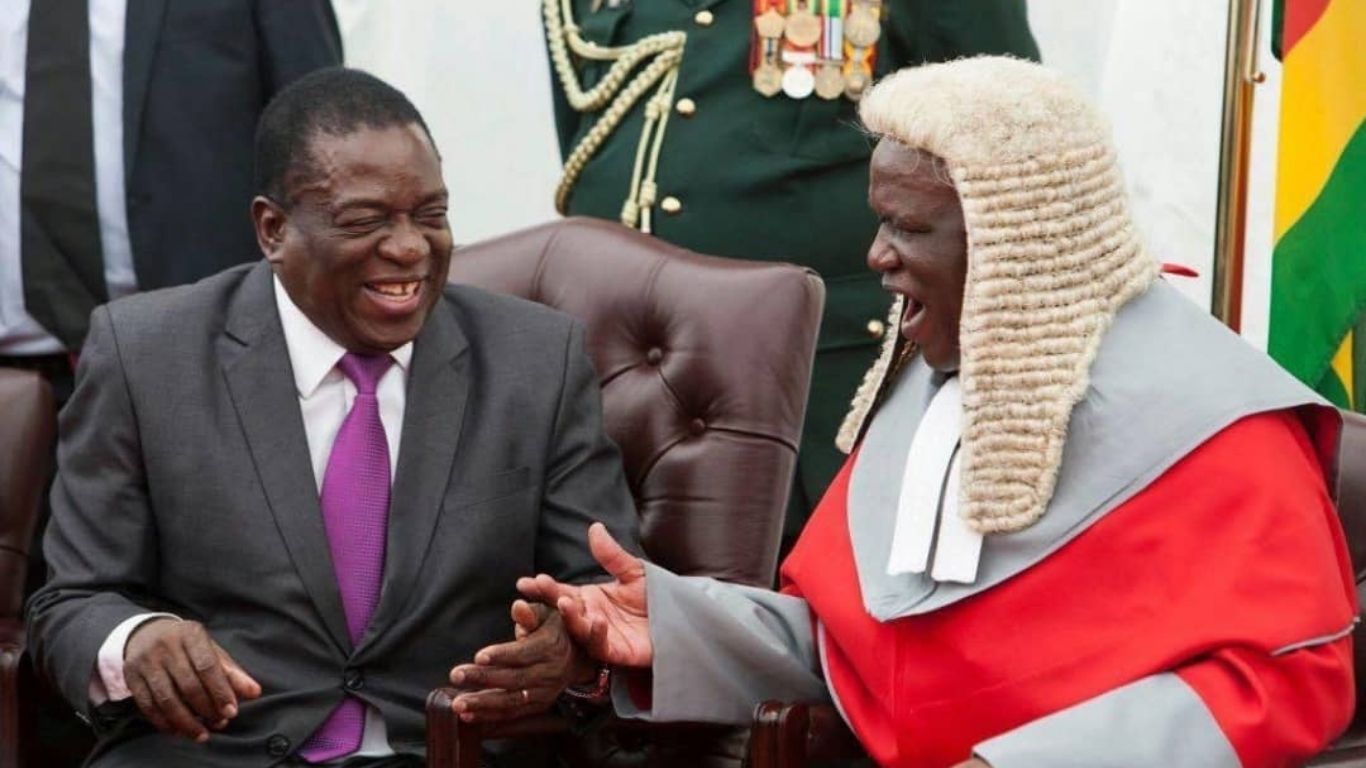
Zimbabwe’s Judicial Service Commission (JSC) has officially confirmed that Chief Justice Luke Malaba will retire on 15 May 2026, bringing to an end a decades-long career on the bench marked by both judicial modernisation and deep controversy. His final working day will be midnight on 14 May 2026, as stipulated under Section 186(1) of the Constitution.
Malaba’s departure closes a chapter that has at times blurred the lines between law, politics and constitutional interpretation. In 2021, shortly before his 70th birthday, the Constitution was amended to permit judges, including the Chief Justice, to remain in office up to age 75 if they produced a medical fitness certificate and received presidential assent. Malaba employed that provision to extend his tenure by five years.
The JSC statement dismissed recent media portrayals suggesting Malaba was “refusing” to take pre-retirement leave, clarifying that discretionary leave before retirement is not legally required and that such claims misrepresent both law and fact.
Malaba’s time at the helm saw the judiciary embrace electronic case management and other modernization efforts, earning plaudits from some quarters for court efficiency gains. But critics argue his legacy is tied to controversial rulings on election disputes, including the dismissal of key opposition challenges, and to the constitutional amendment that enabled his extended stay in office, a move that sparked battles in the High Court, Supreme Court and Constitutional Court and raised questions about judicial independence.
- Chiredzi West MP Arrested: Suspected Abuse Of Constituency Development Funds Amidst Service Delivery Gaps
- Court Despossesses Fraudulent NetOne Cashier
- Madzibaba Veshanduko Sends Regards From Prison
Legal community insiders also point to the political timing of his retirement. The state-ruling Zanu-PF party is currently advancing plans for another constitutional change to extend President Emmerson Mnangagwa’s second and final term to 2030, a proposal likely to face legal challenges that would land before the Constitutional Court. Observers say this places Malaba’s successor in a crucial position.
No successor has yet been named. The JSC is expected to begin a public interviewing process for candidates, a measure championed by governance experts as a step toward transparency. Civil society and legal analysts say the appointment will be a litmus test for judicial independence amid increasing concerns about the executive’s influence over constitutional structures.
For President Mnangagwa’s Vision 2030 bid, widely interpreted as a push to remain in office beyond established constitutional limits, Malaba’s retirement is significant. A new Chief Justice could be pivotal in future legal interpretations of term limits and constitutional amendments. Governance commentators warn that any perception of judicial pliability risks undermining confidence in Zimbabwe’s constitutional democracy.
As Malaba exits, the spotlight now turns to who will lead the Constitutional Court next, and how the judiciary will navigate Zimbabwe’s fraught legal and political crossroads in the years ahead.
Leave a Reply