
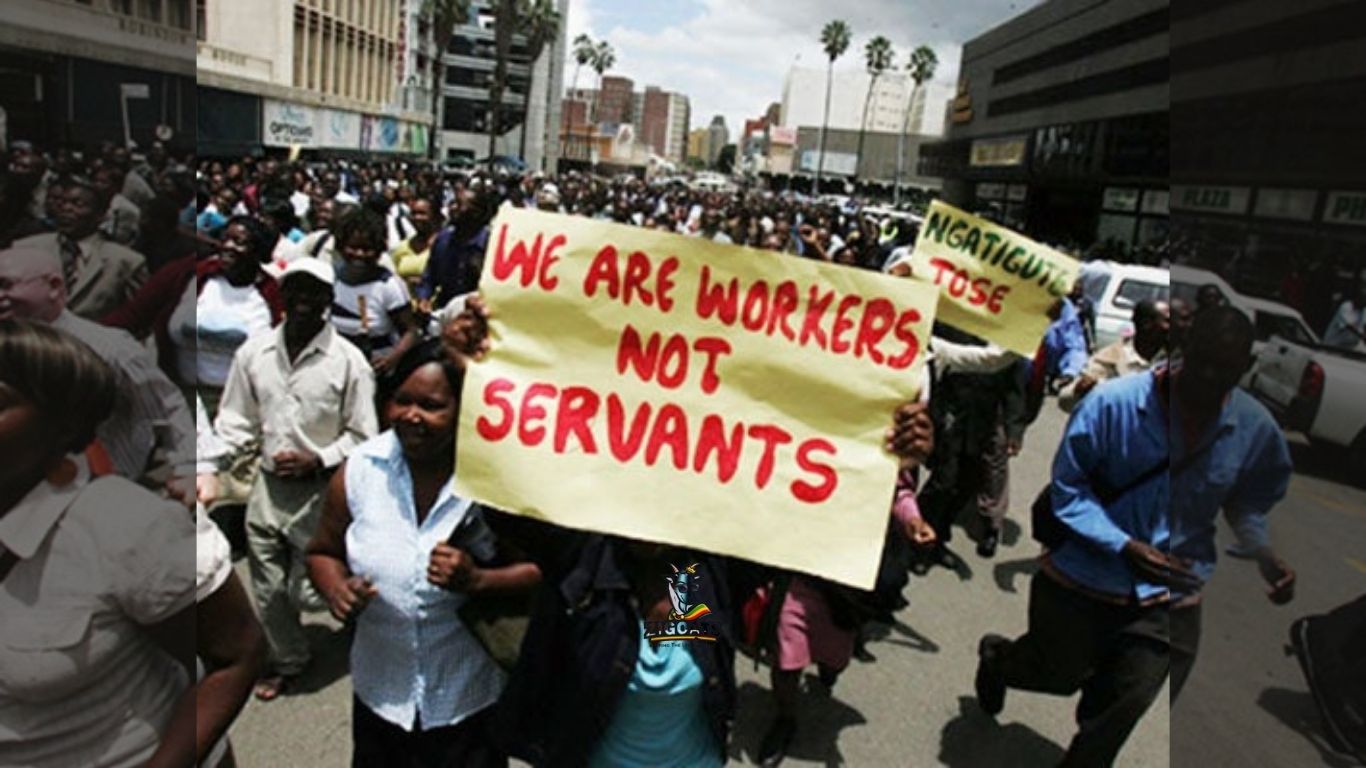
HARARE – The Government says it is satisfied with the current salaries paid to civil servants, arguing that the lowest-paid public workers now earn above the Poverty Datum Line (PDL), although labour unions insist the wages remain far below what workers need to survive.
Deputy Minister of Finance, Economic Development and Investment Promotion Kudakwashe Mnangagwa said Government remains confident that the public sector is among the country’s most competitive employers. Kudakwashe, who is the son of President Emmerson Mnangagwa, said:
“Salary negotiations will continue through the appropriate channels, but we are proud that Government remains one of the most competitive employers in the country.”
His remarks come as the State prepares to conclude a long-running job evaluation exercise designed to restructure civil service salaries across ministries. Authorities say the framework is expected to be completed by the end of the first quarter of 2026.
Public Service, Labour and Social Welfare Minister Edgar Moyo previously said the system is intended to correct long-standing distortions in the grading structure. Moyo said:
“Salaries are being worked around the job evaluation framework, which is about to be concluded.”
Moyo added that the scientific evaluation tool will align pay with responsibility, hierarchy and seniority in the public service.
Currently, many civil servants such as teachers earn an average of about US$350 per month. Under Zimbabwe’s Pay-As-You-Earn (PAYE) tax system, that salary attracts deductions of roughly US$52.50 per month.
But worker representatives say the figures tell only part of the story.
Public sector unions argue that salaries remain far below the levels workers earned before the October 2018 currency reforms, when average civil service pay was around US$540 per month.
A representative of the Apex Council, which represents government workers, said the current earnings are not enough to cover the rising cost of living. The union representative said:
“Civil servants are still struggling. The salaries may look better on paper, but they do not match the cost of basic goods, transport and school fees.”
Workers have repeatedly called for salaries to be restored to pre-2018 levels, arguing that inflation and economic volatility have steadily eroded their purchasing power.
Despite those concerns, Government insists the job evaluation exercise will bring a more structured and fair pay system rather than automatic salary increases.
Officials say the new framework will identify positions that were historically over-graded or under-graded and adjust them accordingly.
For now, negotiations between Government and civil servants are expected to continue through the National Joint Negotiating Council as both sides debate how to balance fair wages with the country’s fiscal realities.
Leave a Reply